
There’s something magical about capturing wildlife in its natural habitat. The thrill of a lioness on the prowl or a herd of elephants splashing in a watering hole makes wildlife photography a unique adventure. Let’s dive into essential tips for making the most of your safari experience!
Understanding Wildlife Photography
The Art of Capturing Nature
Wildlife photography is not just about snapping pictures; it’s about creating art that tells a story. From my experience, immersing myself in the environment is key. I remember my first safari vividly. I felt like I was stepping into a different world, where every rustle of leaves could signal an exciting encounter. The thrill of waiting, watching, and then capturing that perfect moment is what draws many of us to this fascinating art form.
To truly capture the essence of wildlife, I learned to observe patiently. This means taking time to understand the behavior of animals. For example, understanding when a bird is likely to take flight or when a predator is about to move can significantly increase the chance of getting that shot. The best wildlife photos convey emotion and connection, and this comes from spending time watching the subjects rather than just pressing the shutter button. Read Interesting article: Ultimate Guide to Backpacking on a Budget in African Safaris
Essential Gear for Wildlife Photography
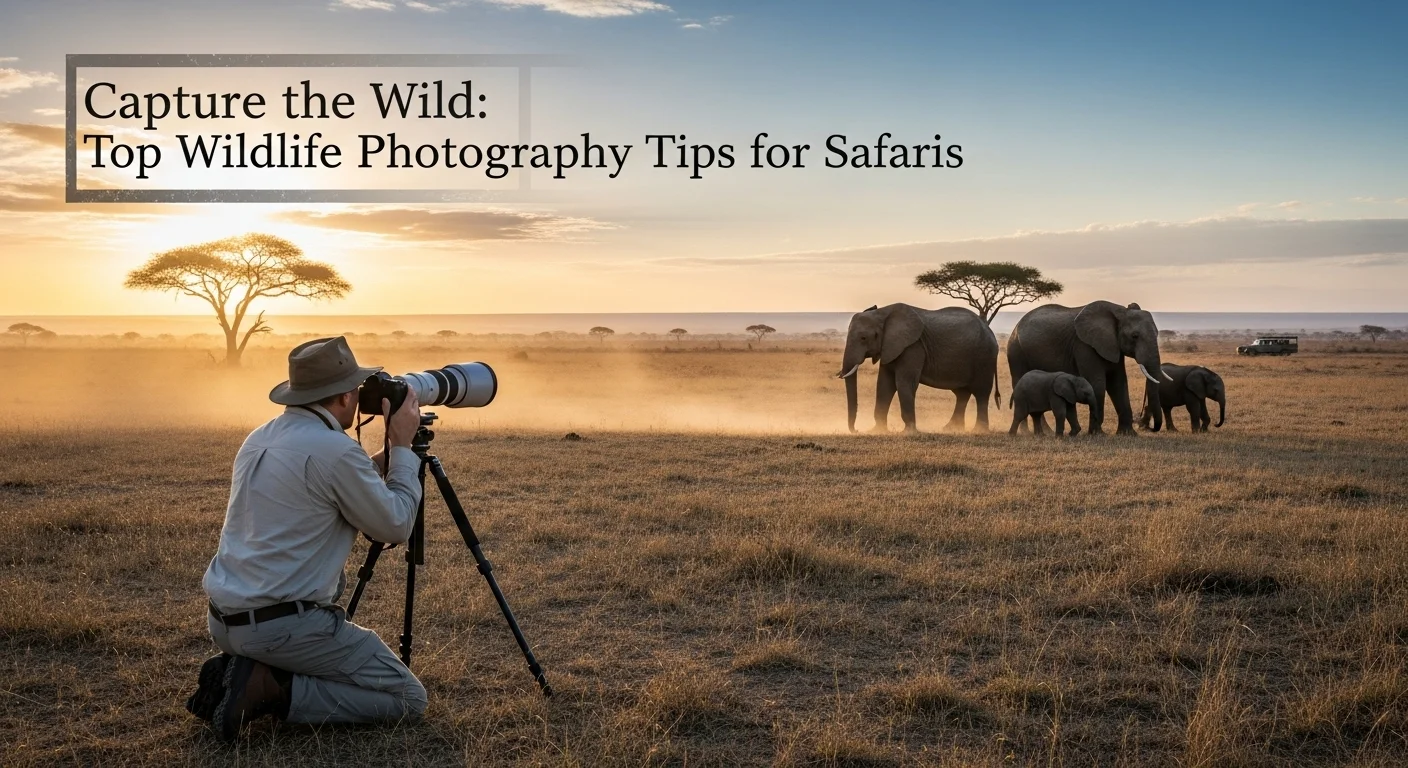
Choosing the right gear can make or break your wildlife photography experience. When I first started, I underestimated the importance of having the right equipment. A high-quality camera with a fast autofocus system is crucial for capturing sharp images, especially when animals are moving. I personally recommend a DSLR or mirrorless camera with a good zoom lens, ideally 300mm or greater, to get close-up shots without disturbing the wildlife.
In addition to the camera and lens, I found that a sturdy tripod can be invaluable, especially for low-light situations at dawn or dusk. A good backpack to carry your gear comfortably is essential too. I’ve learned the hard way that being unprepared can lead to missed opportunities. Also, don’t forget extra batteries and memory cards, as you don’t want to run out just as the action heats up!
Types of Wildlife Photography
Wildlife photography encompasses various styles, each with its own charm. I’ve experienced the thrill of capturing portraits, behavior, and action shots. Portrait photography focuses on individual animals, while behavior photography aims to showcase specific actions, like hunting or nurturing young. Action shots, on the other hand, capture the raw energy of animals in motion—think a cheetah sprinting after its prey.
Each type requires a different approach. For instance, capturing a portrait might require you to focus on the eyes of your subject, while action shots demand quick reflexes. I learned that knowing what type of photography I wanted to pursue shaped how I prepared for my safari. It helped me to be more intentional in my approach, which ultimately led to more satisfying results.
Preparing for Your Safari
Best Safari Destinations for Wildlife Photography
When planning my safari, I discovered that choosing the right destination is crucial for wildlife photography. Some of the top spots I found include the Serengeti National Park in Tanzania, known for the Great Migration, and Kruger National Park in South Africa, home to the Big Five. Each location offers unique opportunities and challenges, so it’s worth considering what wildlife you want to capture.
Another remarkable place I experienced was the Maasai Mara. The vast landscapes and diverse ecosystems provided endless photographic opportunities. I suggest researching each destination to find one that aligns with your interests and the types of animals you wish to photograph. I often look for places that offer a mix of iconic animals and stunning landscapes, which can enhance my shots significantly. Read Interesting article: Budget-Friendly Cultural Trekking: Tips and Destinations
When to Go: Seasons and Migration Patterns
Timing can be everything in wildlife photography. I learned that understanding migration patterns is essential for capturing specific animals during their most active times. For instance, witnessing the wildebeest migration in the Serengeti during the dry season is an unforgettable experience. I’ve found that planning my safari around these natural events not only enriches my experience but also improves my chances of capturing stunning images.
Each season brings its own beauty and challenges. I remember going during the rainy season, which presented difficulties but also provided breathtaking landscapes and vibrant colors. It’s all about finding the right balance and being flexible with your plans. I recommend checking local wildlife calendars to help guide your timing.
Choosing the Right Safari Tour
There are many safari tour options available, and choosing the right one can greatly influence your experience. I’ve tried both self-drive and guided tours. Guided tours offer the advantage of local knowledge, which can lead to better wildlife sightings. My best experiences came from knowledgeable guides who could interpret animal behaviors and take me to prime locations based on their expertise.
I also learned that smaller groups tend to be more beneficial for photographers. They allow for more flexibility and less crowding when shooting. It’s worth spending time researching different tour companies and reading reviews. You want to ensure you’re traveling with a company that prioritizes wildlife conservation and ethical practices, which enhances the overall experience.
Permits and Regulations for Wildlife Photography
Before heading out, I found it crucial to understand the permits and regulations required for wildlife photography in my chosen destination. Many national parks and reserves have specific rules to protect wildlife and their habitats. I recommend checking with local authorities or tour operators to ensure compliance. It’s not just about following the rules; it’s about respecting the environment and the animals we love to photograph.
In my case, I learned that some parks require special permits for professional photographers. Even if you’re an amateur, being aware of the rules helps to cultivate a more responsible and ethical approach to wildlife photography. Understanding these regulations allowed me to enjoy my time without the fear of unintentionally breaking any laws.
Essential Wildlife Photography Techniques
Camera Settings for Wildlife Photography
One of the biggest lessons I’ve learned in wildlife photography is the importance of mastering my camera settings. Trust me, having a good camera is just the beginning. I remember feeling overwhelmed when I first started, but I discovered that understanding the basics of exposure, shutter speed, and ISO made a world of difference. For instance, when photographing fast-moving animals like cheetahs, I found that a fast shutter speed—at least 1/1000th of a second—was crucial to freezing their motion. I usually set my camera to burst mode, allowing me to take several shots in quick succession, ensuring I captured that perfect moment.
Adjusting the ISO is another key factor, especially in varying light conditions. I prefer to keep my ISO as low as possible to reduce noise, but in low-light situations, I learned that I might need to increase it. I often experiment with different settings to find what works best for each environment. And don’t forget about aperture! A wider aperture (lower f-stop number) helps create a beautiful blurred background, making the subject stand out. In my experience, it’s all about finding the right balance based on the situation.
Understanding Animal Behavior
Having a good grasp of animal behavior has been one of the most rewarding aspects of my wildlife photography journey. I’ve learned that each species has unique habits and routines. For example, when I observed elephants, I noticed they often took their time munching on leaves, so I could set up my shot without feeling rushed. On the other hand, predators like lions and leopards can be unpredictable, which adds to the thrill of waiting and watching.
Paying attention to animal interactions is equally important. I remember watching a pride of lions interact at sunset one evening. Their social behaviors provided incredible opportunities for compelling shots. I feel it’s beneficial to do some research on the animals you want to photograph before your trip. Understanding their habits not only helps you anticipate their actions but also enhances the storytelling aspect of your photographs.
Composition Techniques for Stunning Shots
Composition can make or break a photograph, and I’ve found there are a few techniques that consistently enhance my wildlife shots. The rule of thirds is something I always keep in mind. By placing the subject off-center, I can create a more dynamic image. I often visualize my frame divided into nine equal parts and try to position my subject along those lines or at their intersections.
Another technique that has improved my work is leading lines. Whether it’s a winding river or a path through the grass, I try to use natural lines in the environment to draw the viewer’s eye towards my subject. I’ve also learned to experiment with different angles, whether it’s shooting at eye level with the animals or capturing them from a higher vantage point. Each angle can provide a unique perspective that tells a different story.
Using Natural Light Effectively
Lighting can be incredibly tricky when it comes to wildlife photography. I’ve experienced the magic of golden hour—just after sunrise or before sunset—when the light is soft and warm, creating stunning images. During these times, I often find that animals are more active, making it the perfect opportunity to capture beautiful shots.
One of my favorite tricks is to position myself so that the light is behind me, illuminating my subject. However, I’ve also experimented with backlighting, which can create dramatic and ethereal images. I remember capturing a giraffe silhouetted against a vibrant sunset, and it became one of my favorite shots. It’s all about being aware of the light and adapting my settings accordingly. Taking the time to notice how light interacts with the environment can elevate my photography significantly.
Field Tips for Capturing Wildlife
Staying Safe During Wildlife Encounters
Safety is paramount when you’re out in the wild. I recall one time in Kruger National Park, I found myself quite close to a herd of buffalo. While they seemed calm, I remembered the importance of keeping a safe distance. I always make it a point to follow guidelines provided by guides or park authorities, as they know the animals and their behaviors best. Staying in the vehicle during game drives is crucial for safety, as it allows for great vantage points while keeping us safe. I’ve learned that staying calm and respectful towards wildlife not only protects us but also ensures that the animals are not disturbed.
Pacing Yourself and Being Patient
Wildlife photography is as much about patience as it is about skill. I can’t stress enough how important it is to slow down and take your time. On my first safari, I found myself rushing to capture everything I saw, but I quickly learned that the best shots often come when you relax and wait. I’ve spent hours just sitting quietly in one spot, watching the world around me unfold. I’ve found that this patience often pays off, as animals become accustomed to your presence, leading to more natural behavior, which translates into better photos.
Finding the Best Angles and Perspectives
Finding unique angles can transform an ordinary shot into something extraordinary. I remember crouching low to the ground to photograph a family of meerkats. The perspective I achieved made it feel like I was part of their world. I also try to incorporate interesting foreground elements, like grass or rocks, into my shots to create depth. It adds a layer of interest and makes viewers feel more connected to the scene.
Using Camouflage and Blending In
One of the best lessons I learned is the importance of blending in with the environment. I often wear neutral colors and avoid bright patterns that might scare away wildlife. Using natural materials like a simple blanket to sit on or a pop-up blind can help me stay inconspicuous. I remember one time, I set up a blind near a waterhole and waited. The animals came closer, unaware of my presence, allowing me to capture some of my favorite moments. This approach not only helps in getting better shots but also makes the experience more immersive.
Post-Processing Your Wildlife Photos
Choosing the Right Editing Software
Once I got home from my safari, I realized that post-processing is a crucial part of bringing my wildlife photos to life. The right editing software can make a world of difference in enhancing the quality of your images. I’ve tried several programs, but I found that Adobe Lightroom and Photoshop are my go-to tools. Lightroom is fantastic for organizing and making quick adjustments, while Photoshop offers more advanced editing options for detailed work.
There are also some great free alternatives like GIMP and Darktable that I’ve heard good things about. The key is to choose software that feels comfortable for you. I recommend starting with what you have and gradually learning more features as you go. There are tons of tutorials available online that helped me when I first started diving into editing.
Basic Editing Techniques for Wildlife Images
When I first started editing my wildlife photos, I learned a few basic techniques that helped elevate my images significantly. Cropping is one of the first things I usually do. It allows me to focus on the subject and remove distracting elements from the frame. I often crop my images to emphasize the animal or to follow the rule of thirds, which I mentioned earlier.
Adjusting exposure and contrast is another important step. Sometimes images come out a bit washed out from the bright sun, and dialing down the highlights and boosting the shadows can breathe life back into them. I also like to adjust the clarity and sharpness to make the details pop, especially in the fur or feathers of the animals. Remember, though, less is more; I’ve learned that over-editing can sometimes ruin the natural beauty of wildlife.
Enhancing Colors and Details
Color is where the magic happens for me in the editing process. I always try to enhance the vibrancy and saturation of my images without going overboard. There’s something special about the rich colors of a sunset or the vibrant hues of a bird’s plumage. I’ve found that using selective adjustments helps too; for example, I often use the brush tool to enhance colors in specific areas, like the golden light on a lion’s mane or the deep greens of the foliage.
Another technique I love is sharpening my images to draw attention to textures. I can’t tell you how satisfying it is to see the fine details of an animal’s eyes or the fur on its body become more pronounced. And when it comes to noise reduction, especially in low-light situations, I learned to strike a balance. Too much noise reduction can soften the image, so I usually apply it sparingly.
Sharing and Showcasing Your Wildlife Photography
Building an Online Portfolio
After spending countless hours perfecting my wildlife photography, I realized that sharing my work is just as important as capturing it. Building an online portfolio became a way for me to showcase my favorite images and tell the stories behind them. I chose to use platforms like Squarespace and Wix because they offer beautiful templates and are user-friendly. I wanted a site that would reflect my style and make it easy for visitors to navigate through my work.
In my portfolio, I included categories for different types of wildlife, which allows visitors to explore based on their interests. I also wrote brief descriptions for each image, sharing the story behind the shot. It’s really rewarding to have a space that not only showcases my work but also connects viewers to the experiences I had while capturing those moments.
Social Media Tips for Wildlife Photographers
Social media is another powerful tool for sharing my photography. I’ve learned that platforms like Instagram and Facebook can help me reach a wider audience. I try to be consistent with my posting, sharing a mix of my favorite shots along with behind-the-scenes glimpses of my photography journey. Engaging with my followers has been rewarding too; I love hearing their feedback and stories. I often use relevant hashtags to increase visibility, and I’ve found that connecting with other wildlife photographers can lead to amazing collaborations and friendships.
I also recommend sharing the importance of wildlife conservation in my posts. It’s something I’m passionate about, and I feel it’s my responsibility to raise awareness about protecting these beautiful creatures and their habitats. Sharing educational content alongside my photos has made my social media presence more meaningful. Read Interesting article: Winter Hiking on a Budget: Tips for Thrill Seekers
Entering Photography Competitions and Exhibitions
Participating in photography competitions and exhibitions has been another exciting way to showcase my work. I remember the rush I felt when I entered my first contest; it pushed me to refine my skills and seek out my best shots. Many competitions offer categories specifically for wildlife photography, and I’ve found that the feedback I receive can be invaluable.
Exhibitions also provide an opportunity to connect with other artists and engage with the community. When I had my first exhibition, it was thrilling to see my work displayed alongside other talented photographers. It not only boosted my confidence but also opened doors for future opportunities. I recommend looking for local art shows or wildlife-focused events where you can share your passion with others who appreciate it.
Frequently Asked Questions
What is wildlife photography about?
Wildlife photography is about creating art that tells a story by capturing animals in their natural habitat. It involves immersing oneself in the environment and patiently observing animal behavior to capture compelling moments.
What type of camera gear is recommended for wildlife photography?
A high-quality camera with a fast autofocus system is crucial, ideally a DSLR or mirrorless camera with a zoom lens of 300mm or greater. A sturdy tripod and comfortable backpack for carrying gear are also recommended, along with extra batteries and memory cards.
What are some popular safari destinations for wildlife photography?
Popular safari destinations include Serengeti National Park in Tanzania, known for the Great Migration, and Kruger National Park in South Africa, which is home to the Big Five. The Maasai Mara is also noted for its vast landscapes and diverse ecosystems.
How does timing affect wildlife photography?
Timing is crucial in wildlife photography as understanding migration patterns and animal activity can enhance the chances of capturing stunning images. Different seasons also offer unique challenges and opportunities for photography.
What should I consider when choosing a safari tour?
When choosing a safari tour, consider whether to opt for self-drive or guided tours, as guided tours can provide local knowledge for better wildlife sightings. Smaller groups are often more beneficial for photographers due to increased flexibility and reduced crowding.
What are essential camera settings for wildlife photography?
Key camera settings include mastering exposure, shutter speed, and ISO. For fast-moving animals, a shutter speed of at least 1/1000th of a second is recommended. Adjusting the ISO for different lighting conditions and using a wider aperture can also enhance images.
How can understanding animal behavior improve wildlife photography?
Understanding animal behavior helps photographers anticipate actions and capture more compelling shots. Each species has unique habits, and observing interactions can lead to better storytelling in photographs.
What composition techniques are useful in wildlife photography?
Useful composition techniques include the rule of thirds, leading lines, and experimenting with different angles. Incorporating interesting foreground elements can also add depth to wildlife images.
What role does post-processing play in wildlife photography?
Post-processing is crucial for enhancing wildlife photos. Techniques include cropping to focus on the subject, adjusting exposure and contrast, and enhancing colors and details to bring images to life.
How can wildlife photographers effectively share their work?
Wildlife photographers can share their work by building an online portfolio, utilizing social media platforms like Instagram and Facebook, and participating in photography competitions and exhibitions to connect with a wider audience and engage with the community.