
Traveling can be an eye-opening adventure, especially when we step into different cultures. But to truly enjoy the experience, understanding cultural communication etiquette is essential, especially for budget travelers like us. Read Interesting article: Cultural Greeting Etiquette: Tips for Budget Travelers
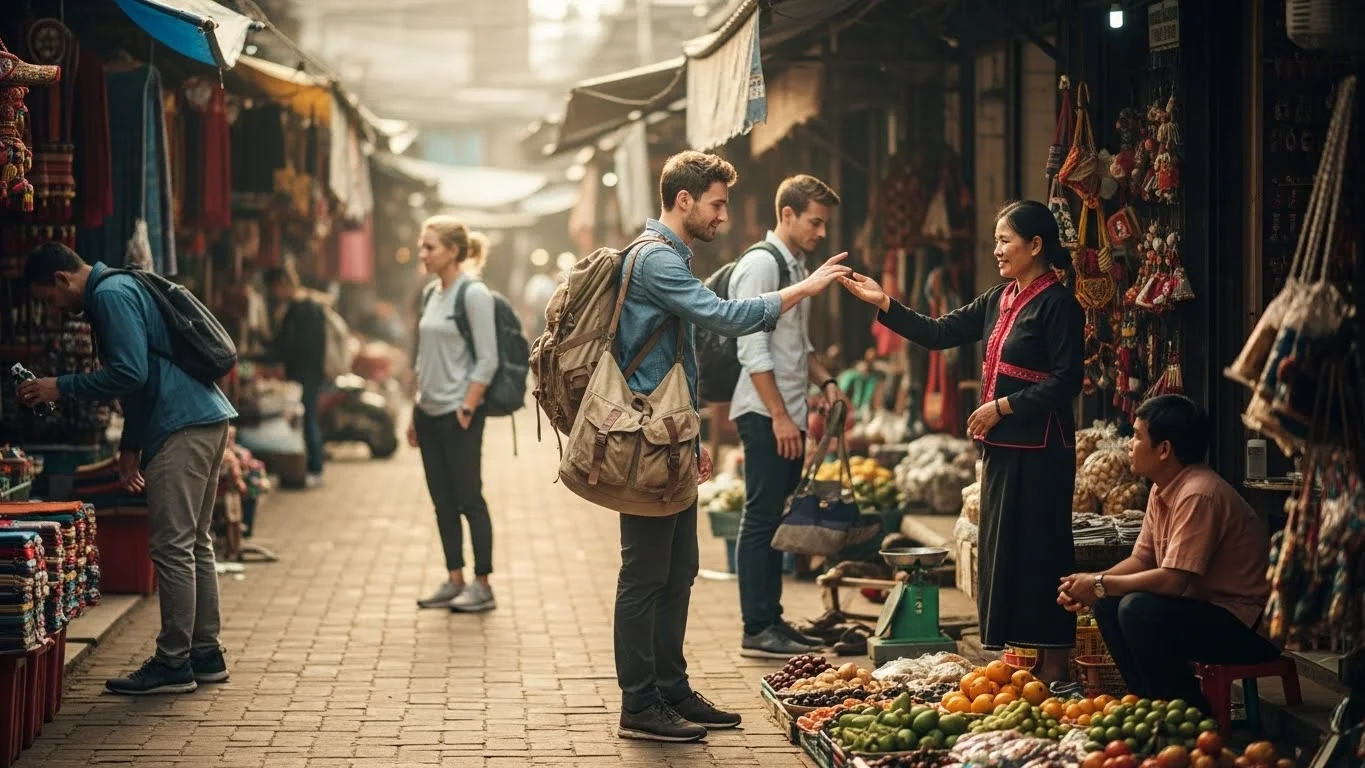
Understanding Cultural Communication Etiquette
What is Cultural Communication Etiquette?
Cultural communication etiquette refers to the rules and norms that dictate how we interact with others in different cultures. It encompasses a wide range of practices, from the way we greet someone to the topics we discuss. For example, in some cultures, direct eye contact is a sign of confidence, while in others, it may be considered disrespectful. I remember my first trip to Italy; I was surprised to find that a simple handshake isn’t always the norm. Instead, I quickly learned that a warm hug or kiss on the cheek could mean much more in terms of friendliness and connection.
Importance for Budget Travelers
As budget travelers, we often rely on local interactions for guidance, recommendations, and support. Understanding cultural communication etiquette can significantly enhance our travel experiences. When we respect local customs, we create positive interactions, which can lead to unexpected opportunities, discounts, or even friendships. During my travels, I found that a simple “hello” in the local language could open doors and make locals more eager to help. Learning these nuances not only deepens our understanding of the culture but also makes our adventures more enjoyable and enriching. Read Interesting article: Mastering Communication Styles When Backpacking Abroad
Key Cultural Differences to Consider
Verbal Communication Styles
One of the first things I noticed while traveling is that people communicate differently based on their cultural backgrounds. In some countries, being straightforward is valued, while in others, indirect communication is preferred. For instance, while in Japan, I learned that saying “no” directly can be seen as rude. Instead, people might use softer phrases to convey disagreement. I found that picking up on these styles helped me navigate conversations more smoothly.
Non-Verbal Communication Cues
Non-verbal communication is another critical aspect that varies widely across cultures. For example, in many Western countries, maintaining eye contact is considered a sign of honesty, while in certain Asian cultures, it might be viewed as confrontational. I remember a moment in Thailand when I enthusiastically waved at a local vendor, only to realize that waving one hand is a sign of greeting, but waving both hands is seen as a sign of disrespect. Paying attention to these cues is essential in ensuring respectful interactions.
Contextual Communication
The context of a conversation can also influence how messages are delivered and interpreted. In high-context cultures, such as those found in many Asian and Middle Eastern countries, the surrounding atmosphere, tone, and even silence carry a lot of weight. In contrast, low-context cultures, like those in the U.S. or Germany, often rely more on explicit verbal communication. When I traveled to Egypt, I noticed that conversations often drifted into personal territory before any business discussions began. Understanding this helped me build rapport before getting to the point, making my interactions feel more genuine.
Country-Specific Communication Etiquette
Asia
Japan: Bowing and Politeness
In Japan, bowing is a traditional greeting that expresses respect. The depth of the bow can indicate the level of respect you are showing. I remember being taught that a slight bow is sufficient for casual greetings, while a deeper bow is reserved for more formal occasions. This small gesture made a big difference in how I connected with the locals.
China: Indirect Communication
In China, direct communication can sometimes be perceived as aggressive. I learned that it’s best to approach conversations with subtlety. When asking questions or making requests, phrasing them in a way that allows for a comfortable response is key. I often found myself using phrases like, “Would you be open to…” to create a more inviting atmosphere.
Europe
France: Formal vs. Informal Address
In France, addressing someone informally can be seen as disrespectful unless you have established a rapport. I learned to use “Monsieur” or “Madame” until a friendlier tone was established. This subtlety made my interactions smoother and helped me enjoy the French cafés even more.
Germany: Directness and Honesty
Germans value honesty and directness in conversation, which I found refreshing. When I visited Germany, I appreciated the straightforward approach. It helped me understand expectations better, and I noticed that this directness often led to quicker solutions when seeking help or information.
Africa
South Africa: Multilingual Communication
South Africa is rich in languages and dialects, and I found that many locals switch between languages in conversations. Being open to this diversity and trying to pick up a few words in different languages can create a connection that transcends simple cultural barriers.
Nigeria: Respect for Elders
In Nigeria, respect for elders is paramount. I learned to greet older individuals first and use titles like “Sir” or “Ma.” This practice not only shows respect but also opens up deeper conversations with the locals, enriching my travel experience.
Latin America
Mexico: Personal Space and Touch
In Mexico, personal space tends to be smaller than what I was used to. Touching arms or shoulders during conversation is common and signifies warmth. I remember feeling a little taken aback at first, but I quickly adapted and found it a beautiful way to connect.
Brazil: Warmth and Friendliness
Brazilians are known for their warmth and friendliness, and I discovered that a smile can go a long way. Greeting with a kiss on the cheek and expressing enthusiasm in conversations made locals feel comfortable and welcomed me into their community.
Practical Tips for Communicating Effectively
Learning Basic Local Phrases
One of the best ways I’ve found to make connections while traveling is by learning a few key phrases in the local language. It doesn’t have to be an entire conversation; just a simple “thank you,” “please,” or “hello” can work wonders. I remember visiting Spain and practicing my Spanish with shopkeepers. Their faces lit up when I attempted to speak their language, even if my pronunciation wasn’t perfect. These small efforts often lead to warmer interactions and a sense of camaraderie. I encourage everyone to take a moment to learn a few basic phrases before visiting a new country; it really shows respect for the culture.
Utilizing Translation Apps
In our digital age, translation apps have become indispensable tools for travelers. I’ve used apps like Google Translate and Duolingo to bridge the communication gap in various situations. On one trip to Vietnam, I stumbled upon a fantastic street food stall but had no idea how to order. After a quick consultation with my translation app, I managed to convey my order with a smile. The vendor appreciated the effort, and I ended up getting recommendations for other local delicacies. I recommend downloading these apps before your trip, especially if you’re visiting a country with a language that uses a different script.
Observing Local Customs
Another effective way to communicate respectfully is by observing how locals interact with each other. I’ve found that just sitting back and watching can provide invaluable insights. During my time in Italy, I noticed how people would greet each other with warmth and familiarity, often taking a moment to ask about family or health before diving into business. This inspired me to adopt a similar approach when engaging with locals. By being observant and adapting to the social norms, we can make our interactions feel more genuine and heartfelt.
Body Language and Gestures
Body language is a universal form of communication, but it varies significantly across cultures. I learned this the hard way during a trip to Greece, where I accidentally used a gesture that is perfectly innocent in my culture but considered rude there. It was a humbling experience that made me realize the importance of being aware of non-verbal cues. Researching common gestures beforehand can help avoid potential misunderstandings. I also discovered that a warm smile and open posture go a long way in any culture, signaling friendliness and approachability. Read Interesting article: Essential Dining Etiquette Tips for Cultural Travel Adventures
Budget-Friendly Ways to Learn Cultural Etiquette
Online Resources and Apps
Thanks to the internet, there are countless resources available to help us learn about cultural etiquette on a budget. Websites like CultureGrams and YouTube channels dedicated to travel can provide quick insights into what to expect in different countries. I found several free online courses on platforms like Coursera that cover cultural communication. These resources allowed me to prepare for each destination without breaking the bank. I suggest setting aside a little time before your trip to explore these options; it can make a big difference in your experience.
Local Workshops and Classes
If you have the opportunity, I highly recommend attending local workshops or classes when you arrive at your destination. Many places offer inexpensive courses that cover local customs, traditional cooking, or even language lessons. I took a cooking class in Thailand, where not only did I learn to make a delicious green curry, but I also gained insights into the cultural significance of various ingredients and cooking methods. Engaging in these activities helped me connect with local people and gain a deeper understanding of their culture.
Engaging with Locals
One of the best ways to learn about cultural etiquette is simply by talking to locals. I’ve often found myself in conversations with people I met at cafes or parks, asking them about their customs and traditions. Many locals appreciate the curiosity and are happy to share their knowledge. During my trip to Morocco, I struck up a conversation with a shop owner who not only taught me about bargaining but also shared fascinating stories about his culture. Engaging with locals not only helps us learn but often leads to friendships that enrich our travels.
Common Miscommunications to Avoid
Assumptions About Language Proficiency
While it’s easy to assume that everyone speaks English, that’s not always the case. I’ve been caught off guard a few times when locals didn’t understand my language or my accent. It’s essential to approach conversations with patience and an open mind. When I traveled to rural areas in Eastern Europe, I made a point to slow down and use simple words, sometimes even resorting to gestures. This approach often led to laughter and camaraderie, breaking down any language barriers.
Misinterpretations of Gestures
As I mentioned earlier, gestures can vary widely in meaning across cultures. I once made a thumbs-up gesture in the Middle East, only to be met with puzzled looks. I learned that this gesture can be offensive in that region. It’s worth taking some time to research common gestures and their meanings before traveling. I’ve found that a little knowledge can prevent awkward situations and foster better connections.
Ignoring Local Norms
Finally, one of the biggest pitfalls I’ve noticed is ignoring local norms or customs. Whether it’s dress codes, dining etiquette, or social practices, being mindful of the local way of life shows respect and willingness to adapt. During my visit to a traditional tea house in Morocco, I learned the importance of using my right hand to eat and drink. Such insights not only helped me fit in but also deepened my appreciation for the local culture.
Understanding Cultural Communication Etiquette
What is Cultural Communication Etiquette?
Cultural communication etiquette encompasses the rules and norms that shape how we interact with people from different backgrounds. These can include greetings, body language, and even the topics we choose to discuss. For instance, in some cultures, it’s customary to ask about one’s family as a way of establishing a connection, while in others, that might be seen as overly personal at first meeting. I remember a trip to Morocco where I quickly learned that asking about someone’s family is not only common but also a sign of genuine interest. It made conversations flow much more naturally.
Importance for Budget Travelers
For budget travelers like us, understanding cultural communication etiquette can transform our experiences. We often rely on local recommendations and support, so respecting local customs can enhance our interactions. During my travels, I found that demonstrating respect for local traditions opened up new opportunities. For example, while in Vietnam, I greeted locals with a smile and a “xin chào” (hello). This simple act often led to invites to local homes or shared meals, making my journey far more enriching than I could have imagined.
Key Cultural Differences to Consider
Verbal Communication Styles
As I ventured into different countries, I noticed how varied communication styles could be. In some places, like Italy, conversations are animated and expressive, whereas in more reserved cultures, like Finland, people might prefer brevity. When I was in Italy, I found myself drawn into lively discussions, where interruptions were common and encouraged. This experience taught me that understanding these verbal styles helps us align our communication with the local norms, making our interactions smoother and more enjoyable.
Non-Verbal Communication Cues
Non-verbal communication is a fascinating part of cultural etiquette that can change the way we connect with others. For example, while in India, I learned that the head nod can mean different things depending on the context—it can indicate agreement, acknowledgment, or simply that the person is listening. I remember being confused at first, but once I paid attention and adjusted my responses accordingly, my conversations became much more engaging. These non-verbal cues are often just as crucial as the words we say, so being aware of them can make a world of difference.
Contextual Communication
The context in which we communicate can greatly influence the message being conveyed. In cultures with high-context communication, like those in Japan or the Middle East, much is left unsaid, and the surrounding environment plays a vital role in conversations. For example, when I visited Japan, I quickly realized that silence can be just as meaningful as spoken words. I learned to be patient and allow for pauses in conversation, which often led to deeper discussions. Understanding the context helps us navigate social interactions more effectively, preventing miscommunications that could arise from differing expectations.
Country-Specific Communication Etiquette
Asia
Japan: Bowing and Politeness
In Japan, bowing is an essential part of communication, expressing respect and acknowledgement. I was amazed by the various degrees of bowing—something I hadn’t considered before. I learned that the depth and duration of a bow can convey different meanings, and I made it a point to practice this during my stay. It was a simple gesture, but it opened up many doors and created a bond with the locals.
China: Indirect Communication
In China, being direct can sometimes lead to misunderstandings. I learned to approach conversations with an air of subtlety. When I wanted to ask for a favor, I would preface my request with a compliment or context, which made the other person feel comfortable and valued. This approach not only eased the interaction but often resulted in a positive outcome.
Europe
France: Formal vs. Informal Address
In France, I quickly learned that formality matters. Initially, I made the mistake of addressing someone informally without establishing rapport. It was a bit awkward! I soon realized that using titles like “Monsieur” or “Madame” was a sign of respect. This small adjustment made my interactions much more pleasant, especially when dining in cafes or shops.
Germany: Directness and Honesty
During my travels in Germany, I appreciated the straightforward nature of conversations. People would get right to the point, which I found refreshing after navigating more indirect communication in other cultures. It helped me understand what was expected and what could be improved in my own interactions. Embracing this directness made getting assistance much easier and more efficient.
Africa
South Africa: Multilingual Communication
In South Africa, I encountered a beautiful mix of languages. Many locals switch between different languages mid-conversation, which I found incredibly fascinating. I made it a point to learn a few basic words in Afrikaans and Zulu, which not only pleased the locals but also created a sense of camaraderie. It truly enriched my experience, making me feel more connected to the culture.
Nigeria: Respect for Elders
One of the most striking aspects of Nigerian culture is the immense respect given to elders. I learned to greet older individuals first and use titles like “Sir” or “Ma.” This simple practice opened up many conversations and stories shared by the elders, making my experience more meaningful. Their wisdom and insights were invaluable, and I treasure those moments immensely.
Latin America
Mexico: Personal Space and Touch
In Mexico, I found that the concept of personal space is much closer than I was used to. Touching someone’s arm or shoulder during conversations is common and signifies warmth and friendliness. I initially felt a bit uncomfortable with this, but I soon embraced it and discovered that it added a layer of connection that I had not experienced before.
Brazil: Warmth and Friendliness
Brazilian culture is vibrant and full of life, characterized by warmth and friendliness. Greeting someone with a kiss on the cheek and an enthusiastic “Olá” made me feel instantly welcomed. I realized that being open and expressive in conversations not only broke the ice but also deepened relationships with the locals. It’s an experience that I truly cherished and appreciated throughout my travels in Brazil.
Frequently Asked Questions
What is cultural communication etiquette?
Cultural communication etiquette refers to the rules and norms that dictate how we interact with others in different cultures. This includes practices such as how we greet others and the topics we discuss, which can vary significantly from one culture to another.
Why is understanding cultural communication etiquette important for budget travelers?
For budget travelers, understanding cultural communication etiquette can enhance travel experiences by fostering positive interactions with locals. Respecting local customs can lead to helpful recommendations, discounts, and even friendships, making trips more enriching.
What are verbal communication styles, and how do they differ across cultures?
Verbal communication styles vary based on cultural backgrounds. Some cultures value directness, while others prefer indirect communication. For instance, in Japan, saying “no” directly can be seen as rude, leading to the use of softer phrases to convey disagreement.
How does non-verbal communication differ in various cultures?
Non-verbal communication, including gestures and body language, varies widely across cultures. For example, in many Western countries, maintaining eye contact is a sign of honesty, while in certain Asian cultures, it may be perceived as confrontational.
What is contextual communication, and why is it important?
Contextual communication refers to how the surrounding atmosphere, tone, and even silence influence messages in conversations. In high-context cultures, much is left unsaid, while low-context cultures rely more on explicit verbal communication, which can affect understanding and interaction.
What is the etiquette for greetings in Japan?
In Japan, bowing is a traditional greeting that expresses respect. The depth of the bow can indicate the level of respect being shown, with a slight bow for casual greetings and a deeper bow for more formal occasions.
How should one communicate in China?
In China, it is best to use indirect communication. Directness can be perceived as aggressive, so approaching conversations with subtlety and using phrases that invite a comfortable response is key.
What are some communication customs in Nigeria?
In Nigeria, showing respect for elders is paramount. It is customary to greet older individuals first and use titles like “Sir” or “Ma,” which opens up deeper conversations and enriches the travel experience.
What are practical tips for effectively communicating while traveling?
Practical tips include learning basic local phrases, utilizing translation apps, observing local customs, and being aware of body language and gestures to ensure respectful interactions with locals.
What common miscommunications should travelers avoid?
Travelers should avoid making assumptions about language proficiency, misinterpreting gestures, and ignoring local norms, as these can lead to misunderstandings and hinder positive interactions.