
Traveling is one of my favorite ways to expand my horizons, especially through food. Understanding cultural dining etiquette becomes essential when exploring new places on a budget. It can enhance our experiences and even save us from awkward moments! For more insights, check out Mastering Cultural Dining Etiquette: A Backpacker’s Guide.
Understanding Cultural Dining Etiquette
The Importance of Dining Etiquette Abroad
When I first traveled abroad, I quickly realized that dining etiquette varies greatly from one culture to another. For some, it’s all about the food, but for others, the manner in which you eat is just as important. I remember a particular trip to Italy where I accidentally committed a faux pas by asking for cheese on my seafood pasta. The look on the server’s face reminded me that food traditions are often tied to a culture’s history and pride. Understanding these customs not only helps avoid embarrassing moments but also shows respect for the local culture.
Dining etiquette can also enhance our travel experience. I’ve found that when I adhere to local customs, I often receive warmer service and even some insider tips from locals. Whether it’s knowing when to start eating, how to use utensils, or the importance of toasting, these customs can open doors to deeper connections with the people I meet. I believe that every meal is an opportunity to immerse ourselves in the culture we are visiting. To further explore these customs, I recommend reading Navigate Dining Etiquette: Cultural Tips for Budget Backpackers.
How Cultural Norms Affect Dining
Every culture has its own set of dining norms that reflect its values and traditions. For instance, in many Asian countries, it’s customary to share dishes, which I learned while dining in Thailand. We all sat around a table, and each dish was shared family-style. It was such a communal experience! On the other hand, in many Western cultures, it’s common to order individual meals. I’ve noticed that understanding these differences can significantly impact how we interact with the locals and enjoy our meals.
Another example is the way we greet before a meal. In some cultures, saying a prayer or expressing gratitude before eating is expected. I remember visiting a family in Turkey, where they invited me to join their meal and shared a short prayer before digging in. It made me feel included and respected. In many cases, these norms may seem small, but they carry a lot of significance in the context of that culture.
Additionally, the seating arrangement can also hold meaning. In some cultures, the guest of honor sits at a specific place at the table, and it’s considered disrespectful to ignore this custom. I learned this the hard way when I accidentally took a seat that was reserved for the host’s father during a dinner in Spain. The subtle communications that happen around the dining table can be quite telling about the culture, and it’s worth doing a little research before your travels.
As I continued to travel, I became more observant of how others interacted during meals. I noticed that people often gauge the atmosphere of the dining experience before proceeding. This taught me the importance of adapting to the environment, whether that means engaging in light conversation or simply enjoying the food in a quieter setting. Dining is not just about eating; it’s about connection, and I believe that understanding these cultural nuances can make our experiences much richer.
Incorporating these insights into my travels has made a world of difference. Now, I take the time to learn about the dining customs of each country I visit, and it has not only improved my interactions but has also helped me develop a deeper appreciation for the local culture. So, if you find yourself traveling soon, remember that every meal is an opportunity to connect, learn, and grow.
In the next section, we’ll dive into some budget-friendly dining strategies that can help us enjoy local flavors without breaking the bank. Eating well while traveling doesn’t have to be expensive, and I’ve got tips that can help stretch those dollars while still indulging in culinary delights.
Budget-Friendly Dining Strategies
Finding Local Eateries and Street Food
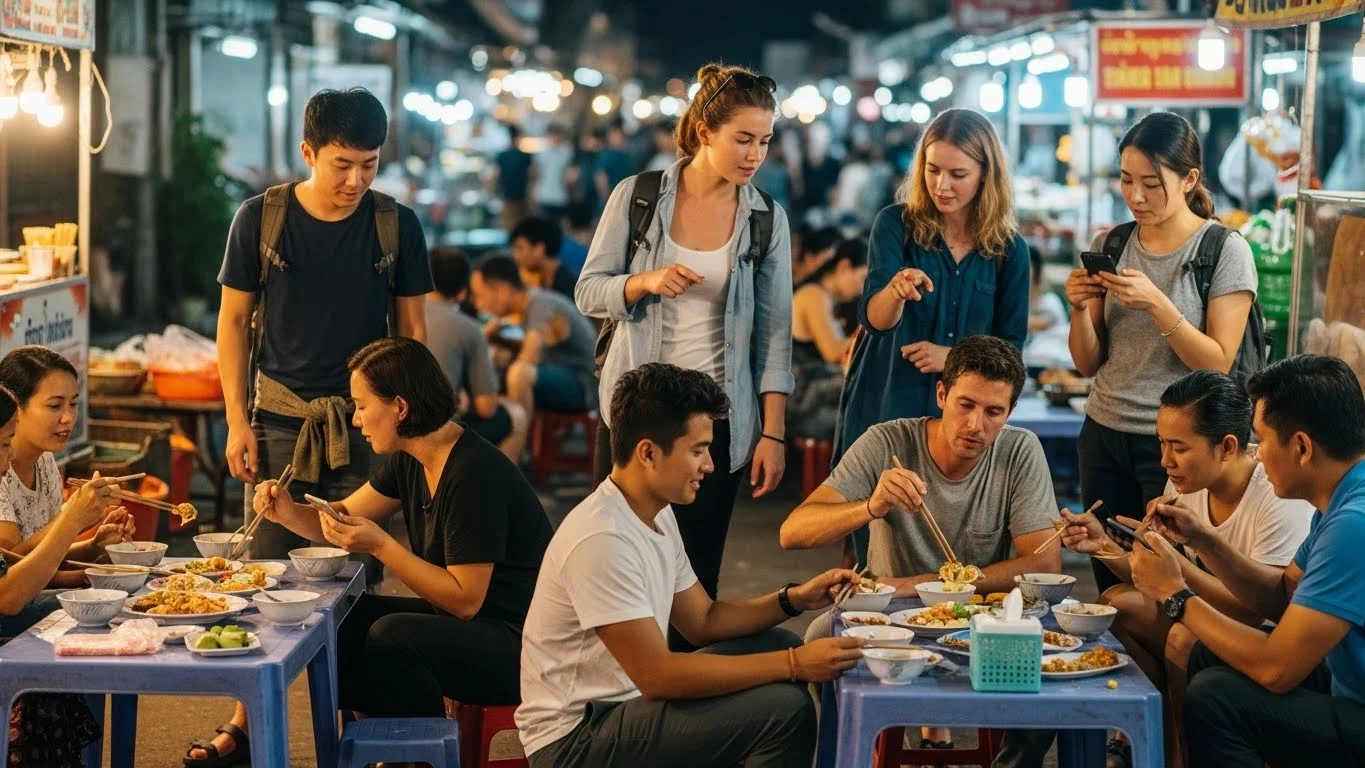
One of the best parts about traveling is discovering local eateries and street food. I remember wandering the vibrant streets of Bangkok, where the aroma of grilled meats and stir-fried noodles filled the air. Instead of heading to tourist spots, I ventured into small alleyways, where local vendors served up delicious meals at a fraction of the cost. It was here that I found my favorite dish, Pad Krapow, a stir-fry dish with basil and chili that left my taste buds dancing.
Eating at local eateries not only saves money but also provides a more authentic experience. I’ve often found that these spots are where the locals gather, and that’s always a good sign! Plus, the conversations I had with the owners or other patrons often led to discovering hidden gems in the city. I recommend asking locals for their favorite places to eat—it’s a great way to connect and learn about the culture through food.
Street food is another fantastic option. While some might be hesitant about hygiene, I’ve learned that many street vendors take great pride in their food. Seeing a bustling line of locals waiting to get their meal is usually a good indicator of quality. I’ve tried everything from tacos in Mexico City to crepes in Paris, and each bite was a delightful experience. Just remember to look for freshness—if it’s busy and the food is being prepared right in front of you, you’re likely in for a treat!
Using Dining Apps and Websites
In this age of technology, I’ve found that using dining apps and websites can be incredibly helpful while traveling on a budget. Apps like Yelp, TripAdvisor, and Google Maps can guide you to restaurants that fit your budget and taste preferences. I remember using Yelp in Barcelona, where I discovered a tapas bar that offered incredible deals during happy hour. With just a few swipes, I was able to find a spot that not only fit my wallet but also had rave reviews from locals and travelers alike.
Moreover, many apps allow you to filter by cuisine, price range, and user ratings, which has saved me countless hours of searching. I also appreciate how some applications have sections for special deals or discounts, which can be a game-changer when you’re trying to make your travel budget stretch. While I love trying new things, I also want to ensure I’m getting the best value for my money.
Another valuable resource is food blogs focused on budget-friendly dining. I’ve come across many bloggers who share their experiences and tips, often highlighting lesser-known eateries that might not appear on mainstream apps. I recommend following a few blogs or social media accounts dedicated to the food culture of the places you plan to visit. It adds another layer of excitement to your culinary adventure! For more tips, check out Essential Dining Etiquette Tips for Cultural Travel Adventures.
Understanding Menu Pricing and Tipping Practices
As I traveled more, I quickly learned that understanding menu pricing and tipping practices is crucial for managing my dining budget. Prices can vary significantly depending on the region, and knowing what to expect can save you from any surprises. For instance, in some countries, the listed price may not include tax or service charges, while in others, tipping is an integral part of the dining experience.
In many European countries, like France and Italy, service is typically included in the bill, but it’s still common to leave a small tip for excellent service. I remember dining in Paris and being unsure about how much to leave. After some observation, I decided to leave a few coins as a token of appreciation, which felt right. On the flip side, in countries like the United States, a tip of 15-20% is often expected, which I had to keep in mind when budgeting for meals.
Before traveling, I suggest doing a little research on the tipping customs of your destination. Some cultures might even consider tipping rude! Understanding these nuances not only helps us budget better but also shows respect for the local customs.
In my experience, being aware of these dining strategies has transformed my culinary adventures. I’ve learned that enjoying local flavors doesn’t have to be an expensive endeavor. With a little effort, we can indulge in authentic dining experiences while keeping our budget in check. Next, we’ll explore dining etiquette by region, diving into what to expect in terms of customs and practices around the world.
Dining Etiquette by Region
Asia
Chopsticks Usage in China
When I first attempted to use chopsticks in China, I realized it was not just a skill but also a way to show respect for the culture. Holding them the right way and mastering the art of picking up food took some practice! I remember my embarrassment when I first dropped a piece of sushi on the table. Luckily, the locals were friendly and amused rather than judgmental. I learned that it’s important to never stick chopsticks upright in a bowl of rice, as it resembles incense at funerals—a complete no-no. Instead, resting them neatly on the provided holder or across your bowl shows an understanding of local customs.
Dining Customs in Japan
Japan was another eye-opening experience for me. One of the first things I noticed was how the Japanese people take their dining rituals seriously. From bowing before meals to saying “Itadakimasu” as a form of thanks, these gestures added a beautiful layer to the dining experience. I remember sitting in a cozy izakaya, trying to remember all the etiquette rules. For example, it’s considered rude to point your chopsticks or stick them into your food. Instead, resting them on the side of your plate is the way to go. I was fascinated by how these small practices showed gratitude and respect for the meal and the chef. It made every bite feel more meaningful.
Africa
Sharing Food in Ethiopia
When I visited Ethiopia, I was introduced to the traditional way of eating called ‘Gursha,’ which involves sharing food directly from a communal plate. I remember feeling a bit hesitant at first, but once I joined in, it was an incredible bonding experience. The injera, a sourdough flatbread, served as both the plate and utensil. I learned to tear off pieces and scoop up the delicious stews. This practice reflects the deep sense of community in Ethiopian culture, and I felt honored to be included. I realized it’s about more than just sharing food; it’s about sharing stories and forging connections.
Dining Etiquette in Morocco
Moroccan dining customs were equally enriching. When I was invited to a traditional meal, I was amazed by the beautiful presentation of the food, especially the tagines. I learned that it’s customary to eat with your right hand only, as the left hand is considered unclean. I remember awkwardly trying to navigate this rule while enjoying a delicious lamb tagine. The host’s laughter and encouragement made me feel at ease, and I found joy in mastering this custom. At the end of the meal, it’s also polite to thank your host with a few kind words in Arabic, which I tried to memorize—and trust me, it was worth the effort!
Europe
Table Manners in France
Dining in France is an art form, and experiencing it firsthand was a dream come true for me. I learned that meals are meant to be savored, not rushed. I remember sitting at a café in Paris, where I was instructed to keep my hands on the table (but not my elbows!). I found the practice of using a knife and fork for nearly everything fascinating, even for foods we might eat with our hands back home. Plus, if you’re dining with locals, it’s common to wait for everyone to be served before starting to eat. I truly appreciated how these customs made the meal feel like a shared experience, rich with conversation and connection.
Understanding Tapas Culture in Spain
In Spain, I discovered the delightful world of tapas—small dishes meant for sharing. The first time I stepped into a tapas bar, I was overwhelmed by the aroma and variety. I learned that it’s polite to order a few dishes and share them among the group rather than ordering individual meals. One memorable evening, I shared a table with locals who patiently taught me how to properly enjoy each dish. They emphasized that it’s common to leave some food on your plate as a compliment to the chef, which took me by surprise! Embracing this culture of sharing really made me feel like I was part of something bigger.
Latin America
Dining Etiquette in Mexico
In Mexico, dining etiquette has its unique charm. I found that meals are often lively events, with lots of conversation and laughter. One lesson I quickly learned was to never start eating until the host says “buen provecho,” which is akin to saying “enjoy your meal.” I remember one evening at a local family gathering, where the warmth and hospitality made me feel right at home. I also appreciated the emphasis on finishing everything on my plate, as it shows appreciation for the cook’s effort. It’s all about connection and joy!
Understanding Asado Culture in Argentina
Experiencing an asado in Argentina was one of the highlights of my travels. This traditional barbecue is more than just a meal; it’s a social gathering. I remember being invited to a friend’s family asado, where I was taught the art of grilling meats over an open flame. What struck me was the importance of honoring time and patience in this practice. I learned that it’s common to start the gathering in the late afternoon and span into the evening, allowing everyone to enjoy each other’s company. Sharing a glass of Malbec while savoring perfectly grilled meats was a memory I’ll treasure forever.
Middle East
Dining Customs in Turkey
Dining in Turkey was an experience filled with warmth and generosity. I recall being invited to a family meal where I was greeted with a spread of various dishes. It’s customary to offer food to your guests multiple times, and I discovered that refusing can be seen as impolite. I felt like I was being treated like family! Also noteworthy was the way we shared bread, with everyone taking from the same basket. This communal aspect made me feel connected to the culture and the people.
Etiquette in Persian Cuisine
My experience with Persian cuisine was equally delightful. When dining in Iran, I learned that meals often start with a prayer or a moment of gratitude. I was captivated by the beauty of the table setting, known as the “sofreh,” which often includes a variety of dishes to share. I found the practice of serving guests first to be a lovely gesture of hospitality, and I felt honored each time I was offered food. The importance of tea in Persian culture also stood out; it’s a symbol of friendship and hospitality, and I loved sharing countless cups with new friends.
Frequently Asked Questions
What is the importance of dining etiquette when traveling abroad?
Dining etiquette varies greatly from culture to culture, and understanding these customs can help avoid embarrassing moments and show respect for local traditions. It can also enhance travel experiences by fostering warmer interactions with locals.
How do cultural norms affect dining experiences?
Cultural norms influence how meals are shared and enjoyed. For example, in many Asian cultures, it is customary to share dishes, while in Western cultures, ordering individual meals is more common. Understanding these differences can enrich interactions with locals.
What should I know about greeting before a meal in different cultures?
In some cultures, it is customary to express gratitude or say a prayer before eating. These gestures can foster a sense of inclusion and respect among diners.
What is ‘Gursha’ in Ethiopian dining culture?
‘Gursha’ is a tradition in Ethiopian dining where food is shared directly from a communal plate, reflecting community and connection among diners.
What are some budget-friendly dining strategies for travelers?
Travelers can save money by seeking out local eateries and street food, which often provide authentic experiences at lower costs. Using dining apps and websites can also help find budget-friendly options.
How should I approach tipping in different countries?
Tipping practices vary by region; in some countries, service is included in the bill while in others, a tip is expected. Researching local customs before traveling can prevent misunderstandings and show respect for the culture.
What dining etiquette should be observed in France?
In France, meals are meant to be savored, and it is customary to keep hands on the table (but not elbows) and to wait for everyone to be served before starting to eat.
What are some key aspects of tapas culture in Spain?
In Spain, tapas are small dishes meant for sharing. It is polite to order several dishes to share among the group, and leaving some food on your plate can be seen as a compliment to the chef.
What is the significance of saying ‘buen provecho’ in Mexico?
In Mexico, it is customary to wait for the host to say ‘buen provecho’ before starting to eat, which emphasizes appreciation for the meal and the cook’s efforts.
What dining customs should be noted in Turkey?
In Turkey, it is customary to offer food to guests multiple times, and refusing food can be seen as impolite. Sharing bread from the same basket is also a common practice, fostering a sense of community.