
When you’re out exploring the world on a budget, the last thing you want to think about is an emergency. However, having the right contacts can make all the difference. Let’s dive into why these contacts are essential for every backpacker.
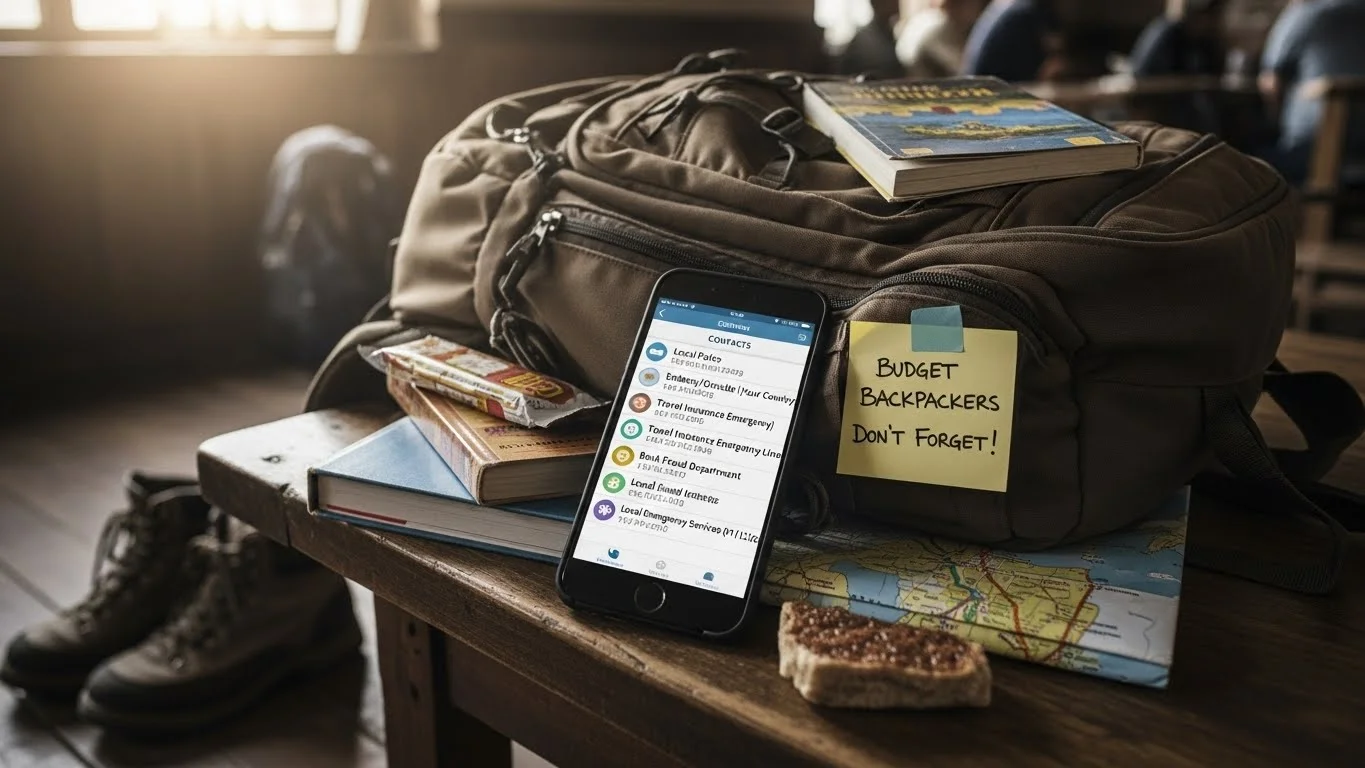
Understanding the Importance of Emergency Contacts
Why Emergency Contacts are Crucial for Backpackers
As a backpacker, I often find myself in places that are far from home, and sometimes, things don’t go as planned. I remember one trip where I got lost in a new city. It was pretty unsettling, but I quickly realized how important it is to have emergency contacts at my fingertips. These contacts can be your lifeline in unexpected situations. Whether it’s a lost wallet, a sudden illness, or an emergency situation, knowing who to call can save you time and stress.
Emergency contacts are more than just phone numbers; they represent safety and security. They help you feel connected, even when you’re miles away from familiar surroundings. I’ve learned that having a reliable network means I can focus on enjoying my adventure without constantly worrying about what might happen next. Read Interesting article: Essential Health Precautions for Budget Backpackers Abroad
Types of Emergencies Backpackers Might Face
Backpacking is an exhilarating experience, but it comes with its own set of challenges. From my travels, I’ve encountered various types of emergencies that every backpacker should be prepared for:
- Medical Emergencies: Whether it’s a sudden illness or an injury from a fall, knowing where to find medical help is crucial. I once twisted my ankle hiking, and thankfully I had the contact info for a local clinic.
- Theft: Unfortunately, theft can happen anywhere. I’ve had my phone stolen on a crowded bus. Having the local police number saved me from feeling completely helpless.
- Natural Disasters: Depending on where you are traveling, you might face natural disasters like earthquakes or floods. Knowing who to call for help can save lives.
- Lost or Missing Persons: If you’re traveling with friends, it’s essential to know how to report someone missing. I once had a friend fail to return from a day hike, and knowing whom to contact was incredibly important.
- Travel Disruptions: Missed flights and canceled trains can leave you stranded. Having the contact information for your accommodation or local travel services can help you rebook quickly.
Essential Emergency Contacts to Have
Local Emergency Services
When traveling, the first step to staying safe is knowing how to reach local emergency services. I’ve found that having these numbers handy can lead to quicker responses in times of need.
Police
Every country has its own emergency number for police. In some places, it’s as simple as dialing 112 or 911, while others have different numbers. Before my trips, I always make a note of the local police number in my phone. During my last trip to Thailand, I had to call the police due to a theft. Knowing their number made the process so much smoother.
Fire Department
While I hope to never need to call the fire department, it’s still important to have their number saved. Fires can happen, and knowing who to contact can save lives. I always check online for the local emergency number for fire services before I arrive at a new destination.
Medical Services
Medical emergencies are often unexpected, which is why it’s crucial to have local medical service contacts. I’ve learned that some countries have unique numbers for ambulances. During my travels in Europe, I found out that 112 connects you to emergency medical services in many countries. It’s a good idea to familiarize yourself with these numbers before you need them.
Embassies and Consulates
Having the contact information for your country’s embassy or consulate is another cornerstone of backpacker safety. They can assist in numerous ways, especially if you lose your passport or face legal issues.
How to Find Your Country’s Embassy
Finding your embassy’s contact details can be as easy as a quick internet search. I always bookmark the embassy’s website before I travel. They usually list their contact numbers and emergency protocols. When I was in Chile, my friend lost her passport, and the embassy was incredibly helpful in getting her a temporary replacement.
What Services Embassies Provide
Embassies can assist with a variety of issues, such as lost passports, legal troubles, and even emergency evacuations in extreme situations. Knowing that I can contact my embassy provides an incredible sense of security while traveling. I once had to rely on them for assistance when I faced unexpected travel delays due to a local strike. They were a great resource!
Travel Insurance Contacts
Travel insurance is an essential part of backpacking. I never travel without it. Having the insurance provider’s contact details handy can be invaluable when something goes wrong. Read Interesting article: Essential Airport Safety Tips for Budget Backpackers
How to Choose the Right Travel Insurance
Choosing travel insurance can feel overwhelming, but I always look for a policy that covers medical emergencies, trip cancellations, and theft. I recommend comparing different providers and reading reviews from fellow travelers. I learned the hard way that not all policies cover the same things!
Contacting Your Insurance Provider
Before I travel, I always write down my insurance provider’s contact details and keep them in my wallet. In my experience, it’s crucial to know how to contact them, especially in a medical emergency. I once had to call my provider from a hospital in a foreign country, and having that number saved me time and stress.
How to Organize Your Emergency Contacts
Creating a Contact List
One of the first steps I take before a trip is creating a comprehensive contact list. I find that writing down essential numbers helps me remember them better, and it’s a great way to keep everything organized. I usually include local emergency services, my embassy, and any travel insurance contacts. Additionally, I add friends or family members back home who can help if needed. Having this list handy makes it so much easier to reach out in an emergency.
When I create my contact list, I also categorize the numbers. For instance, I have a section for medical services, another for emergency services, and one for my travel insurance. This way, if something happens, I can quickly find the number I need. I remember when I was in Spain and a friend had an allergic reaction. We were able to find the local hospital’s number in seconds because it was clearly listed on my contact sheet.
Using Digital Tools and Apps
In today’s tech-savvy world, using digital tools can be a lifesaver. I’ve found that several apps can help me store and organize emergency contacts efficiently. For example, I use a notes app that allows me to create a dedicated folder for travel contacts. Some apps even let you share your location, making it easier for others to find you in case of an emergency.
Another helpful tool I discovered is a specialized travel app that stores vital information, including emergency contacts and local emergency numbers. This app can work offline, which is fantastic because I’ve often found myself in areas with limited internet access. Having everything saved in one place means I can avoid scrambling to find a signal when I’m in a tight spot.
Keeping a Physical Copy
While digital tools are super convenient, I personally believe in the importance of having a physical copy of my emergency contacts. I usually print out my contact list and keep it in my wallet or passport holder. It’s a simple backup plan in case my phone dies or gets lost — something I’ve unfortunately experienced on a couple of trips.
During one memorable adventure in Vietnam, my phone slipped out of my pocket while I was exploring a bustling market. I felt a wave of panic wash over me, but then I remembered I had a physical copy of my essential contacts. I was able to reach out to my travel insurance provider and the local police without missing a beat, which really saved me a lot of stress in that moment.
Regional Emergency Contacts: A Country-by-Country Guide
Europe
Key Emergency Numbers
Traveling through Europe has its perks, especially when it comes to emergency contact numbers. Most countries share the emergency number 112, which connects you to police, fire, and medical services. This uniformity has helped me feel more secure while traveling through countries like France, Italy, and Germany.
Useful Local Services
Besides the general emergency number, I always look for local services that can assist me. For example, in Paris, I found a great app that connects travelers with English-speaking doctors. It made a huge difference when I caught a cold during my stay. Knowing I could easily access healthcare helped ease my worries.
Asia
Key Emergency Numbers
Asia can be a bit different when it comes to emergency contacts. In Japan, for example, the emergency number is 110 for police and 119 for fire and medical emergencies. I make sure to memorize these numbers, even though I have them saved on my phone. I appreciate how helpful locals can be in emergencies, which I experienced firsthand in Thailand when I needed help finding a hospital.
Useful Local Services
In many Asian countries, there are also tourist police or dedicated services for travelers. I’ve always found it reassuring to know that there are authorities specifically trained to assist tourists. In Bali, for instance, I reached out to a local tourism office when I had questions about safety and security, and they were incredibly helpful.
South America
Key Emergency Numbers
Traveling through South America offers its own set of challenges. Each country has its own emergency numbers, so I always do my research before I go. In Brazil, for instance, the police can be reached at 190, while in Argentina, it’s 911. I jot these numbers down and keep them accessible during my travels.
Useful Local Services
In South America, I’ve found that having a contact for local tourist information can also be a lifesaver. These offices often provide assistance with everything from lost property to emergency situations. In Peru, I visited a tourist center in Cusco, and they provided me with valuable safety tips — knowing where the nearest hospital was, for instance — that proved helpful during my stay.
Africa
Key Emergency Numbers
Africa is another continent where emergency numbers greatly vary. In South Africa, the police can be reached at 10111, while in Egypt, the number is 122. I always make a point to familiarize myself with these before I travel, as each country has unique challenges and services.
Useful Local Services
In Africa, having local contacts is crucial. I’ve learned that personal recommendations can lead to trustworthy services, especially if you’re in a less touristy area. During a trip to Kenya, a local guesthouse owner helped me locate a reliable taxi service, which brought me peace of mind while exploring.
Oceania
Key Emergency Numbers
In Oceania, Australia and New Zealand share the emergency number 000, while in Fiji, it’s 911. I always keep these numbers in mind, especially since I’ve done quite a bit of backpacking in this region. The natural beauty often comes with its own set of challenges, so knowing who to call is essential.
Useful Local Services
In Australia, I’ve found that each state has local resources available for tourists. I remember when I wanted to hike in the Blue Mountains; I contacted a local ranger service to ask about safety guidelines, and they provided me with invaluable information.
Communication Tips for Backpackers
How to Stay Connected in Emergencies
Staying connected while traveling is vital, especially during emergencies. I’ve learned that having multiple ways to communicate can really make a difference. First and foremost, I always ensure that my phone is in good working order and that I have a local SIM card or an international plan. This way, I can make calls and use data without worrying about exorbitant fees.
In my experience, messaging apps like WhatsApp or Facebook Messenger are lifesavers. They allow me to connect with family and friends without incurring hefty charges, and I can send updates about my whereabouts, especially if I find myself in a tricky situation. I remember once I was stuck at a train station late at night, and being able to reach out to my friends back home kept me calm and connected.
Additionally, carrying a portable charger is a must. I can’t tell you how many times my phone battery has died at the worst possible moment. Having a reliable power source gives me peace of mind that I can always reach out for help or access important information, even if I’m on the go.
Language Barriers and Translation Apps
Language barriers can be daunting, particularly in emergencies. I’ve faced situations where I needed help, but the local language was a challenge. That’s where translation apps come into play. I highly recommend downloading a reliable translation app before you embark on your journey. Google Translate has saved me countless times, allowing me to communicate with locals when I needed directions or assistance.
During one memorable trip to a remote village in Thailand, I found myself needing to ask for help when I got lost. Thanks to my translation app, I was able to communicate with a local who directed me back to my accommodation. It was a relief to bridge that communication gap, and it made me appreciate the kindness of strangers even more.
Additionally, I often find it helpful to learn a few basic phrases in the local language, such as “Help!” or “Emergency!” This not only shows respect to the locals but can also make a significant difference in urgent situations.
Safety Tips for Budget Backpackers
Staying Aware of Your Surroundings
One of the best pieces of advice I’ve received as a backpacker is to stay aware of my surroundings. I think there’s a tendency to get lost in the adventure and forget to pay attention to what’s going on around us. I make it a point to observe my environment, especially in crowded places or unfamiliar areas. I’ve noticed that being aware allows me to spot potential threats before they escalate.
During a trip to Barcelona, I was waiting for a bus at a busy station when I noticed a group of people acting suspiciously nearby. I decided to move to a different spot, and soon after, I saw them trying to pickpocket someone. Trusting my instincts really paid off, and it reminded me that being vigilant is just as important as enjoying the experience.
Using Trusted Transportation Options
Transportation can be a tricky aspect of travel, especially for budget backpackers like myself. I’ve learned that using trusted transportation options is crucial for avoiding potential scams and unsafe situations. Whenever possible, I opt for reputable taxi services or well-known rideshare apps. Researching local transportation options before I arrive has made a significant difference in my travels.
On a recent trip to Mexico City, I relied on the local subway system, which was efficient but could be overwhelming. I made it a point to familiarize myself with the routes and schedules in advance. Not only did this save me time, but it also kept me from feeling lost or vulnerable in a new environment.
Storing Important Documents Securely
Keeping my important documents secure is something I take very seriously. I always carry copies of my passport, travel insurance, and emergency contacts, storing them separately from the originals. I learned this lesson the hard way when my wallet was stolen during a crowded festival in Brazil. Thankfully, I had a backup plan in place, which made it easier to report the theft and get assistance.
Additionally, I recommend using a money belt or a travel pouch that can be worn under clothing. This keeps money and important documents safe from pickpockets. I’ve found that being discreet about my valuables helps me feel more secure, especially when exploring bustling markets or tourist hotspots.
Common Questions and Concerns
What to Do if You Lose Your Phone or Wallet
Losing your phone or wallet while traveling can be one of the most stressful experiences, and I’ve been there. The first thing I recommend is to remain calm and take a deep breath. It’s easy to panic, but I’ve found that thinking clearly helps me navigate the situation. If I lose my wallet, I immediately check for any lost and found services in the vicinity. I’ve had luck with this in the past, especially in places like hostels or public transport stations.
Next, I contact my bank to report the lost cards and freeze my accounts if necessary. For my phone, I use tracking apps to locate it if possible. If I can’t find it, I usually visit a local mobile service provider to discuss options for getting a temporary replacement or sim card. I learned that most places are willing to help, especially if I explain my situation.
How to Report a Crime Abroad
Reporting a crime while traveling can feel daunting, but it’s essential for your safety and the safety of other travelers. If I find myself in this situation, I always go directly to the local police station. I’ve had to do this a couple of times, and it’s important to have all relevant information on hand, such as details of the incident and any identification necessary.
In one instance, after my phone was stolen, I visited the local police station in Spain. They were understanding and guided me through the process of filing a report, which ultimately helped with my travel insurance claim. Keeping a copy of the police report is crucial, as it can serve as documentation for any further claims or assistance I might need.
What to Do in a Medical Emergency
In the unfortunate event of a medical emergency, I always remember the importance of staying calm. First, I assess the situation to determine if I need immediate medical attention. If so, I contact local emergency services or go to the nearest hospital. Having the local emergency numbers saved in my phone has made this process much smoother.
In addition, I carry a small first aid kit with basic supplies like band-aids, antiseptic wipes, and pain relievers. I also make sure to have any necessary medications on hand. During a trip to Thailand, I had a minor allergic reaction, and being prepared with my own supplies and knowing where to go for help made all the difference.
Frequently Asked Questions
Why are emergency contacts crucial for backpackers?
Emergency contacts are essential for backpackers as they provide a lifeline in unexpected situations, such as a lost wallet, sudden illness, or emergencies. Having these contacts allows travelers to focus on their adventures without constant worry about potential issues.
What types of emergencies should backpackers prepare for?
Backpackers should be prepared for various emergencies, including medical emergencies (like injuries or sudden illnesses), theft, natural disasters, lost or missing persons, and travel disruptions like missed flights or canceled trains.
What are some essential emergency contacts to have while traveling?
Essential emergency contacts include local emergency services (police, fire department, medical services), your country’s embassy or consulate, and travel insurance providers. Having these contacts readily available can significantly help in emergencies.
How can I find my country’s embassy while traveling?
You can find your country’s embassy contact details through a quick internet search. It’s advisable to bookmark the embassy’s website before traveling, as they typically list their contact numbers and emergency protocols.
What should I include in my emergency contact list?
Your emergency contact list should include local emergency services, your embassy, travel insurance contacts, and friends or family members back home. Organizing these numbers into categories can make it easier to find them in an emergency.
How can digital tools help in organizing emergency contacts?
Digital tools, such as notes apps or specialized travel apps, can help store and organize emergency contacts efficiently. Some apps even work offline, allowing you to access important information without needing internet connectivity.
What are key emergency numbers in Europe?
In Europe, the key emergency number is 112, which connects you to police, fire, and medical services in many countries. It’s important to familiarize yourself with local emergency numbers before traveling.
What should I do if I lose my phone or wallet while traveling?
If you lose your phone or wallet, remain calm and check for lost and found services nearby. Contact your bank to report lost cards, and for a lost phone, use tracking apps if available. Visit a local service provider for options regarding a temporary replacement or SIM card.
How can I stay connected during emergencies while traveling?
To stay connected during emergencies, ensure your phone is in good working order, obtain a local SIM card or international plan, and use messaging apps like WhatsApp or Facebook Messenger to communicate without incurring high charges.
What steps should I take in a medical emergency abroad?
In a medical emergency, assess the situation and contact local emergency services or go to the nearest hospital. Having local emergency numbers saved on your phone and carrying a small first aid kit can help manage the situation more effectively.