
Archaeology unveils the stories of our past, revealing ancient wonders that ignite our imagination. Join me as we explore the most captivating archaeological excavations that have shaped our understanding of history. Read Interesting article: Backpacking Through Time: Affordable Ancient Ruins to See
Understanding Archaeological Excavations
Definition of Archaeological Excavations
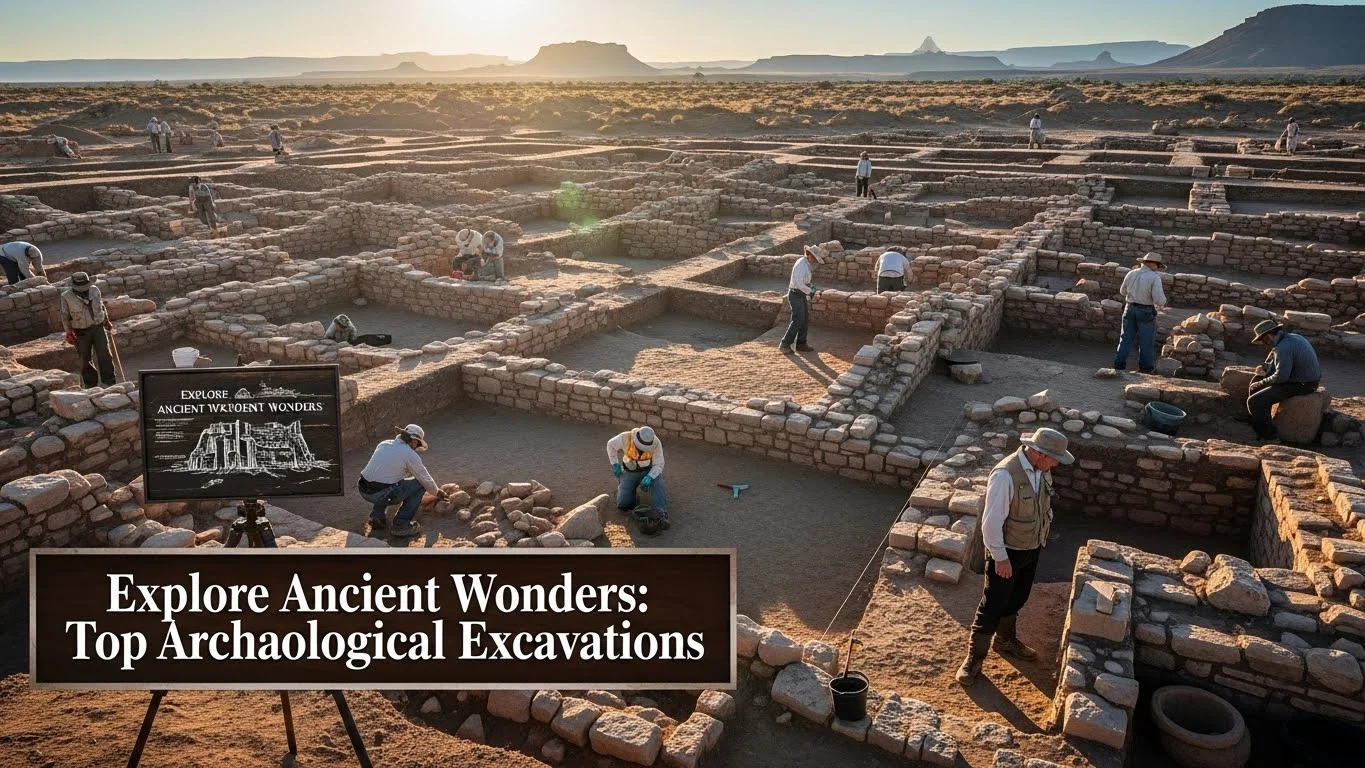
When I first stumbled upon the term “archaeological excavation,” I was fascinated by what it truly meant. Essentially, it involves systematically digging into the earth to uncover artifacts, structures, and other materials from past human activity. It’s like a treasure hunt, but instead of gold and jewels, archaeologists seek out pottery, tools, and even the remains of ancient buildings to piece together how people lived long ago. Each layer of soil tells a story, and each artifact uncovered adds another piece to the puzzle of our collective history.
Importance of Archaeological Excavations in History
In my opinion, archaeological excavations play a crucial role in understanding our history. They provide tangible evidence of how civilizations evolved, adapted, and interacted with their environment and each other. For instance, I remember visiting a museum where I saw a simple clay pot from thousands of years ago. It struck me that this vessel was once used by someone just like us, perhaps to store food or water. Such artifacts help us connect with our ancestors on a personal level, reminding us that they shared many of the same struggles and joys that we do today.
Moreover, excavations have the power to reshape historical narratives. They can challenge established beliefs and offer new insights into the way we view our past. For example, discoveries in places like Pompeii have provided a window into daily life in ancient Rome, revealing everything from the food they ate to their social customs. Without these excavations, much of this knowledge would remain hidden beneath layers of soil. Read Interesting article: Your Ultimate Guide to Ancient Ruins on a Budget
Key Techniques Used in Excavations
Throughout my journey in learning about archaeology, I’ve discovered that excavations are not just about digging. There are various techniques that archaeologists employ to ensure their findings are accurate and valuable. One of the most fundamental methods is stratigraphy, which involves studying the different layers of soil that have accumulated over time. Each layer can signify a different period, and by analyzing these layers, archaeologists can create a timeline of human activity at a site.
Another technique that I found fascinating is the use of digital technologies. Geographic Information Systems (GIS) have revolutionized the way archaeologists analyze sites. With GIS, they can create detailed maps that help visualize the layout of an area and identify patterns that might not be immediately obvious. I’ve seen how these maps can reveal the locations of ancient structures or burial sites that would otherwise remain undetected.
There’s also the art of excavation itself. I was amazed to learn that it requires precision and patience. Teams often work in small squares, carefully removing layers of dirt and meticulously documenting their findings. This process can take years, but it’s essential for preserving the integrity of the site. I can only imagine the thrill of uncovering an artifact that hasn’t been seen for centuries—it’s a moment that truly connects the past with the present.
Furthermore, I’ve noticed that collaboration plays a significant role in modern excavations. Archaeologists often work alongside historians, scientists, and even local communities. This teamwork not only enhances the quality of the research but also fosters a sense of shared ownership of the discoveries made. I believe that when a community is involved in the excavation of their heritage, it adds layers of meaning to the artifacts found, enriching their historical context.
In exploring these techniques, I’ve come to appreciate the depth of knowledge and skill required in archaeology. The more I learn, the more I’m inspired by the dedication of those who delve into the earth to uncover our past. Each excavation is a reminder of the stories waiting to be told—stories that connect us to our ancestors and to each other.
Top Archaeological Excavations Around the World
The Great Pyramids of Giza, Egypt
When I think of extraordinary archaeological sites, the Great Pyramids of Giza immediately come to mind. Standing tall against the backdrop of the desert, these monumental structures have fascinated me since childhood. Built as tombs for the pharaohs, their construction is still shrouded in mystery. I remember reading about the theories surrounding the workforce that built these colossal structures—some say tens of thousands of laborers worked tirelessly for decades, while others believe that skilled workers were employed year-round.
What’s truly captivating is how these pyramids align with the stars. I’ve seen diagrams that illustrate their exact positioning, which seems to reflect the ancient Egyptians’ deep understanding of astronomy. Each stone tells a story not just of labor and engineering, but of a civilization’s beliefs and aspirations. Visiting Giza felt like stepping into the pages of history, and I remember feeling a profound connection to the past as I gazed at the Great Sphinx, a timeless guardian of these ancient wonders.
Pompeii, Italy
Pompeii is another excavation site that has left a lasting impression on me. The city was tragically buried under volcanic ash from Mount Vesuvius in AD 79, preserving it in time. My visit to Pompeii felt surreal; I walked through streets once bustling with life, peering into homes and shops that had remained untouched for centuries. It was astonishing to see the vibrant frescoes still intact, depicting scenes of daily life, gods, and mythical creatures.
What struck me the most was the discovery of plaster casts of the victims. Seeing these impressions left me with a sense of the fragility of life and how quickly everything can change. I’ve learned that excavations in Pompeii continue to reveal new insights, including the recent findings of well-preserved artifacts and even a fast-food restaurant that offers a glimpse into Roman culinary habits. Every visit to Pompeii feels like uncovering another layer of an extraordinary narrative.
Machu Picchu, Peru
Machu Picchu is another site that sparks my imagination. Nestled high in the Andes, it offers breathtaking views that are almost as awe-inspiring as the ruins themselves. I remember the excitement of hiking the Inca Trail, where every step felt like a journey back in time. The way the Incas engineered this citadel to blend seamlessly with the surrounding landscape is a testament to their ingenuity.
Exploring Machu Picchu made me appreciate the complex society that thrived here. I learned about the agricultural terraces and the sophisticated water management system that sustained the population. Standing in front of the Temple of the Sun, I felt a deep respect for the people who once called this place home. The ongoing excavations at Machu Picchu continue to provide insights into Inca civilization, and I’ve read about efforts to preserve this UNESCO World Heritage Site for future generations. Read Interesting article: Explore Ancient Ruins: Top Budget-Friendly Sites to Visit
Stonehenge, England
Stonehenge is a site that has intrigued many, including myself. I remember my first view of the stone circle, standing majestically on the Salisbury Plain. The sheer size of the stones and their mysterious arrangement left me in awe. I’ve often wondered about the purpose of Stonehenge—was it a temple, an astronomical observatory, or a burial site? Each theory feels equally compelling, and it’s fascinating how this ancient monument has inspired countless interpretations over the years.
The ongoing excavations around Stonehenge have brought forth new discoveries, such as nearby sites that suggest it was part of a larger ceremonial landscape. I find it fascinating to think about how our understanding of this monument is continually evolving, just like the technologies used to study it. Each excavation contributes to the narrative of a civilization that remains enigmatic yet profoundly impactful.
Angkor Wat, Cambodia
Angkor Wat is a place that truly captures the imagination. I remember the first time I gazed upon its towering spires against the morning sky—it felt like stepping into a fantasy. As the largest religious monument in the world, it reflects the grandeur of the Khmer Empire. Walking through its halls, I marveled at the intricate carvings that depicted scenes from Hindu mythology and everyday life.
The ongoing excavations at Angkor Wat reveal more than just architectural brilliance; they uncover stories of the people who lived there. I learned about the advanced irrigation systems that supported agriculture in this once-thriving city. Every visit to Angkor Wat feels like a journey into a once-vibrant culture, showcasing the resilience and ingenuity of its people.
Teotihuacan, Mexico
Teotihuacan, known as the “City of the Gods,” has always fascinated me with its monumental pyramids and expansive layout. I remember standing before the Pyramid of the Sun, feeling the energy of a place that once housed thousands of people. The city was a hub of culture and commerce, and I’ve enjoyed learning about its mysterious origins and how it influenced later Mesoamerican civilizations.
The excavations in Teotihuacan continue to offer new insights into its inhabitants. I’ve read about the discoveries of murals and artifacts that reveal the complexity of their society. Walking along the Avenue of the Dead, I felt a connection to a time when this city was a thriving metropolis, bustling with life and creativity.
Çatalhöyük, Turkey
Lastly, Çatalhöyük is a site that really opened my eyes to the dawn of human civilization. This Neolithic settlement, one of the oldest known human communities, offers a glimpse into how our ancestors lived. I learned that the houses were built so closely together that people moved around on rooftops, creating a unique urban landscape.
The ongoing excavations at Çatalhöyük have unearthed fascinating artifacts, from pottery to figurines. Each find provides a window into the daily lives and spiritual beliefs of its inhabitants. I remember reading about the elaborate wall paintings that depicted their rituals and environment, and it made me appreciate the artistic expression of early humans. Exploring Çatalhöyük is like walking through a time capsule, revealing how interconnected we are to those who came before us.
Recent Discoveries in Archaeological Excavations
New Findings at Pompeii
Every time I hear about new findings at Pompeii, I feel a rush of excitement. This site is like a time capsule, and each discovery feels like a personal invitation to witness the past. Just recently, archaeologists announced the unearthing of a new fresco that depicted a feast scene. I remember how vividly the colors jumped out at me when I saw images of similar frescoes during my visit, and I can only imagine how thrilling it must have been for those who uncovered this artwork. It brings to life the daily rituals and social gatherings of the people who once lived there.
These ongoing excavations continue to enhance our understanding of Roman life, from the foods they enjoyed to the games they played. I once read about the discovery of a thermopolium, which is like an ancient fast-food joint, complete with beautifully preserved frescoes and cooking utensils. It’s incredible how these findings allow us to visualize the vibrancy of life before the eruption of Vesuvius. Each element found not only adds depth to our knowledge of ancient Rome but also connects us to the universal aspects of human existence: food, celebration, and community.
Excavations in the Valley of the Kings
The Valley of the Kings has always fascinated me, particularly because of its association with the tombs of pharaohs. The thrill of unearthing a burial site is palpable, and recent excavations have revealed more treasures than I could have imagined. I remember reading about the discovery of a tomb that belonged to a previously unknown royal—a rarity that sends ripples through the archaeological community. Such findings can reshape our historical narratives, as they provide insight into the lineage and practices of the time.
One aspect that I found particularly intriguing was the use of advanced technology in these excavations. Ground-penetrating radar has helped archaeologists identify structures hidden beneath the surface, leading to exciting digs. I can only imagine the atmosphere among the team as they uncover artifacts that have remained hidden for millennia. Each item, whether it’s a simple pottery shard or an elaborate jewelry piece, tells a story about the beliefs and customs of ancient Egyptians, allowing us to connect with them on a deeper level.
Discoveries in the Maya Ruins
Learning about the Maya civilization has always captivated me, especially their impressive architectural feats and rich cultural heritage. Recently, archaeologists have made groundbreaking discoveries in the ruins of Tikal and other Maya sites, unearthing structures that hint at the complexity of this ancient society. I remember the awe I felt standing beneath the towering temples during my visit, and I often wonder what secrets lie buried in the jungle.
Among the latest findings, I was particularly fascinated by the discovery of a vast network of roads connecting different cities. This revelation showcases the advanced urban planning of the Maya, and it’s incredible to think about the bustling trade and communication that occurred between these distant communities. Every new discovery sheds light on their intricate social structure and the environmental challenges they faced. It reminds me of how interconnected we all are, and how lessons from the past can inspire our present and future.
Significant Archaeological Methods
Stratigraphy and its Importance
Stratigraphy is one of those concepts in archaeology that really resonates with how I see the world. It’s all about understanding the layers of history beneath our feet. I remember feeling a sense of wonder when I learned how each layer of soil can tell a different story. As archaeologists dig deeper, they can date artifacts based on their position in these layers. This method helps piece together the timeline of human activity at a site. I can’t help but admire the patience and precision that goes into this process; it’s like reading a novel one chapter at a time, where each chapter unravels more of the plot.
Carbon Dating Techniques
Carbon dating is another fascinating method that has changed the game for archaeologists. I often find myself pondering how we can know the ages of artifacts that are thousands of years old. Carbon-14 dating allows researchers to estimate the age of organic materials by measuring the decay of carbon isotopes. I remember reading about how this technique has helped date everything from ancient textiles to wooden tools. It’s mind-boggling to think about the stories embedded in these items and how carbon dating unlocks their timelines.
Remote Sensing and Geophysical Surveys
Remote sensing and geophysical surveys have opened up new horizons in archaeology. I’ve read about how techniques like magnetometry and ground-penetrating radar can reveal structures that are invisible to the naked eye. It’s like having a superpower that allows archaeologists to see what lies beneath the earth’s surface without disturbing it. I can only imagine the thrill of discovering hidden ruins through technology; it adds an element of surprise and wonder to the excavation process. These methods not only save time and resources but also help preserve sites for future study, ensuring that the stories of our past continue to unfold.
Frequently Asked Questions
What are archaeological excavations?
Archaeological excavations involve systematically digging into the earth to uncover artifacts, structures, and other materials from past human activity. They help piece together how people lived long ago.
Why are archaeological excavations important for history?
Archaeological excavations provide tangible evidence of how civilizations evolved and interacted with their environment. They can reshape historical narratives, challenge established beliefs, and connect us with our ancestors.
What techniques are commonly used in archaeological excavations?
Common techniques include stratigraphy, which studies soil layers to create timelines, and digital technologies like Geographic Information Systems (GIS) that help visualize site layouts. Precision in excavation and collaboration with various experts also play crucial roles.
What is stratigraphy in archaeology?
Stratigraphy is the study of different layers of soil accumulated over time at a site. Each layer can signify a different period, allowing archaeologists to analyze and create a timeline of human activity.
What significant discoveries have been made at Pompeii?
Recent discoveries at Pompeii include a new fresco depicting a feast scene and a well-preserved thermopolium, which is like an ancient fast-food restaurant. These findings enhance our understanding of Roman life before the eruption of Mount Vesuvius.
What did recent excavations in the Valley of the Kings reveal?
Recent excavations in the Valley of the Kings revealed a tomb belonging to a previously unknown royal, along with the use of advanced technology like ground-penetrating radar to identify hidden structures.
What recent discoveries have been made in the Maya ruins?
Recent discoveries in the Maya ruins include a vast network of roads connecting different cities, showcasing the advanced urban planning and social structure of the Maya civilization.
How does carbon dating work in archaeology?
Carbon dating allows researchers to estimate the age of organic materials by measuring the decay of carbon isotopes. This technique has helped date ancient textiles and wooden tools, revealing their timelines.
What role does remote sensing play in archaeology?
Remote sensing techniques, such as magnetometry and ground-penetrating radar, reveal structures that are invisible to the naked eye. This allows archaeologists to discover hidden ruins without disturbing the site.
What is the significance of collaboration in archaeological excavations?
Collaboration enhances the quality of research in archaeological excavations. When local communities and various experts work together, it fosters a sense of shared ownership and enriches the historical context of the findings.