
Mastering dining etiquette can transform your travel experience, making meals more enjoyable and culturally enriching. As a backpacker, embracing local customs not only shows respect but also opens doors to new friendships and unforgettable experiences. Read Interesting article: Explore Cultural Cities on a Budget: Ultimate Backpacker’s Guide
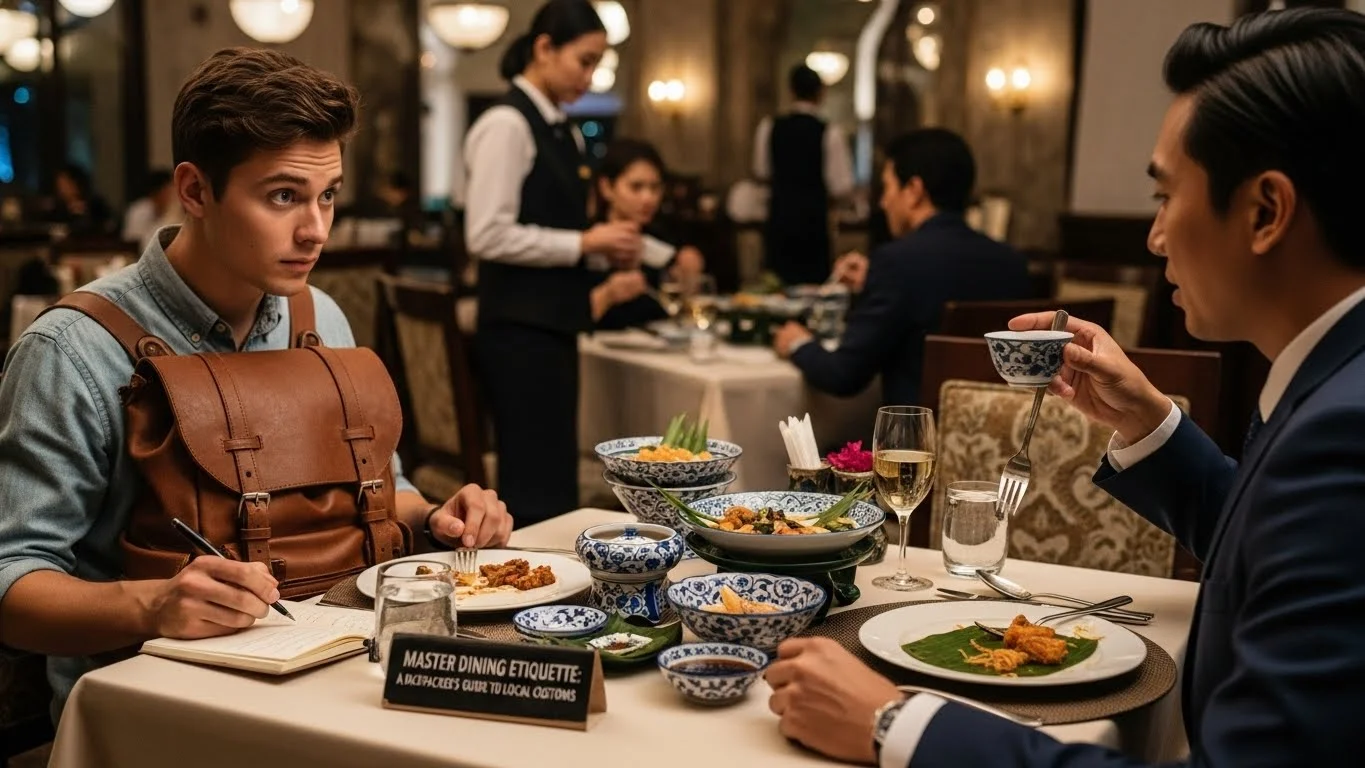
Understanding Dining Etiquette Across Cultures
The Importance of Dining Etiquette
Dining etiquette is more than just a set of rules; it’s a reflection of cultural values and social norms. I’ve found that understanding these customs can greatly enhance my travels. For instance, when I dined in Italy, I noticed how important it was to savor each course, allowing the meal to become a leisurely experience rather than a rushed event. In many cultures, the way we eat, what we eat, and even how we hold our utensils can convey respect and appreciation. I believe that by practicing good dining etiquette, we show that we value not just the food, but also the company and the traditions associated with it. Read Interesting article: Solo Travel Success: Understanding Cultural Etiquette
How Dining Etiquette Reflects Local Customs
Each culture has its unique dining customs that often mirror its history and social structure. For example, during my travels in Japan, I experienced how bowing before a meal is a sign of gratitude. This simple act resonated with me, highlighting the deep respect the Japanese have for their food and the people who prepare it. Similarly, in many Middle Eastern countries, meals are often shared, emphasizing community and connection. This practice reminded me of family gatherings at home, where food serves as a bridge that brings people together. Understanding these customs can offer valuable insights into a culture’s identity, and I’ve learned that this understanding can often lead to more meaningful interactions with locals.
Essential Dining Etiquette Tips for Backpackers
General Table Manners
When dining in a new country, I always start by observing the locals. Their behavior can provide a wealth of knowledge about what is considered polite or rude. For instance, I learned that in many Asian cultures, finishing every last morsel on your plate can imply that you were not satisfied with the meal, whereas leaving a small amount can signify enjoyment. I also found it essential to maintain a pleasant conversation while dining. In my experience, asking locals about their favorite dishes or dining customs often led to delightful exchanges and deeper cultural insights. Keeping my voice at a respectful volume and avoiding controversial topics is something I prioritize during meals, as it fosters a positive dining atmosphere.
Proper Use of Utensils
Using utensils appropriately can vary dramatically from one culture to another. I remember my first meal in Thailand where I was handed a spoon and fork. It took me a moment to realize that the fork is used to push food onto the spoon, which is then brought to the mouth. This was quite different from the standard knife and fork approach I was used to back home. In contrast, I learned that in Ethiopia, it’s customary to eat with your hands, using injera to scoop up food. I found this to be a fun and immersive way to experience the culture, as it allowed me to connect with the meal and the people sharing it. It’s crucial to adapt my utensil use to match local customs, as it shows respect and willingness to engage with the culture.
When to Eat: Meal Times Around the World
Meal times can also vary widely, and I’ve had my fair share of surprises. In Spain, I learned that dinner doesn’t usually start until after 9 PM, which was a stark contrast to my usual routine. At first, I felt a bit lost, but I came to enjoy the late-night atmosphere of bustling restaurants filled with laughter and chatter. In some Middle Eastern countries, lunch is the main meal of the day, often enjoyed during the hottest part, while in other places like Germany, dinner is typically lighter and served earlier. Recognizing these differences can help me avoid any potential faux pas, such as showing up to a restaurant that is still closed for the evening or arriving too late for lunch service. Read Interesting article: Navigating Cultural Etiquette Solo: A Traveler’s Guide
Dining Etiquette by Region
North America
Common Practices in the U.S.
When I first traveled to the United States, I was surprised by how casual dining can be, yet there are still many unwritten rules to keep in mind. For instance, I learned that in most restaurants, it’s customary to wait for everyone at the table to be served before diving into the meal. This practice fosters a sense of togetherness that I appreciate. I also discovered that tipping is a significant part of dining culture here—generally, a tip of 15-20% of the bill is expected. While at first, I felt pressured by this expectation, I realized it’s a way to show appreciation for good service, which is something I can get behind. I remember a time when I tipped an extra amount for a waiter who went out of his way to accommodate my food allergies, and it felt good to acknowledge his efforts.
Dining in Canada
My experience dining in Canada was quite similar to that in the U.S., but with a few unique twists. Canadians are known for their politeness, and this is reflected in their dining etiquette. I noticed that saying “please” and “thank you” is emphasized, even with waitstaff. Also, I found that in more casual dining settings, especially in smaller towns, it’s common for diners to share dishes or order family-style, which creates a friendly atmosphere. I remember enjoying a meal of poutine and sharing it with new friends I met at a hostel. It felt so authentic and warm, truly capturing the essence of Canadian hospitality.
Europe
Dining Etiquette in France
Dining in France was one of the highlights of my travels. The French take their meals seriously, and I quickly learned that meals are often seen as a celebration. I discovered that it’s polite to greet the staff with a simple “Bonjour” before placing my order, which sets a positive tone. I also found that the French usually enjoy their meals in multiple courses, and it’s considered rude to rush through them. In fact, I remember sitting for hours in a cozy bistro, savoring each course and chatting with my travel companion. It felt like we were part of something special, a tradition that stretches back generations.
Italian Dining Customs
Italy was yet another culinary adventure. One thing I learned is that Italians typically eat their pasta as a first course, known as “primo,” before moving on to the main dish. When I was in Rome, I noticed that they take their time enjoying meals, often accompanied by lively conversations and laughter. I also learned about the “no cappuccino after meals” rule—something I initially overlooked but quickly adapted to after receiving some curious glances! It’s these little nuances that make dining in Italy so engaging and memorable.
German Table Manners
When I visited Germany, I found their dining customs to be straightforward yet respectful. It’s common to say “Guten Appetit” before digging in, which I enjoyed as it felt like a shared acknowledgment of the meal. I learned that it’s polite to keep my hands on the table (but not my elbows!), and that finishing my plate is a sign of appreciation for the meal. I also experienced the unique tradition of eating with a knife in the right hand and fork in the left, which felt a bit different but was easy to adapt to with practice. Sharing a hearty meal of sausages and sauerkraut with locals at a beer garden was a highlight of my trip!
Asia
Chinese Dining Etiquette
Traveling to China opened my eyes to a whole new world of dining etiquette. One of the first things I encountered was the tradition of serving dishes family-style, where several plates are placed at the center of the table for everyone to share. I found that it’s polite to wait for the eldest person at the table to start eating before I dive in. I also learned the significance of chopstick etiquette—like never sticking them upright in rice, as it resembles funeral rituals. During one memorable meal, I accidentally pointed my chopsticks at someone when I was trying to grab a piece of food, and the table burst into laughter. It was a great reminder of how humor can bridge cultural gaps!
Japanese Table Manners
In Japan, I was struck by the emphasis on respect and tradition during meals. I quickly learned that saying “Itadakimasu” before eating is a way to show gratitude for the food. I also experienced the beauty of using chopsticks correctly, which can be quite intricate. I remember my first sushi experience, where I was served a beautiful platter. I was nervous about making mistakes, but I was pleasantly surprised by how patient and understanding the locals were. It made the experience all the more enjoyable, and I felt honored to partake in such a culturally rich dining experience.
Indian Dining Customs
During my time in India, I was fascinated by the communal aspect of dining. Meals are often shared, and I learned that it’s common to eat with the right hand, a tradition rooted in cultural norms. In some regions, I noticed everyone sitting on the floor around a large platter, which made me feel connected to the meal and the people I was with. One memorable experience was when I tried a thali, a platter filled with various dishes. Sharing this meal not only filled my stomach but also my heart as I connected more deeply with my companions. I appreciated how food can be a powerful unifier across cultures.
Latin America
Dining in Mexico
My travels took me to Mexico, where I quickly learned that meals are often a vibrant and lively affair. I discovered that it’s customary to say “Buen provecho” to others who are eating, which is a lovely way to wish them an enjoyable meal. I also noticed that sharing food is a common practice; it’s not unusual for diners to pass around dishes to try a bit of everything. I loved experiencing this sense of community and warmth. One evening, I found myself at a family-run taquería, sharing tacos and stories with the locals, and it was a night I’ll always cherish.
Argentinian Steakhouse Etiquette
In Argentina, the dining experience revolves around the famous asado, or barbecue. I learned that meals often start late in the evening and can last for hours. I was amazed by the emphasis on meat and the careful preparation that goes into it. When dining at a steakhouse, I quickly picked up that it’s polite to order a bottle of wine to share, which added to the festive atmosphere. I remember being invited to a local’s home for an asado, where I not only enjoyed delicious food but also learned about the cultural significance of this tradition. It was a delightful experience that connected me to the heart of Argentinian culture.
Dining Etiquette in Specific Situations
Eating at Street Food Stalls
Street food has a special place in my heart. There’s something magical about grabbing a bite from a bustling stall, surrounded by the sounds and smells of a vibrant city. However, I quickly learned that there are some etiquette tips to keep in mind when indulging in street food. For starters, I always try to observe how locals enjoy their meals. I noticed that in places like Thailand and Mexico, it’s common to eat standing up or while walking, which made me feel part of the local scene. I remember savoring a spicy taco in Mexico City while chatting with a friendly vendor, and it felt like the most authentic experience I could have!
Another important aspect is to be mindful of cleanliness. I tend to look for stalls that have a high turnover of customers, as this usually indicates fresh food. It’s also polite to use utensils if they’re provided, or to wash my hands before digging in. In some cultures, like in India, I learned that eating with my right hand is not just common, but a sign of respect. I found it incredibly rewarding to embrace these little customs while enjoying delicious street food, as it made each bite even more satisfying.
Dining with Locals: What to Expect
One of the most enriching experiences I’ve had while traveling is dining with locals. I discovered that sharing a meal often goes beyond just food; it’s about connection and understanding. When I was invited to a family dinner in a rural village in Greece, I was both excited and nervous. I learned that it’s customary to bring a small gift, such as a dessert or some wine, which I made sure to do.
At the table, I found that meals were filled with laughter and storytelling. I noticed that locals often encouraged me to try everything, offering multiple dishes at once. This was a delightful experience, but I had to keep in mind that refusing food can be seen as rude. There were moments when I felt overwhelmed by the variety, but I learned to accept small portions. This way, I could appreciate each dish without overloading my plate.
Additionally, I realized that conversation plays an essential role during meals. I made an effort to engage in discussions about traditions, local ingredients, and favorite recipes. This not only helped me learn more about the culture, but it also created an atmosphere of warmth and camaraderie. I believe that sharing meals with locals is one of the best ways to experience a culture authentically.
Formal Dining vs. Casual Dining
Understanding the difference between formal and casual dining settings has been crucial for my travels. I’ve been to places where I had to don my best attire for a formal dinner, and others where I could get away with shorts and a t-shirt. In countries like France and Italy, I found that formal dinners are often a way to celebrate special occasions and come with specific etiquette rules. I remember being taken aback by the multiple forks and plates set before me at a formal event in Paris. It was a learning curve to navigate which utensils to use for each course, but I enjoyed the challenge and the elegant atmosphere that came with it.
Casual dining, on the other hand, has its own set of unwritten rules. I’ve found that it often emphasizes a relaxed and friendly environment, where interaction is encouraged. During a casual meal in a pub in Ireland, for example, I was delighted to see locals sharing stories and laughter without any formalities. I learned that it’s perfectly acceptable to engage in conversations with fellow diners, which added to the enjoyment of the experience.
In my experience, being aware of the dining context helps me adjust my behavior accordingly. Whether it’s keeping a lower voice in a formal restaurant or engaging in lively banter at a casual eatery, adapting to the environment has enriched my culinary adventures.
Understanding Cultural Nuances
The Role of Sharing Food
Food has an incredible ability to bring people together, and I’ve witnessed this across many cultures. In many Asian and Middle Eastern countries, sharing food is not just a custom, but a way of showing hospitality and friendship. I recall dining with a family in Morocco, where they laid out a large tagine in the center of the table, and we all dug in using our hands. It felt so intimate and communal, creating a sense of belonging that I cherished.
Sharing food also allows for a richer tasting experience. When I tried a variety of dishes in a communal setting, I was able to sample flavors that I wouldn’t have ordered on my own. This practice taught me the importance of being open-minded and adventurous when it comes to trying new foods. It’s a reminder that food is not only nourishment but a means of connection and shared experiences.
Understanding Tipping Customs
Tipping can be a tricky subject, especially since customs vary widely around the world. In the U.S. and Canada, I learned that tipping is expected and often serves as a significant part of a server’s income. However, during my travels in Japan, I found that tipping is considered rude, as exceptional service is expected without extra compensation. I remember feeling awkward when I tried to leave a tip at a restaurant in Tokyo, only to have the waiter chase after me to return it.
In countries like Mexico and many European nations, tipping practices can be more relaxed. I typically round up the bill or leave a small percentage, which is always appreciated. Understanding these nuances has helped me navigate various dining situations smoothly and respectfully, ensuring that my gestures of appreciation align with local customs.
Alcohol Consumption and Etiquette
When it comes to alcohol, I’ve noticed that different cultures have unique attitudes and practices surrounding its consumption. In many European countries, sharing a toast before drinking is an important ritual, and I remember my first time clinking glasses in Germany while saying “Prost!” It created an immediate connection with my dining companions.
In contrast, during my time in some Middle Eastern countries, I learned that alcohol consumption is often restricted due to cultural and religious beliefs. Being aware of these customs has helped me navigate social situations without inadvertently offending anyone. I’ve also learned to appreciate non-alcoholic beverages, which often come with their own rich traditions, like chai tea in India or mate in Argentina. Embracing these practices has expanded my experiences and allowed me to connect more deeply with the local culture.
Frequently Asked Questions
What is the significance of dining etiquette while traveling?
Dining etiquette reflects cultural values and social norms, enhancing travel experiences by showing respect for local customs and fostering connections with locals.
How can observing locals help improve my dining etiquette?
By observing locals, you can learn what is considered polite or rude in their culture, which can inform your behavior and make for a more enjoyable dining experience.
What are some general table manners to keep in mind while traveling?
Maintaining pleasant conversation, keeping your voice at a respectful volume, and avoiding controversial topics are essential for fostering a positive dining atmosphere.
What are the typical meal times in different cultures?
Meal times vary by culture; for example, dinner in Spain often starts after 9 PM, while in some Middle Eastern countries, lunch is the main meal of the day.
What are some dining customs in North America?
In the U.S., it is customary to wait for everyone at the table to be served before starting the meal, and tipping of 15-20% is generally expected. In Canada, politeness is emphasized, and sharing dishes in casual settings is common.
How do dining customs differ in European countries?
In France, meals are seen as celebrations requiring polite greetings and savoring multiple courses, while in Italy, pasta is typically served as a first course. Germany emphasizes straightforward manners, such as saying “Guten Appetit” before eating.
What is unique about dining etiquette in Asian cultures?
In China, meals are often served family-style, and it’s polite to wait for the eldest to start eating. In Japan, saying “Itadakimasu” before eating shows gratitude, and proper chopstick use is important.
What dining customs are observed in Latin America?
In Mexico, it is customary to say “Buen provecho” to fellow diners, and food sharing is common. In Argentina, dining often revolves around the asado, with meals starting late and a focus on communal enjoyment.
What etiquette should I follow when eating street food?
Observe locals on how to enjoy their meals, be mindful of cleanliness, and use utensils if provided. In some cultures, like India, eating with the right hand shows respect.
What should I know about dining with locals?
Dining with locals is about connection; it’s customary to bring a small gift and engage in conversation. Accepting food is important, and discussing traditions enhances the experience.