
Backpacking abroad can be one of the most thrilling experiences of our lives, but mastering communication styles is essential for connecting with new cultures. Let’s explore how we can enhance our communication skills while traveling. Read Interesting article: Cultural Greeting Etiquette: Tips for Budget Travelers
Understanding Communication Styles
The Importance of Communication in Travel
When I first started backpacking, I quickly learned that communication goes beyond words. It’s about connecting with people, sharing experiences, and immersing ourselves in new cultures. In my travels, I noticed that the way we communicate can shape our entire experience. Being able to express ourselves, ask questions, and engage with locals can lead to friendships, unforgettable memories, and a deeper understanding of the places we visit.
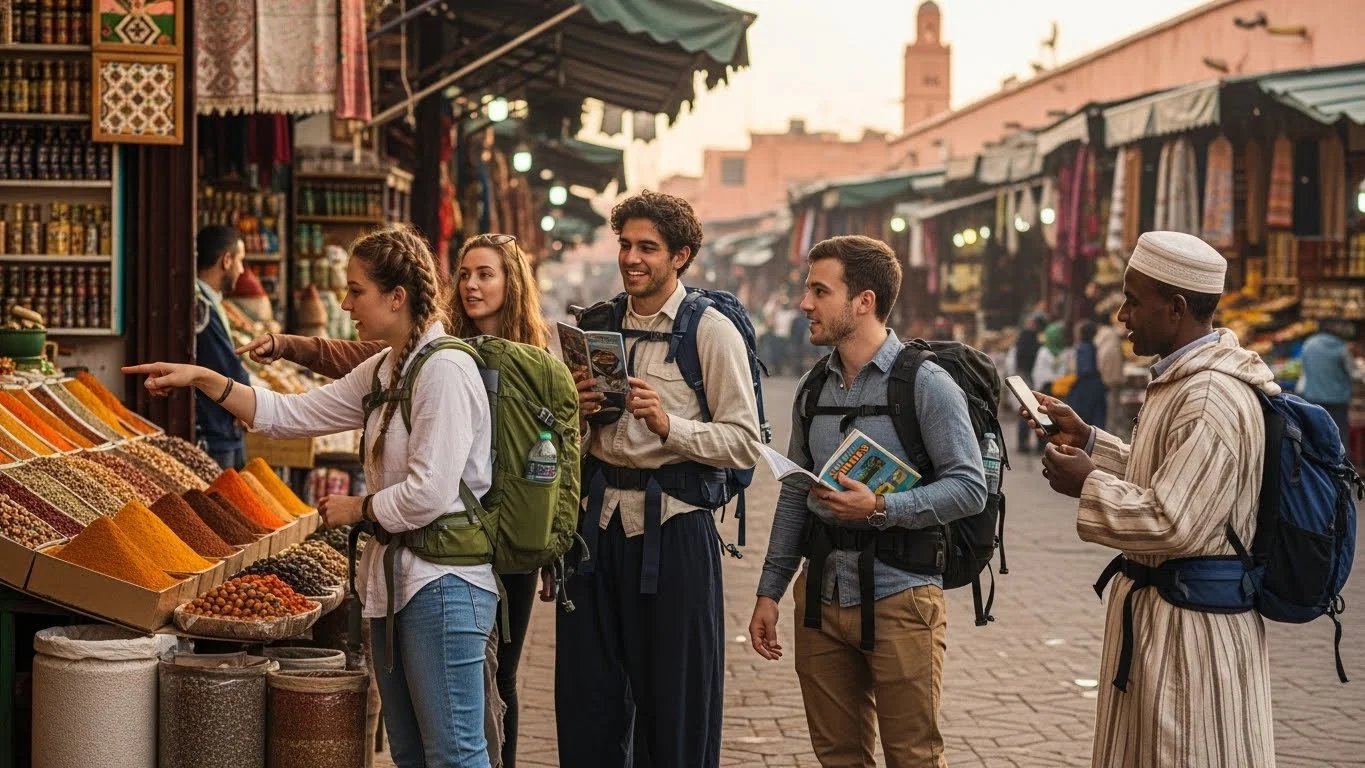
Effective communication helps break down barriers and fosters a sense of belonging. I remember an instance in a bustling market in Marrakech, where my attempts to converse in Arabic led to smiles, laughter, and a warm invitation for mint tea. It’s moments like these that remind me of the power of communication while traveling.
Types of Communication Styles
As I traveled, I began to recognize different communication styles that varied not only between cultures but also among individuals. Some people are direct, getting straight to the point, while others prefer a more indirect approach, using hints and subtleties. Understanding these differences can help us navigate conversations more smoothly.
For example, in some cultures, being straightforward is appreciated, while in others, it may come off as rude or confrontational. I learned to adapt my style based on who I was speaking with. Sometimes, I would tone down my directness and embrace a softer approach, especially when engaging with individuals from cultures that value harmony and indirect communication.
Additionally, I discovered that some people lean towards a more expressive style, using gestures and emotions to convey messages. I found this particularly true in Mediterranean countries, where conversations seemed to dance with enthusiasm. In contrast, I encountered more reserved styles in Scandinavian countries, where communication was often succinct and to the point.
Cultural Influences on Communication
Culture plays a significant role in shaping how we communicate. I’ve seen how different traditions, values, and social norms influence our interactions. In some regions, maintaining eye contact is a sign of confidence and honesty, while in others, it may be seen as disrespectful. This realization hit home during a visit to Japan, where I was reminded to be mindful of my non-verbal cues. I noticed how body language, tone, and even silence conveyed meaning in different ways.
During my travels, I made it a point to observe and learn from locals. By immersing myself in their ways, I became more attuned to their communication preferences. I remember a lovely conversation I had with a local family in Italy, where gestures and laughter bridged any language gaps. Their warmth and openness were contagious, and I felt welcomed despite any initial awkwardness.
Another important aspect is understanding the role of context. In some cultures, the context of a conversation dictates what can be said, who can say it, and how. I learned this during a conversation in Thailand, where respecting the hierarchy within social structures became essential. I realized that addressing someone of higher status required a more formal approach, reflecting their cultural values and traditions. Read Interesting article: Essential Dining Etiquette Tips for Cultural Travel Adventures
In summary, understanding communication styles is a crucial part of our travel experience. Whether we’re navigating discussions with locals or engaging with fellow backpackers, having an awareness of these styles can help us connect on a deeper level. As I continue my journey, I find that adapting to different communication styles not only enriches my travels but also fosters a greater appreciation for the diverse cultures that make our world so vibrant.
Before You Go: Preparing for Communication
Researching Local Languages and Dialects
Before embarking on any journey, I find it incredibly helpful to research the local languages and dialects of the places I plan to visit. It’s fascinating to discover how certain words or phrases vary from one region to another. For instance, during my trip to Spain, I learned that there are significant differences between Castilian Spanish and the Catalan language in Barcelona. This knowledge not only helped me communicate better but also showed respect for the local culture. I’ve noticed that locals appreciate it when travelers make an effort to understand their language, even if it’s just a few key phrases.
Moreover, I’ve learned that some regions have unique expressions that may not translate well. In Italy, I remember hearing the phrase “fare una bella figura,” which means making a good impression. Understanding these nuances can help us connect more meaningfully with the locals. So, before you go, take the time to familiarize yourself with the language landscape—it’s an investment that pays off in rich experiences.
Understanding Non-Verbal Communication Practices
Non-verbal communication is another critical aspect to consider before traveling. I’ve discovered that gestures, facial expressions, and body language can vary widely across cultures. For example, in some Middle Eastern countries, a simple thumbs-up is considered offensive, while in others, it’s a sign of approval. When I was in Greece, I noticed that people often use their hands to express themselves, which added a vibrant layer to our conversations. I remember mimicking some of those gestures, which led to bursts of laughter and a sense of camaraderie.
Being aware of these non-verbal cues can prevent misunderstandings. I’ve found that observing how locals interact with one another can offer valuable insights. Before my journey to Brazil, I made it a point to read about the importance of personal space and eye contact in Brazilian culture. This preparation helped me navigate social interactions more comfortably and confidently.
Learning Key Phrases in the Local Language
One of the most rewarding things I’ve done is learn key phrases in the local language. I often use language learning apps to practice basic greetings and essential vocabulary. Simple phrases like “hello,” “thank you,” and “excuse me” can go a long way in bridging communication gaps. I recall a moment in Vietnam when I greeted a vendor in Vietnamese. The look of surprise and delight on her face was priceless. It was as if a door had opened, leading to a more authentic exchange.
Additionally, learning phrases that might be relevant for specific situations—like ordering food or asking for directions—can make a huge difference. I remember struggling to order a traditional dish in Morocco, only to have my effort rewarded with an unexpected culinary delight. The locals appreciated my attempts, and it made the experience all the more enriching.
Using Translation Apps and Tools
In this digital age, translation apps can be a lifesaver. I often download language translation apps before my trips, which help in situations where my language skills fall short. These tools can translate spoken phrases, which can be really helpful in a fast-paced environment where quick communication is essential. I remember using an app to ask for directions in Tokyo, and it not only got me to my destination but also impressed the locals who were around.
However, I try to use translation apps as a supplement rather than a crutch. I’ve noticed that relying solely on technology can sometimes lead to misunderstandings due to the nuances of language. Instead, I aim to use my knowledge of key phrases alongside the app, which creates a more personal connection. Finding this balance has enhanced my travel experiences significantly.
Communication Styles by Region
North America
Traveling in North America, I’ve found that communication is typically direct and straightforward. People tend to appreciate honesty and clarity. For example, when I visited New York City, I noticed how locals often speak quickly and efficiently. It took me a bit to adjust, but I learned that it was just their way of keeping conversations brisk. I found it refreshing to engage in no-nonsense dialogues that got straight to the point, and it made interactions feel more genuine.
Europe
In Europe, the communication styles can vary significantly from country to country. In the UK, I experienced a blend of politeness and indirectness, while in Germany, directness was valued. I remember feeling a bit taken aback when I first encountered the straightforwardness of the Germans, but I soon appreciated how it led to clear expectations. It was a lesson in adapting to the local style while maintaining my own authenticity.
Asia
Asia is a tapestry of diverse communication styles. In places like Japan, I learned the importance of non-verbal cues and indirect communication. It was fascinating to observe how silence often spoke volumes. On the other hand, in India, I encountered a rich blend of expressiveness and emotional warmth. The way people engaged in conversation often felt like a dance, filled with gestures and animated expressions that made me feel at home, even among strangers.
South America
In South America, I’ve often found that communication is vibrant and full of life. In countries like Brazil, conversations are rarely dull; people are animated and expressive. I remember being swept up in a conversation at a street festival, where the energy was contagious. It taught me that sometimes, being loud and enthusiastic is part of the charm of connecting with others.
Africa
Africa is incredibly diverse, and communication styles can vary widely from one region to another. In East Africa, for instance, I experienced a warm and welcoming approach, where greetings often took precedence over the actual topic of conversation. It was refreshing to see how important it was to build rapport before diving into discussions. I remember spending time in a village in Kenya, where I learned that a simple “Jambo” (hello) could open up a world of friendship.
Oceania
In Oceania, particularly in Australia and New Zealand, I found that communication is often laid-back and friendly. The locals value humor and casual interactions. I remember feeling at ease during my travels, as people often used light-hearted banter to break the ice. This made it easy to strike up conversations and feel a sense of belonging, even as a traveler.
Adapting Your Communication Style While Traveling
Active Listening Techniques
One of the most valuable skills I’ve developed while traveling is active listening. It’s easy to get caught up in our own thoughts or the next thing we want to say, but I’ve found that truly listening to others can create stronger connections. During my travels, I made a conscious effort to give my full attention to the person speaking, whether they were a local shopkeeper or a fellow traveler.
For example, while chatting with a group of locals in a small café in Greece, I noticed how attentive they were to each other. Nodding, maintaining eye contact, and even mirroring their expressions made a huge difference. It not only showed respect but also encouraged them to open up even more. I realized that when we actively listen, we create a space for meaningful exchange, which enriches our travel experiences.
Respecting Local Customs and Etiquette
Respecting local customs and etiquette can profoundly affect how we communicate. Each culture has its own set of unwritten rules that guide interactions. I learned this the hard way during my first trip to Thailand. I accidentally pointed my feet at someone, which is considered disrespectful. The look of surprise on their face immediately taught me the importance of understanding and respecting cultural norms.
Before visiting a new country, I make it a point to research local customs. For example, I discovered that in Japan, it’s polite to bow when greeting someone instead of a handshake. Adapting my behavior to align with local expectations has helped me build rapport with people I meet, leading to warm exchanges and lasting memories. I think it’s a small effort that goes a long way in showing appreciation for the culture. Read Interesting article: Navigating Cultural Etiquette Solo: A Traveler’s Guide
Building Rapport with Locals
Building rapport with locals has been one of the highlights of my travels. I remember wandering through the streets of Buenos Aires, where I struck up a conversation with an elderly gentleman who was sitting on a park bench. By asking about his life and sharing a bit about mine, I felt an immediate connection. He started sharing stories about his youth, and before I knew it, we were laughing and exchanging anecdotes as if we were old friends.
These moments have taught me that genuine curiosity can break down walls. When I approach locals with an open heart and a willingness to learn, I often find that they are eager to share their world with me. I’ve learned that asking open-ended questions encourages deeper conversations. Instead of simply asking questions that require a yes or no answer, I now try to frame them in a way that invites stories. This not only enriches my understanding of their culture but also builds trust.
Navigating Language Barriers
Language barriers can be daunting, but I’ve found that they also present unique opportunities for connection. I remember a hilarious yet heartwarming experience in a small village in India. I was trying to order a meal, but my pronunciation of the local dish was far from perfect. Instead of frustration, the vendor laughed and decided to teach me how to say it correctly. We ended up having a delightful exchange, and I left with not just a great meal but also a memory I cherish.
When faced with language barriers, I try to remain patient and open. Sometimes, simply using gestures or drawing pictures can help convey my message. I’ve found that a smile goes a long way, too. It’s amazing how much can be communicated through facial expressions and body language when words fail. I often remind myself that it’s not about speaking perfectly; it’s about the effort to connect that truly matters.
Practical Tips for Effective Communication
Body Language and Gestures
Body language and gestures play a crucial role in communication, especially when language is a barrier. I’ve noticed that a friendly smile, a nod, or even a wave can break the ice in any situation. During my trip to Morocco, I observed how locals often used their hands to emphasize their points. I found myself mimicking their gestures, which not only made our conversations more lively but also helped convey my enthusiasm and interest.
However, I’ve also learned to be mindful of cultural differences in gestures. For instance, I discovered that in some cultures, certain hand signals can be offensive. That’s why I make it a habit to observe local interactions before jumping in. This awareness allows me to adapt my body language to resonate better with those around me, making conversations more fluid and enjoyable.
Using Visual Aids and Sign Language
When words seem inadequate, using visual aids or even sign language can be incredibly helpful. I remember finding myself in a remote village in Vietnam, where the language spoken was completely foreign to me. Instead of feeling lost, I pulled out my phone and used pictures to communicate what I was looking for. The locals responded with enthusiasm, and we ended up having a delightful exchange that included laughter and gestures.
Carrying a small notepad or using a translation app to draw out what I’m trying to convey has proven useful in many situations. I’ve found that visuals can transcend language barriers, allowing for more engaging and meaningful interactions. It’s a wonderful reminder that communication isn’t just about words; it’s about sharing experiences and connecting with one another.
Asking Questions and Clarifying Information
Asking questions is a powerful tool for effective communication. I’ve learned that when I’m unsure about something, clarifying information can save me from misunderstandings. During my travels, I often take the opportunity to ask locals about their customs or recommendations. For example, while exploring the markets of Istanbul, I asked a vendor about the history of a particular spice. His enthusiasm led to an enlightening conversation that deepened my appreciation for the culture.
Additionally, I’ve found that repeating back what I’ve heard in my own words can help ensure that I’ve understood correctly. It’s a simple technique, but it fosters trust and shows that I value their input. Each interaction becomes an opportunity to learn and grow, enriching my travel experience.
Handling Misunderstandings Gracefully
Misunderstandings are bound to happen, especially when navigating different cultures. I’ve had my fair share of awkward moments, but I’ve learned that handling them with grace can turn a potentially uncomfortable situation into a memorable one. I remember one time in a small restaurant in Thailand, I accidentally ordered a dish that was far too spicy for my taste. Instead of getting flustered, I laughed it off and playfully gestured to the staff to help me cool it down. They joined in the laughter, and we spent the next few minutes sharing stories about our culinary adventures.
When misunderstandings arise, it’s important to remain calm and approach the situation with a positive attitude. A smile, a bit of humor, or even a simple apology can go a long way in easing tension. I’ve found that most people are understanding and are willing to help, as long as we approach them with kindness and respect.
Frequently Asked Questions
What is the importance of communication when backpacking abroad?
Communication is essential for connecting with people, sharing experiences, and immersing ourselves in new cultures. It helps break down barriers and fosters a sense of belonging, leading to friendships and a deeper understanding of the places we visit.
How do communication styles vary across different cultures?
Communication styles can vary significantly between cultures and individuals. Some cultures appreciate directness, while others prefer a more indirect approach. Being aware of these differences can help travelers navigate conversations more smoothly.
What role does culture play in shaping communication?
Culture influences our interactions through traditions, values, and social norms. For example, maintaining eye contact may be viewed as a sign of confidence in some cultures, while in others, it could be seen as disrespectful. Understanding these cultural nuances is crucial for effective communication.
How can travelers prepare for effective communication before their trip?
Travelers can enhance their communication skills by researching local languages and dialects, understanding non-verbal communication practices, learning key phrases in the local language, and using translation apps and tools to aid communication.
What are some effective techniques for active listening while traveling?
Active listening involves giving full attention to the speaker, maintaining eye contact, and mirroring their expressions. This shows respect and encourages deeper conversations, enriching the travel experience.
Why is it important to respect local customs and etiquette?
Respecting local customs and etiquette can profoundly affect communication. Understanding unwritten rules, such as appropriate greetings or gestures, helps build rapport and leads to warmer interactions with locals.
What strategies can travelers use to build rapport with locals?
Building rapport can be achieved by showing genuine curiosity, asking open-ended questions, and sharing personal stories. This approach encourages deeper conversations and fosters trust.
How can travelers navigate language barriers effectively?
Travelers can navigate language barriers by remaining patient, using gestures, drawing pictures, and maintaining a positive attitude. A smile can also facilitate communication when words fail.
What should travelers do when misunderstandings occur?
When misunderstandings happen, it’s important to handle them gracefully by remaining calm, using humor, and approaching the situation with kindness and respect. This can turn awkward moments into memorable experiences.
What role do body language and gestures play in communication?
Body language and gestures are crucial, especially when language is a barrier. A friendly smile, nod, or wave can break the ice, while being mindful of cultural differences in gestures can enhance communication and connection.