
Planning a mountain climb? Don’t forget to pack your first aid gear! It’s essential for keeping you and your climbing partners safe during your adventure. For more tips, check out Essential First Aid Tips for Mountain Climbing Adventures.
Understanding the Importance of First Aid Gear in Mountain Climbing
Why First Aid Gear is Essential for Climbers
When I first started climbing, I underestimated the importance of first aid gear. I thought, “What could possibly go wrong?” But after experiencing a few close calls, I realized how crucial it is to be prepared. First aid gear isn’t just a suggestion; it’s an absolute necessity. Accidents can happen when you least expect them, and having the right equipment can make a significant difference in those critical moments. Whether you’re scaling a rocky face or traversing a snowy peak, being equipped with first aid supplies could save a life—possibly your own.
Climbing is all about pushing your limits, but injuries can occur due to falls, sprains, or even altitude sickness. Having a well-stocked first aid kit empowers you to respond effectively and swiftly. I remember a time when a friend twisted his ankle during a descent. Thanks to our first aid gear, we were able to stabilize his injury and get him off the mountain safely. That experience solidified my belief that we should never venture into the wild without being prepared.
Common Injuries and Emergencies in Mountain Climbing
During my climbs, I’ve seen a range of injuries, some more common than others. Understanding what could happen can help us prepare better. Here are some typical injuries climbers might face:
- Sprains and Strains: These are probably the most frequent types of injuries. Uneven terrain can easily lead to twisted ankles or strained muscles. I’ve had my fair share of close calls with both!
- Cuts and Scrapes: Rocks and sharp edges can lead to cuts. Even minor scrapes can become problematic if they’re not treated properly, especially in outdoor environments.
- Altitude Sickness: As you climb higher, the air gets thinner. Symptoms may include headache, nausea, and fatigue. I learned the hard way to listen to my body and descend if I start to feel unwell.
- Hypothermia and Frostbite: Cold weather can be ruthless. If you’re not dressed properly or exposed for too long, you risk serious cold-related injuries.
- Fractures: Falls can lead to fractures. Whether it’s a hand or a leg, the impact can be severe, and quick intervention is crucial.
It’s important to be aware that injuries can escalate quickly, especially in remote locations where help is far away. I often remind myself that the wilderness is beautiful but can be unforgiving. Being equipped with first aid gear allows us to manage these situations effectively. Best Budget Mountain Climbing Gear: Climb Smart & Save Big can provide insights on how to prepare without breaking the bank.
In my experience, staying calm and assessing the situation is the first step. Then, having the right gear at hand can help treat the injury until you can seek professional medical assistance. It’s a reassuring thought to know that I won’t be completely helpless in a tricky situation.
While I don’t want to sound overly dramatic, I believe it’s essential to treat mountain climbing with respect. The risks are real, and coming prepared can mean the difference between a fun adventure and a dangerous ordeal. First aid gear is a crucial ally on every climb, ensuring that we can tackle any challenge that comes our way.
Essential First Aid Gear for Mountain Climbers
Basic First Aid Kit Contents
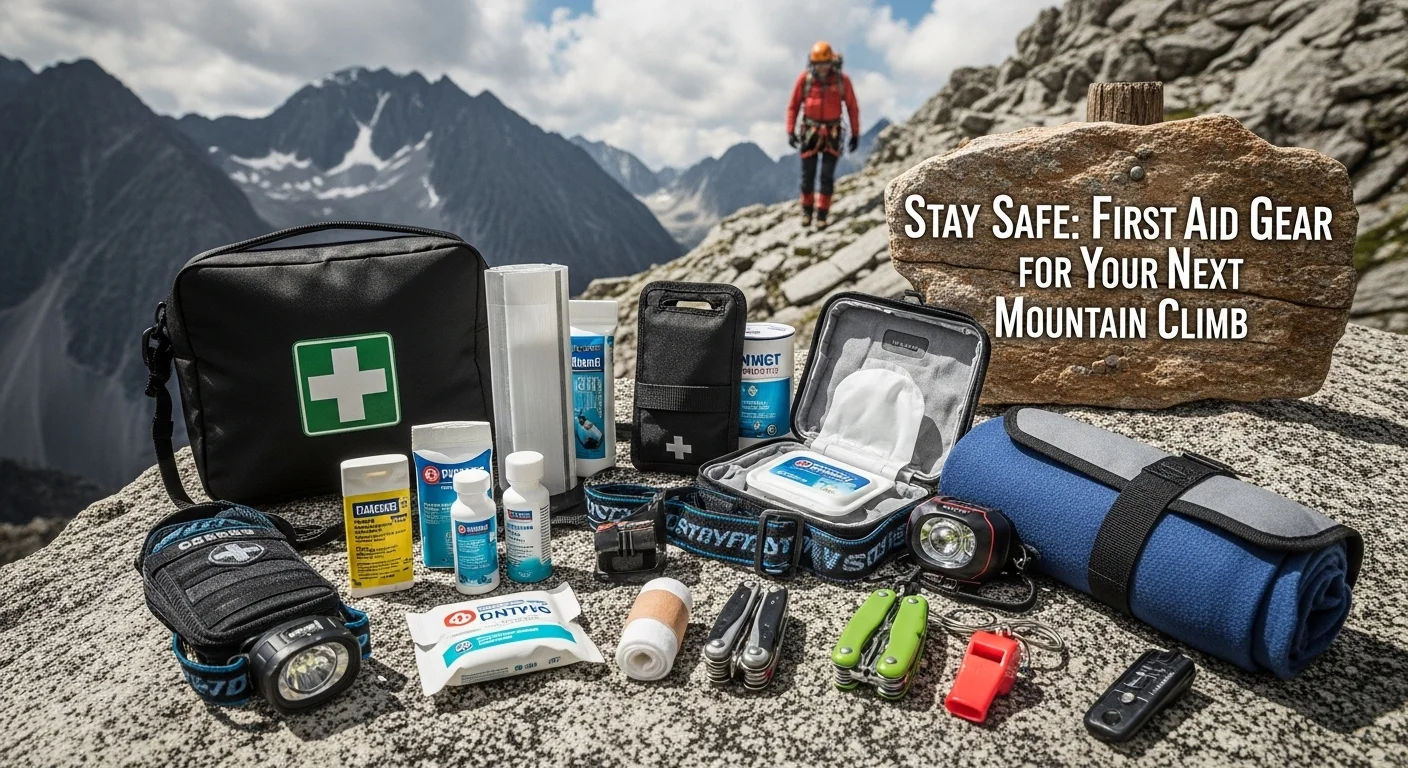
When I began putting together my first aid kit for climbing, I wanted to ensure I had the essentials without overpacking. After some trial and error, I discovered a basic list that works well for most situations. Here’s what I always make sure to include:
- Adhesive Bandages: These are great for covering small cuts and scrapes. I always keep a variety of sizes in my kit.
- Gauze Pads and Adhesive Tape: For larger wounds, these are crucial. I remember needing them for a friend who suffered a nasty scrape from a rock.
- Antiseptic Wipes: Cleanliness is vital. These wipes help prevent infection in any cuts or scrapes we might encounter.
- Antibacterial Ointment: I swear by this for any minor injuries. It keeps the area moist and helps in healing.
- Pain Relievers: Whether it’s ibuprofen or acetaminophen, having pain relief on hand can make a big difference, especially after a long day of climbing.
- Scissors: They come in handy for cutting tape or clothing during emergencies.
- Latex or Nitrile Gloves: Protecting ourselves while treating someone else is essential. I always pack a pair or two.
This basic kit has served me well on numerous climbs. I’ve learned that while you might hope not to use it, it’s reassuring to know it’s there when you need it. Additionally, consider checking out Essential Gear for Mountain Climbing on a Budget for more ways to prepare efficiently.
Specialized Gear for Climbing Injuries
While the basic supplies are essential, I also believe that having specialized gear can make a world of difference in specific situations. Here’s what I recommend:
Splints and Supports
In cases of suspected fractures or severe sprains, a splint can stabilize the injury enough to get the person to safety. I remember a trip where a climber took a tumble and ended up with a suspected wrist fracture. Having a splint allowed us to secure it until we could get her to a hospital.
Emergency Blankets
These lightweight, compact blankets are amazing for preventing hypothermia. They reflect body heat and can be a lifesaver in cold conditions. I always keep one in my pack, especially for high-altitude climbs where temperatures can drop unexpectedly.
Compression Bandages
These are not just for aesthetics; they can control swelling and support injured limbs. I’ve used them multiple times to wrap up sprained ankles or knees. They are versatile and take up minimal space in my kit.
Tools for Immediate Response
In addition to standard first aid supplies, having a few tools can help in immediate response scenarios. Here are some of my favorites:
Instant Cold Packs
These packs are a game changer for treating swelling or bruising. They activate quickly and provide immediate relief. I’ve found them particularly useful after a long trek when someone’s feet are sore or if there’s an injury.
Multi-Tool or Swiss Army Knife
This is one of those items I never leave behind. Not only does it have a knife for various tasks, but it also typically features screwdrivers, can openers, and more. I’ve used mine for everything from opening food packages to making quick repairs on gear in the field.
Emergency Whistles
This might seem like an odd addition, but I can’t stress how important it is to have a way to signal for help if things go awry. I always keep one on my climbing harness. It’s lightweight and can be heard over great distances, which can be critical in case of an emergency.
When I think about my climbing experiences, I realize that being prepared with the right first aid gear not only gives me peace of mind but also empowers me to tackle challenges more confidently. The wilderness is unpredictable, and our adventures can lead us into unexpected situations. By packing the right gear, I know we can handle whatever comes our way, ensuring a safer and more enjoyable experience for everyone involved.
Choosing the Right First Aid Kit for Your Climb
Factors to Consider When Selecting a Kit
Choosing the right first aid kit for your climb is crucial, and I’ve learned that it’s not a one-size-fits-all situation. Here are a few key factors to consider:
Duration of the Climb
The length of your climb plays a significant role in the type of kit you’ll need. For day hikes or short climbs, a smaller, more compact kit might suffice. However, if you’re planning a multi-day expedition, you’ll want a more comprehensive kit. I remember a week-long trek where we had to carry everything we needed. We opted for a larger kit with more supplies, and it turned out to be a wise decision when a member of our group developed blisters on the second day. Being prepared for extended climbs is essential.
Group Size
Another factor to consider is how many people will be joining you. A larger group means a higher likelihood of potential injuries, so having a more extensive kit is beneficial. I’ve found that when climbing with friends, I like to assess the group’s experience and ensure our first aid supplies match our collective needs. In one case, we had a mixed group of experienced and novice climbers on a challenging route. Having a well-stocked kit helped us feel more secure, knowing we could address various issues.
Remote vs. Accessible Locations
Are you climbing in a remote area far from medical facilities or in a more accessible location? This can drastically change your first aid kit requirements. In remote locations, I believe it’s better to err on the side of caution and pack extra supplies. I’ll never forget a climb in a national park where we were hours away from the nearest help. We encountered a minor emergency, and having additional supplies meant we could handle it without panic. Being prepared for the unexpected can make all the difference in a remote environment.
Pre-Packed Kits vs. Custom Kits
When it comes to first aid kits, you’ll find both pre-packed options and the opportunity to create a custom kit. Each has its advantages, and I’ve experienced both sides.
Benefits of Pre-Packed Kits
Pre-packed first aid kits are convenient. They come ready to go, with essential items included, which is great for those who may not know what to pack. I’ve used them for many climbs and appreciated the thought that went into the selections. They often include a variety of supplies that can handle common injuries, which is a huge plus for beginners. Just make sure to check for expiration dates and adjust the contents based on your specific needs.
Creating a Custom First Aid Kit
On the other hand, putting together a custom first aid kit allows you to tailor your supplies to your specific needs and preferences. This is something I’ve enjoyed doing over the years. I take into account the climbs I do most often, the group size, and even personal health concerns. For instance, I’m prone to blisters, so I always ensure I have extra blister pads and moleskin. Custom kits can feel more personal and empower you to include items that you know work well for you and your climbing partners. I remember feeling much more confident on a climb after putting together a kit that included my go-to supplies!
How to Use First Aid Gear Effectively
Basic First Aid Skills Every Climber Should Know
Having the right gear is only part of the equation; knowing how to use it effectively is equally important. I’ve learned some basic first aid skills that every climber should know, and they can make a huge difference in an emergency.
Wound Cleaning and Dressing
Cleaning and dressing wounds properly is vital to prevent infection. I remember a time when I scraped my arm against a jagged rock. I quickly cleaned the wound with antiseptic wipes, applied antibacterial ointment, and covered it with a gauze pad. This simple process helped me avoid complications later on. I recommend always having a clean surface to work on, and don’t forget to wash your hands or wear gloves if possible before treating injuries.
Managing Sprains and Strains
Sprains and strains are common in climbing, and knowing how to manage them can be a game changer. I’ve had to apply compression bandages to my friends several times after they twisted an ankle or knee. The R.I.C.E. method—Rest, Ice, Compression, Elevation—is a quick and effective way to handle these injuries. It’s a valuable skill to keep in your back pocket, especially when the trail is rocky and uneven.
When to Seek Professional Medical Help
Finally, it’s important to know when to seek professional medical help. Sometimes injuries may seem minor at first but can escalate. I’ve learned to trust my instincts: if something feels off—like persistent pain, inability to move a limb, or signs of severe altitude sickness—it’s better to err on the side of caution and get help. Don’t hesitate to reach out to others in your group for their perspective as well. We’re all in this together, and sometimes a second opinion can help clarify the situation.
Maintenance and Inspection of First Aid Gear
Regular Checks Before Your Climb
Maintaining your first aid gear is just as important as packing it. I’ve learned the hard way that having a well-stocked kit means little if the supplies are expired or damaged. Before each climb, I make it a point to inspect my entire first aid kit. This includes checking the expiration dates on items like antiseptic wipes, pain relievers, and any medications. I also make sure that bandages are intact and that I have enough supplies to address common injuries. If anything is missing or has expired, I replace it immediately. This routine helps ensure that I’m fully prepared when heading into the mountains.
How to Replace Expired Items
Replacing expired items can be as simple as making a list of what needs to be refreshed. I usually keep a checklist of my first aid kit contents, which I update after each climb. When I notice something needs to be replaced, I try to do so as soon as possible. I find that keeping a few spare supplies at home makes this task easier, allowing me to restock quickly before my next adventure. I also recommend keeping a small supply of common medications, like antihistamines or anti-nausea pills, in your kit. These can be lifesavers in case of unexpected allergies or motion sickness during a climb.
Additional Safety Gear to Consider
Navigation Tools and Communication Devices
In addition to first aid gear, I believe it’s essential to carry navigation tools and communication devices. Whether it’s a reliable GPS device, a map, or a compass, knowing where you are can be crucial in emergencies. I’ve faced my share of disorientation on trails, and having a reliable navigation tool has helped me find my way back safely. Communication devices, like a charged mobile phone or a satellite communicator, can be invaluable too. I can’t stress enough how comforting it is to know I can reach out for help if needed. Just the peace of mind that comes from having a way to communicate can make a big difference in my confidence while climbing.
Emergency Shelter and Signaling Devices
In the unpredictable wilderness, an emergency shelter can save lives. I always pack a lightweight emergency bivy sack or a space blanket. These items can provide critical warmth and protection if something goes wrong and I find myself stranded. Additionally, carrying signaling devices, like a whistle or a signal mirror, is a great idea. I keep a whistle attached to my harness—it’s small, lightweight, and can carry a long distance. In a situation where I might need to call for help, this little device could be the difference between being heard and being lost.
Recommended Brands and Products
Top First Aid Kits for Climbers
After years of climbing, I have come across a variety of first aid kits, and a few brands stand out for their quality and comprehensiveness. Brands like Adventure Medical Kits and Lifeline offer excellent pre-packed options that cater to climbers. I particularly like the features of the Adventure Medical Kits’ Ultralight & Watertight series, which are designed specifically for outdoor adventures. They include a wide range of supplies and are compact enough to fit in my pack without taking up too much space.
Reliable Emergency Gear Brands
For specialized gear, I turn to brands like Sea to Summit and MSR. Their lightweight emergency blankets and bivy sacks have always impressed me with their performance and durability. I also trust my Multi-Tool from Leatherman; it’s versatile and has been a reliable companion on many climbs. Having gear from reputable brands gives me confidence that I can rely on it when I need it the most.
Resources for Further Learning
First Aid Courses for Outdoor Enthusiasts
To truly be prepared, I recommend taking first aid courses focused on outdoor scenarios. Organizations like the American Red Cross and Wilderness Medical Associates offer valuable programs that teach essential skills tailored for outdoor situations. I took a wilderness first aid course a few years ago, and it significantly improved my confidence and abilities to handle emergencies in the backcountry.
Online Resources and Guides
In addition to courses, I often refer to online resources and guides that provide tips and insights into outdoor safety and first aid. Websites like REI and the National Outdoor Leadership School offer excellent articles and videos that can help supplement my knowledge. I appreciate having access to these resources, as they keep me updated on best practices and new techniques in wilderness first aid.
Final Thoughts
Reflecting on my climbing journeys, I realize that being prepared with the right first aid gear and knowledge is essential for enjoying the great outdoors safely. Each adventure is unique, and accidents can happen at any moment. By maintaining my first aid kit, equipping myself with additional safety gear, and continuously learning, I feel empowered to tackle any challenges ahead. I encourage every climber to take their preparation seriously; it can mean the difference between a safe return and a misadventure. Let’s embrace our passion for climbing while respecting the wild and preparing ourselves for whatever it may throw our way.
Frequently Asked Questions
Why is first aid gear essential for mountain climbers?
First aid gear is essential for mountain climbers because accidents can happen unexpectedly, and having the right equipment can make a significant difference in critical moments. It empowers climbers to respond effectively to injuries, potentially saving lives.
What are some common injuries climbers might face?
Common injuries climbers may encounter include sprains and strains, cuts and scrapes, altitude sickness, hypothermia and frostbite, and fractures. Each of these injuries requires prompt attention and management.
What should be included in a basic first aid kit for climbing?
A basic first aid kit for climbing should include adhesive bandages, gauze pads and adhesive tape, antiseptic wipes, antibacterial ointment, pain relievers, scissors, and latex or nitrile gloves.
What specialized gear should climbers consider for injuries?
Climbers should consider carrying specialized gear such as splints and supports for fractures or severe sprains, emergency blankets for preventing hypothermia, and compression bandages for controlling swelling and supporting injured limbs.
How do I choose the right first aid kit for my climb?
Choosing the right first aid kit involves considering factors such as the duration of the climb, the size of the group, whether the location is remote or accessible, and whether to use a pre-packed kit or create a custom kit based on specific needs.
What basic first aid skills should every climber know?
Every climber should know basic first aid skills including wound cleaning and dressing, managing sprains and strains using the R.I.C.E. method, and when to seek professional medical help for escalating injuries.
How can I maintain my first aid gear effectively?
Maintain your first aid gear by regularly checking the kit before each climb, ensuring all supplies are intact and not expired. Replace any expired items promptly and keep a checklist of contents to help with restocking.
What additional safety gear should climbers consider besides first aid supplies?
In addition to first aid gear, climbers should consider carrying navigation tools, such as a GPS device or map, communication devices, emergency shelters, and signaling devices like whistles or signal mirrors.
What are some recommended brands for first aid kits and emergency gear?
Recommended brands for first aid kits include Adventure Medical Kits and Lifeline, while reliable brands for emergency gear include Sea to Summit and MSR for blankets and bivy sacks, and Leatherman for multi-tools.
Where can climbers find further resources for learning about first aid?
Climbers can find further resources for learning about first aid through organizations like the American Red Cross and Wilderness Medical Associates, which offer first aid courses, as well as online resources from websites like REI and the National Outdoor Leadership School.