
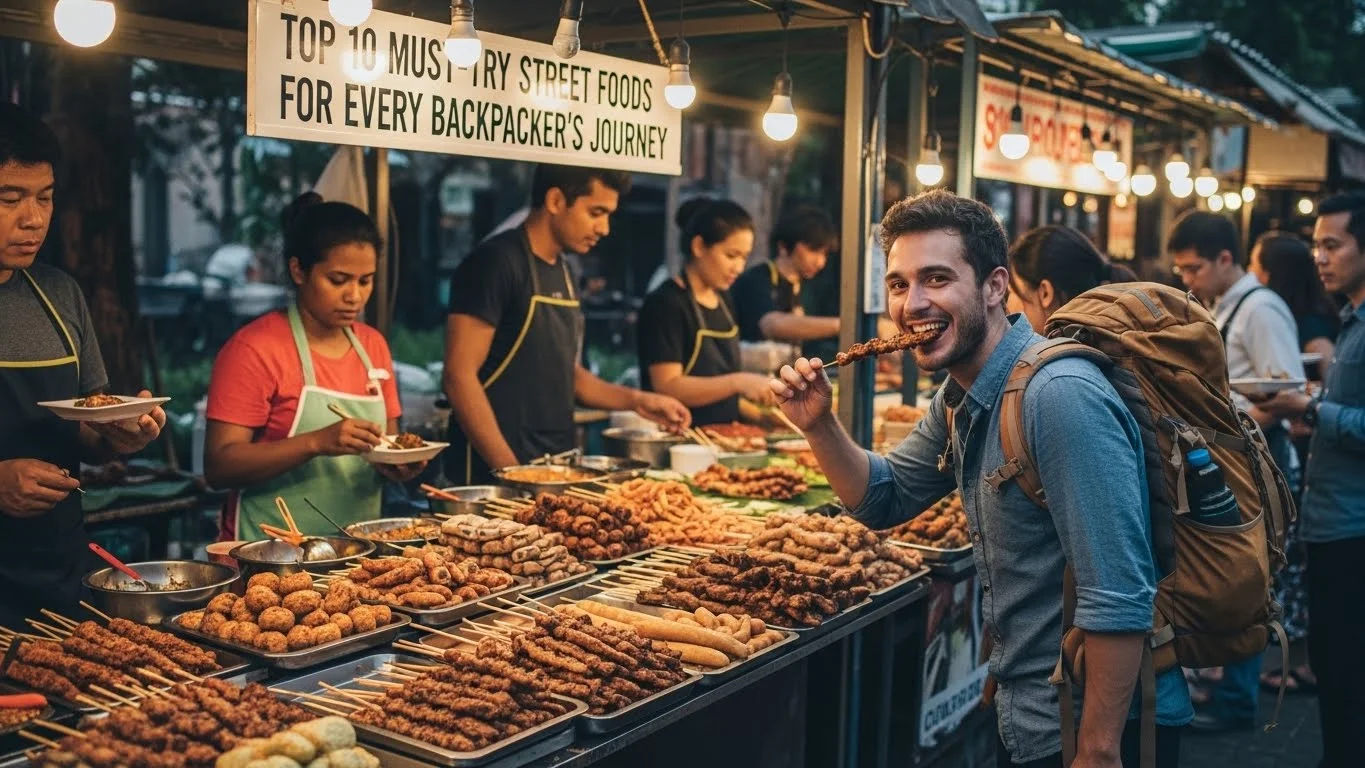
Street food is a delicious gateway to experiencing local cultures, flavors, and traditions. For every backpacker, indulging in these culinary gems is a must. Let’s dive into the vibrant world of street food and explore its significance and safety tips!
Understanding Street Food Culture
The Significance of Street Food in Global Cuisine
Street food is not just a quick bite on the go; it’s a rich tapestry of history, culture, and community. I remember my first encounter with street food in Mexico City. I was overwhelmed by the colorful stalls, the sizzling sounds of cooking, and the intoxicating aromas wafting through the air. Each vendor had their own story, and their food reflected the unique culture of the region.
Street food connects us to the heart of a city. It often tells the story of local traditions and family recipes passed down through generations. In many cultures, it’s a social activity, where friends and families gather around food carts to share a meal and enjoy each other’s company. I’ve found that street food is often more than just sustenance; it’s a communal experience that fosters connection among people.
Moreover, street food can be a more affordable way to sample authentic local cuisine. I’ve often found that trying a few different dishes from various vendors gives me a broader taste of the culinary landscape than a sit-down restaurant would. From tacos in Mexico to paella in Spain, each bite can transport you to a different place and time, allowing you to savor the essence of the region. Savor the World: Budget Culinary Journeys for Backpackers offers more insights into how to explore culinary delights on a budget.
Health and Safety Considerations
While the allure of street food is undeniable, it’s important to prioritize your health and safety. I’ve learned a few tricks to ensure that I enjoy these delicacies without any woes. First, I always observe the cleanliness of the stall. If the vendor maintains a tidy workspace and handles food with care, it gives me confidence in their practices.
Another tip I’ve picked up is to look for busy stalls. A line of locals eagerly waiting for their food usually indicates that the vendor is well-regarded and that the food is fresh. I’ve found that when locals flock to a particular vendor, it’s a good sign that the food is both tasty and safe. Also, I tend to steer clear of anything that has been sitting out for a long time, especially in warmer climates, as it can lead to foodborne illnesses.
Staying hydrated is just as important. Often when we travel, we’re walking around a lot, and I’ve noticed that I can easily forget to drink water. It’s wise to carry a reusable water bottle and fill it up whenever possible. Additionally, when it comes to trying new foods, I like to start with smaller portions. This way, I can sample a variety without overwhelming my stomach.
Top 10 Must-Try Street Foods
Tacos (Mexico)
No list of street food would be complete without tacos! When I first tasted a freshly made taco from a street vendor in Mexico, I was hooked. The combination of soft corn tortillas filled with juicy meats, fresh herbs, and zesty salsas is divine. I still remember the vibrant colors of the toppings and the explosion of flavors with every bite. Whether it’s al pastor, carnitas, or veggie options, tacos offer endless possibilities for delight.
Pad Thai (Thailand)
During my travels in Thailand, I couldn’t resist the charm of Pad Thai from street vendors. Watching them expertly fry rice noodles with eggs, tofu, and a mix of flavors was a show in itself. The taste is a perfect balance of sweet, sour, and savory, often garnished with crushed peanuts and lime. It’s a complete meal that’s both filling and affordable, making it a backpacker’s favorite.
Bánh Mì (Vietnam)
On my trip to Vietnam, I was introduced to Bánh Mì, a delightful fusion of French and Vietnamese cuisine. This sandwich made with a crispy baguette and filled with meats, pickled vegetables, and fresh herbs is a game-changer. Each bite is a delightful crunch, and the fresh ingredients give it a vibrant taste. I’ve enjoyed many variations, but the classic pork Bánh Mì will always have a special place in my heart.
Chaat (India)
Exploring the streets of India, I discovered Chaat, a delicious snack that’s a festival of flavors. The mix of crispy fried dough, tangy tamarind chutney, and creamy yogurt is irresistible. I remember standing in a bustling market, savoring the unique combination of spices and textures while engaging with friendly locals. Each region has its own version, and I made it my mission to try as many as I could!
Arepas (Venezuela)
Arepas are a delightful treat I discovered during my time in Venezuela. These cornmeal cakes can be grilled, baked, or fried, and then stuffed with a variety of fillings, from cheese to meats and avocado. They’re incredibly versatile and can be enjoyed at any time of the day. I loved watching vendors craft them right on the street, each one made to order, ensuring they were hot and fresh.
Falafel (Middle East)
In the bustling markets of the Middle East, I stumbled upon falafel, which quickly became one of my go-to street foods. These crispy chickpea balls are often served in pita bread with fresh veggies and tahini sauce. I remember the first time I bit into a warm falafel sandwich; the flavors exploded in my mouth, and I couldn’t help but go back for seconds. They’re not only tasty but also a great vegetarian option.
Takoyaki (Japan)
While wandering the streets of Osaka, I was introduced to takoyaki, a beloved Japanese street food. These savory balls made from a batter filled with diced octopus and topped with takoyaki sauce, bonito flakes, and green onions are simply amazing. Watching the vendors skillfully flip the balls in their special pans was a spectacle. Each bite is warm and comforting, perfect for those cool evenings.
Gelato (Italy)
No adventure in Italy is complete without indulging in gelato. As I strolled through the charming streets of Florence, the sight of gelato shops was tempting. The rich, creamy texture and intense flavors made it hard to resist. I remember trying flavors I had never seen before, and each scoop felt like a little piece of happiness on a hot day.
Jerk Chicken (Jamaica)
During my travels in Jamaica, I fell in love with jerk chicken. The combination of spices in the marinade creates an unforgettable flavor. I can still taste the smoky sweetness from the grill, and the vibrant side dishes of rice and peas made it a complete meal. Sharing a plate with locals while listening to music was an experience I cherish.
Ceviche (Peru)
In Peru, I had the pleasure of trying ceviche, a fresh dish made from raw fish marinated in citrus juices. Each bite was refreshing, and the addition of onions, cilantro, and chili brought it to life. I remember enjoying it by the ocean, feeling the sea breeze as I savored the vibrant flavors. It’s a must-try for any seafood lover.
Regional Variations and Local Favorites
Street Food in Southeast Asia
Southeast Asia is a treasure trove of street food delights. I remember wandering through the night markets in Thailand and Malaysia, where the stalls seemed to stretch endlessly. Each turn brought a new aroma that made my stomach growl. From the iconic satay skewers in Indonesia, grilled to perfection with a rich peanut sauce, to the spicy and fragrant laksa in Malaysia, I felt like I was on a flavor adventure. The variety is astounding; there’s something for everyone, whether you crave something savory or sweet.
One of my favorite experiences was enjoying a bowl of pho on the streets of Vietnam. The steaming broth, fresh herbs, and tender meat created a symphony of flavors. Watching the locals expertly prepare and serve these dishes made every meal feel special. I realized that street food here is more than just a meal; it’s a way of life, a daily ritual, and a celebration of culture.
Latin American Street Food Staples
Traveling through Latin America, I discovered that street food varies significantly from country to country, yet each dish packs a punch of flavor. Take pupusas from El Salvador, for instance. These thick corn tortillas filled with cheese, beans, or pork are a comfort food I quickly became addicted to. I remember visiting a local stall where the vendor made them fresh right in front of me. The warmth and heartiness of each bite were unmatched.
In Colombia, I found myself enjoying arepas again, but in a different style, often filled with different local ingredients. Each region has its twist, making every arepa experience unique. And let’s not forget about churros! I’ve had them in various Latin American countries, each one giving me a taste of nostalgia as I savored the crispy exterior and sweet, warm filling.
European Street Food Trends
In Europe, street food has seen a renaissance in recent years. I’ve noticed that many cities are embracing food trucks and outdoor markets, presenting a modern twist on traditional fare. In Barcelona, I stumbled upon a food market bustling with locals and tourists alike, all eager to try gourmet tapas. The fusion of flavors was exciting; I tried everything from mini paellas to innovative twists on classic dishes.
In London, I was captivated by the variety of street food options available. I tasted dishes from all over the world, like the mouthwatering jerk chicken and spicy curry, all available from vibrant food stalls. The atmosphere was electric, filled with laughter and chatter, making each meal feel like a celebration. I found myself returning to my favorite spots for a second helping!
How to Find the Best Street Food
Asking Locals for Recommendations
One of the best ways to discover hidden gems in street food is by asking the locals. I’ve always found that the people living in the area know where to find the tastiest dishes. Whenever I travel, I make it a point to chat with locals, whether it’s my taxi driver, hotel staff, or fellow travelers. They often have great insights and can point me to stalls that might not be in guidebooks.
When I was in Bangkok, for example, I asked a friendly shopkeeper where to find the best pad thai. She smiled and directed me to a bustling street corner where I was treated to the most authentic, flavorful pad thai I’ve ever had. Engaging with locals not only enhances the culinary experience but also helps me connect with the culture on a deeper level.
Using Food Apps and Online Resources
In today’s tech-savvy world, food apps and online resources have become indispensable for finding the best street food. I often rely on apps like Yelp and TripAdvisor to see what others recommend. While browsing, I look for places with high ratings and lots of reviews, especially from locals. I’ve discovered incredible spots this way, often with unique dishes that I might have missed otherwise.
Social media platforms, especially Instagram, can also be a goldmine for foodies. I’ve found that searching hashtags related to the city I’m in often leads me to trendy food stalls and dishes. Plus, stunning food photos can be quite motivating when I’m trying to decide where to eat next!
Choosing the Right Food Stalls
When I approach a food stall, there are a few things I look for to ensure I’m choosing the right one. First, I always pay attention to how busy the stall is. A long line of customers is usually a good sign that the food is not just tasty but also freshly prepared. I’ve found that busy stalls often have a quick turnover, which means the ingredients are likely to be fresh.
Additionally, I look for stalls that showcase their ingredients. If a vendor displays fresh produce and meats, it gives me confidence in the quality of their food. Cleanliness is also key; I prefer stalls that appear organized and well-kept. This attention to detail often reflects the care and pride a vendor takes in their cooking.
Street Food Etiquette and Tips
Understanding Local Customs
When enjoying street food, I’ve discovered that understanding local customs can greatly enhance the experience. Each country has its own unique etiquette, and adapting to these norms not only shows respect but also helps me connect with the culture. For instance, in many Asian countries, it’s common to eat with chopsticks or even with my hands, while in others, I might be expected to use utensils. I remember in Thailand, I was initially hesitant to eat with my hands, but once I embraced it, I found it to be a more intimate way to enjoy my food.
In some places, it’s polite to greet the vendor with a smile or a simple “thank you” in the local language. I’ve found that locals appreciate when I try to speak their language, no matter how basic my attempts may be. This small gesture often leads to warmer interactions and might even result in bonus recommendations for other dishes to try! I learned this during my time in India, where a friendly exchange with the vendor opened the door for me to sample a special dish they didn’t usually advertise.
Payment Methods and Bargaining
Payment methods can vary significantly from one place to another. I’ve often faced cash-only stalls, especially in smaller towns or markets. It’s wise to carry a mix of small bills and coins when I explore street food scenes. I learned this lesson the hard way once when I found a stall with the best-looking samosas, only to realize I had no cash! Now, I always ensure I have enough local currency before diving into the street food adventure.
Bargaining is another aspect I’ve encountered, particularly in markets. While it can feel intimidating, I’ve found that engaging in light-hearted negotiation can be fun and part of the experience. In some cultures, vendors expect it, while in others, it might be considered rude. I remember haggling for some delicious empanadas in Argentina. The vendor laughed and played along, and in the end, I walked away with a great deal and a smile on my face. I recommend keeping the mood light; a friendly attitude usually leads to a better experience for everyone involved.
Budgeting for Street Food on Your Journey
Price Ranges Around the World
One of the things I love about street food is how budget-friendly it can be. The price range for street food varies wildly depending on the country and specific dish. For instance, when I was in Vietnam, I could enjoy a hearty bowl of pho for just a couple of dollars. In contrast, a gourmet food truck in a major city like New York might charge upwards of $10 for a meal. Regardless, I’ve often found that street food offers a fantastic value, especially when considering the quality and authenticity of the meals.
In Mexico, I was pleasantly surprised to find that a delicious taco could cost less than a dollar, allowing me to sample a variety of flavors without breaking the bank. On the other hand, in more touristy areas, prices can inflate, so I usually try to venture slightly off the beaten path. This approach not only helps me save money but also leads me to some hidden gems. I remember finding a bustling local market in Peru where I savored fresh ceviche at a fraction of the price I would’ve paid at a touristy restaurant.
Maximizing Your Street Food Experience on a Budget
To make the most of my street food experience without overspending, I often adopt a few strategies. First, I like to eat like a local. This means avoiding tourist traps and seeking out bustling food stalls that locals frequent. I’ve found that these spots often offer the most authentic flavors at reasonable prices. It’s also a great way to mingle with locals and gain insight into the culture.
I’ve discovered that sharing dishes with friends or fellow travelers is another fantastic way to maximize my street food experience. Ordering a variety of dishes to share allows me to taste more without overindulging. I remember one night in Bangkok, where my friends and I each ordered a different dish, and we all got to sample everything from spicy curry to sweet mango sticky rice. This communal dining experience not only filled our bellies but also created lasting memories.
Finally, I keep an eye out for street food festivals or markets in the cities I visit. These events often bring together a variety of vendors, offering a taste of different cuisines at lower prices. I stumbled upon a food festival in Barcelona that showcased everything from traditional tapas to innovative fusion dishes. It was a feast for the senses, and I left feeling satisfied and inspired.
Frequently Asked Questions
What is the significance of street food in global cuisine?
Street food is a rich tapestry of history, culture, and community, often reflecting local traditions and family recipes. It serves as a social activity where friends and families gather to share meals, making it more than just sustenance; it fosters connection among people.
What are some health and safety tips for enjoying street food?
To ensure a safe experience, observe the cleanliness of the stall, choose busy vendors with locals waiting in line, avoid food that has been sitting out for a long time, stay hydrated, and start with smaller portions when trying new foods.
What are some must-try street foods mentioned in the article?
Some must-try street foods include tacos from Mexico, Pad Thai from Thailand, Bánh Mì from Vietnam, Chaat from India, Arepas from Venezuela, Falafel from the Middle East, Takoyaki from Japan, Gelato from Italy, Jerk Chicken from Jamaica, and Ceviche from Peru.
How can I find the best street food options in a new city?
Asking locals for recommendations is a great way to discover hidden gems. Engaging with local people can provide insights into the best stalls, while food apps and online resources can also help identify top-rated street food options. Avoid Travel Scams: Essential Tips for Budget Backpackers can also help you navigate your travels safely.
What should I look for when choosing a food stall?
When approaching a food stall, look for how busy it is, whether the vendor showcases fresh ingredients, and the cleanliness of the stall. A busy stall usually indicates fresh and tasty food.
How does street food etiquette vary across cultures?
Street food etiquette can differ significantly, with some cultures expecting the use of chopsticks or hands for eating, while others may require utensils. It’s also polite in many places to greet vendors with a smile or a thank-you in the local language.
What payment methods should I expect at street food stalls?
Payment methods can vary, with many stalls being cash-only, especially in smaller towns. It’s advisable to carry a mix of small bills and coins to ensure you can pay at various stalls.
Is bargaining common at street food markets?
Bargaining can be a part of the street food experience, particularly in markets. Engaging in light-hearted negotiation can be fun and is often expected in some cultures, while it may be considered rude in others.
What are the price ranges for street food around the world?
The price of street food varies widely by country and dish. For example, a bowl of pho in Vietnam may cost a couple of dollars, while gourmet food trucks in major cities can charge upwards of $10. Generally, street food offers great value for its quality and authenticity.
How can I maximize my street food experience on a budget?
To maximize your experience, eat like a local by avoiding tourist traps, share dishes with friends to sample more variety, and look for street food festivals that offer a range of cuisines at lower prices.