
Traveling as a backpacker can be an exhilarating adventure, but it also comes with its fair share of risks. Scams targeting travelers can leave lasting impacts, both financially and emotionally. Let’s dive into the world of backpacker scams and how to safeguard ourselves. Read Interesting article: Avoid Travel Scams: Essential Tips for Budget Backpackers
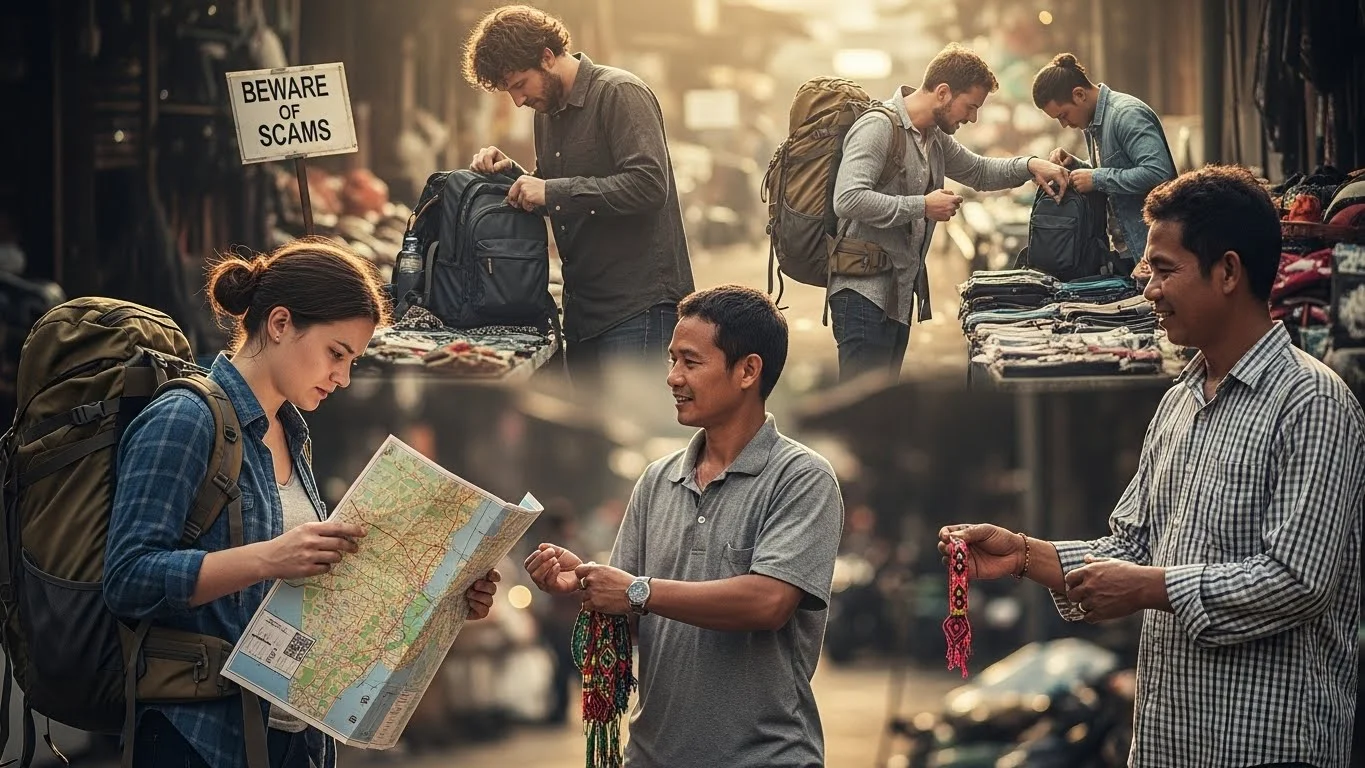
Overview of Scams Targeting Backpackers
Definition of Backpacker Scams
Backpacker scams are deceptive schemes specifically designed to exploit travelers, particularly those who are on a budget. These scams can range from fake accommodation listings to overpriced tours, and they often occur in popular tourist destinations. I’ve seen friends fall victim to these scams, and it’s heartbreaking to watch someone’s travel experience tainted by such dishonesty.
In my travels, I’ve encountered various scams myself. The first time I was approached by someone offering “too good to be true” deals, I felt a mix of excitement and suspicion. Understanding these scams can make all the difference in how we navigate our adventures. Read Interesting article: Essential Solo Travel Safety Tips for Budget Backpackers
Why Backpackers are Targeted
So why are backpackers specifically targeted? For one, many backpackers are often traveling on a tight budget, making them more vulnerable to scams that promise savings or deals. Additionally, backpackers tend to be less familiar with local customs and languages, which can make them easy targets for tricksters. I remember a time when I was in a bustling market, and the language barrier made it challenging to decipher whether a price was fair or not.
Moreover, backpackers generally carry cash and important documents, making them attractive targets for pickpockets and con artists. I’ve learned to be extra cautious with my belongings, especially in crowded areas where distractions are common.
Common Types of Scams
Fake Accommodation Listings
One of the most common scams backpackers encounter is fake accommodation listings. Imagine arriving in a new city after a long journey, only to find that the place you booked doesn’t exist or is significantly different from what was advertised. I experienced this firsthand when I booked a hostel online that looked great in photos, but when I arrived, it was more of a run-down apartment. It was a wake-up call for me to do my research thoroughly before booking.
To avoid falling for this scam, I recommend checking reviews on trusted travel websites and ensuring the listing has a profile with real feedback. Engaging in forums where travelers share their experiences can also provide valuable insights.
Overpriced Tours and Activities
Another scam that frequently targets backpackers involves overpriced tours and activities. I’ve been approached by enthusiastic locals offering guided tours at seemingly great prices, only to realize later that I could have explored on my own for free or at a much lower cost. It’s essential to do some prior research on what’s available and compare prices.
When booking tours, I’ve learned to ask locals for recommendations or consult online travel communities. Often, fellow travelers can point you in the direction of genuine experiences without the hefty price tag.
Taxi and Transportation Scams
Taxi scams are prevalent in many tourist-heavy areas. I remember hailing a taxi in a foreign city, only to find out that the driver took a longer route than necessary, racking up the fare. To avoid this, I now use rideshare apps whenever possible or ask my accommodation for a reliable taxi company. Knowing the estimated fare beforehand can also help in negotiations.
It’s also wise to check if the taxi has a meter and if not, agree on a fare before getting inside. Transparency is key, and being aware of common routes can save us from unnecessary hassle.
Street Vendor Scams
Street vendors can be a fun way to experience local culture, but they can also be a source of scams. I’ve been lured into buying items that were overpriced or of poor quality. One time, I paid a high price for what I thought was a unique souvenir, only to find the same item at a fraction of the cost a few blocks away. I learned to look around and compare prices before making a purchase.
When dealing with street vendors, it’s helpful to ask locals about fair prices or to walk away if something feels off. Trusting our instincts often leads us in the right direction.
Scams Involving Currency Exchange
Currency exchange scams can also catch backpackers off guard. I remember exchanging currency at a local shop that presented a very favorable rate, only to discover later that I was given counterfeit notes. It’s essential to exchange money at legitimate places, such as banks or authorized exchange offices, to avoid being shortchanged.
Before traveling, I usually research the current exchange rates to avoid being misled. Having a rough idea of what to expect can save us a lot of trouble.
Pickpocketing and Theft
Pickpocketing is a common concern for backpackers, especially in crowded areas like markets or public transport. I’ve had moments where I felt a sudden push in a crowd and instinctively checked my pockets to find my wallet was still there. It’s a reminder of how alert we need to be. Keeping our belongings close and using anti-theft bags can make a significant difference.
Using hidden pockets for valuables and staying aware of our surroundings has helped me tremendously. When we’re in unfamiliar places, a little caution can go a long way in keeping our belongings safe.
Online Scams and Phishing
Lastly, we mustn’t forget about online scams and phishing attempts. I once received an email that looked like it was from a trusted travel site, asking me to confirm my booking. Thankfully, I paused and checked the email address. It wasn’t legitimate. This experience highlighted the importance of being cautious with our online activities while traveling.
Using secure connections, avoiding public Wi-Fi for sensitive transactions, and being skeptical of unsolicited messages can help protect our information. I always double-check URLs and think twice before clicking links.
Regions with High Scam Risks
Europe
Europe is a beautiful continent filled with rich history, stunning landscapes, and vibrant cultures. However, it also has its fair share of scammers looking to take advantage of unsuspecting backpackers. I remember walking through famous tourist spots like Barcelona and Paris, where I saw countless individuals selling counterfeit tickets or offering “exclusive” tours that turned out to be nothing special. In cities like Rome, I heard stories about fake charity collectors, who would tug at our heartstrings only to pocket our donations. It’s essential to stay vigilant, especially in highly trafficked areas.
One tip I’ve found helpful is to keep my eyes peeled for local news or travel advisories that highlight common scams in specific cities. Knowing what to expect can save us from falling victim to these tactics.
Asia
Asia is another hotspot for backpackers, known for its affordability and breathtaking sights. However, I’ve learned that it’s also rife with scams. In places like Thailand, tuk-tuk drivers often lure tourists in with promises of cheap rides that turn into overpriced detours to tourist traps. I once took a ride that led me to a shop where the driver received a commission for bringing in customers. It taught me the importance of understanding where I want to go before hopping into a vehicle.
Additionally, in certain regions, I’ve encountered scams involving “friendly locals” who offer to help but instead lead you to overpriced shops or services. It’s a good idea to research transportation options and have a general itinerary in mind, so you’re less likely to be swayed by these tricks.
South America
South America is filled with vibrant cultures and breathtaking landscapes, but scams are prevalent. I’ve heard cautionary tales about people getting approached by seemingly friendly individuals who offer to show them around, only to take advantage of their trust. In cities like Buenos Aires, I’ve seen how distractions can lead to pickpocketing. One moment, I was admiring the street art, and the next, I had to check my bag to ensure nothing was missing.
When I traveled through this region, I learned to stay alert and limit my valuables to what I truly needed for the day. Trusting my gut instinct helped me avoid situations that felt off.
Africa
Africa has so much to offer, from wildlife safaris to stunning beaches. However, scams are not uncommon. In places like Morocco, I’ve encountered situations where I was offered “exclusive” guided tours that turned out to be overpriced and underwhelming. I remember a time when I was approached in a market, and the vendor insisted on giving me a “special price” for a product, only to inflate the cost once I showed interest.
To navigate these situations, I recommend asking locals for advice and keeping an eye out for reviews from other travelers. It’s also beneficial to engage with multiple vendors before making a purchase, as it helps to gauge fair pricing.
North America
Even in North America, scams exist, particularly in tourist-heavy areas. I recall visiting certain cities in the U.S., where individuals posed as officials or police officers to extract money for “fines” or donations. These encounters were shocking, as they felt more brazen than I had experienced elsewhere. I learned quickly to ask for identification and not to hand over cash without verifying the authenticity of the request.
It’s also important to watch out for online scams involving vacation rentals or event tickets. I’ve been tempted by offers that seemed too good to be true, and I learned the hard way that researching and booking through trusted platforms is crucial.
How to Recognize Scams
Red Flags to Watch For
Recognizing scams can sometimes feel overwhelming, but there are clear red flags to watch for. One major sign is if someone is overly persistent or aggressive in their pitch. I learned to be wary of people who approach me in a hurry, especially in crowded places. If they’re trying to sell something or push an agenda without giving me a moment to think, I typically walk away.
Another red flag is when someone offers something at a significantly lower price than the going rate. I remember the first time I encountered a “too-good-to-be-true” offer for a tour. It turned out to be a lemon. Always trust your instincts and take a moment to consider whether the deal seems reasonable.
Common Phrases and Tactics Used by Scammers
Scammers often have a repertoire of phrases designed to disarm or entice us. I’ve noticed that many will start with, “You’re lucky! I’m having a special deal today,” or “This is a one-time offer.” These phrases are meant to create urgency and pressure you into making a decision without thinking it through. I’ve also encountered the classic, “I’m just trying to help!” which can sometimes mask ulterior motives.
Additionally, be cautious of anyone who tries to engage you in conversation about your plans or where you’re staying. Scammers often use this information to tailor their approach and gain your trust. I’ve found that keeping my plans to myself and deflecting questions has saved me from potential scams.
Staying Safe While Traveling
Pre-Travel Tips
Before embarking on any journey, I find that being prepared can make a world of difference. One of my favorite pre-travel tips is to research my destination thoroughly. I like to read up on the local customs, typical scams, and even the safest neighborhoods to stay in. Knowing what to expect helps me feel more confident and less vulnerable. I remember planning a trip to Southeast Asia, and diving deep into travel blogs and forums helped me understand common pitfalls that other travelers had encountered.
As part of my preparation, I also create a detailed itinerary that includes the addresses of my accommodations and any important landmarks. I print these out and keep them handy while traveling. Having a physical backup is especially helpful in case my phone dies or I can’t access the internet. I also make copies of my passport, ID, and critical documents, storing them separately from the originals. This way, if anything gets lost or stolen, I have a better chance of resolving the issue quickly.
Staying Alert and Aware in Public Spaces
Once I’m on the road, staying alert becomes my priority. I’ve learned that being aware of my surroundings can often help me avoid potentially dangerous situations. When I’m in crowded places like markets or public transport, I tend to keep my belongings close and always in sight. I remember a time in a busy train station, where I noticed a group of people acting suspiciously. By staying aware, I was able to move to a safer area before anything could happen.
I also make it a habit to scan the faces around me and trust my instincts. If something feels off—like too many people crowding one space or someone getting too close—I step back and reassess. I find that taking a moment to breathe and observe can prevent a lot of unnecessary stress.
Using Technology Wisely
Technology can be a great ally while traveling, but it also comes with risks. When I travel, I’m cautious about the Wi-Fi networks I connect to. I avoid public Wi-Fi for sensitive transactions, like banking or making reservations. Instead, I rely on my mobile data or use a VPN to protect my information. I remember once trying to book a last-minute flight while on a café’s Wi-Fi, only to be bombarded with strange ads and pop-ups. That taught me a valuable lesson about being cautious online.
There are also numerous apps that can enhance our travel experience. I love having translation apps on hand, which can help me navigate language barriers. Additionally, using maps and navigation apps allows me to find my way around without needing to ask strangers for directions. I’ve found that having offline maps downloaded ahead of time can come in handy in places where internet access is spotty.
Trusting Your Instincts
Above all, I believe trusting my instincts is one of the best tools I have in my travel safety belt. Over the years, I’ve learned to listen to that little voice in my head. If a situation feels uncomfortable or if someone’s approach seems too pushy, I don’t hesitate to walk away. I remember one instance where a local approached me, offering a guided tour. The deal sounded amazing, but something about it felt off. I decided to politely decline, and later I learned from fellow travelers that it was a common scam. It reinforced the idea that if something doesn’t feel right, it probably isn’t.
I think it’s important to remember that our instincts are often based on subconscious observations. If we feel uneasy, it’s okay to prioritize our safety over politeness. I’ve learned to be assertive and remember that it’s perfectly acceptable to decline offers that don’t sit well with me.
Frequently Asked Questions
What are backpacker scams?
Backpacker scams are deceptive schemes designed to exploit travelers, particularly those on a budget. These scams can include fake accommodation listings, overpriced tours, and various other tricks that often occur in popular tourist destinations.
Why are backpackers targeted by scammers?
Backpackers are often traveling on tight budgets, making them more vulnerable to scams that promise savings. They are typically less familiar with local customs and languages, which can make them easy targets. Additionally, backpackers usually carry cash and important documents, attracting pickpockets and con artists.
What is a common type of scam involving accommodation?
A common scam is fake accommodation listings. Travelers may arrive at a location to find that the place they booked doesn’t exist or is significantly different from what was advertised. To avoid this, it’s recommended to check reviews and engage in travel forums for feedback.
How can backpackers avoid overpriced tours?
Backpackers can avoid overpriced tours by doing prior research on available options and comparing prices. They should ask locals for recommendations or consult online travel communities to find genuine experiences at fair prices.
What should I do to avoid taxi scams?
To avoid taxi scams, use rideshare apps when possible, ask for reliable taxi companies from your accommodation, and check if the taxi has a meter. Agreeing on a fare before getting in can also help prevent being overcharged.
How can I protect myself from pickpocketing?
To protect yourself from pickpocketing, keep your belongings close and use anti-theft bags. Staying aware of your surroundings and using hidden pockets for valuables can also make a significant difference in preventing theft.
What are some red flags to recognize a scam?
Red flags to watch for include overly persistent or aggressive pitches and offers that are significantly lower than the going rate. If someone seems too eager to sell something or pressure you into a quick decision, it’s wise to walk away.
How can I stay safe while traveling online?
To stay safe online while traveling, avoid public Wi-Fi for sensitive transactions, use secure connections, and be skeptical of unsolicited messages. Always double-check URLs and think twice before clicking on links.
What pre-travel tips can help me avoid scams?
Before traveling, research your destination, including local customs and typical scams. Creating a detailed itinerary with addresses of accommodations and important landmarks, and making copies of important documents can also enhance your safety.
How important is trusting my instincts while traveling?
Trusting your instincts is crucial for travel safety. If a situation feels uncomfortable or someone seems too pushy, it’s acceptable to walk away. Your instincts are often based on subconscious observations and can help you avoid potentially harmful situations.