
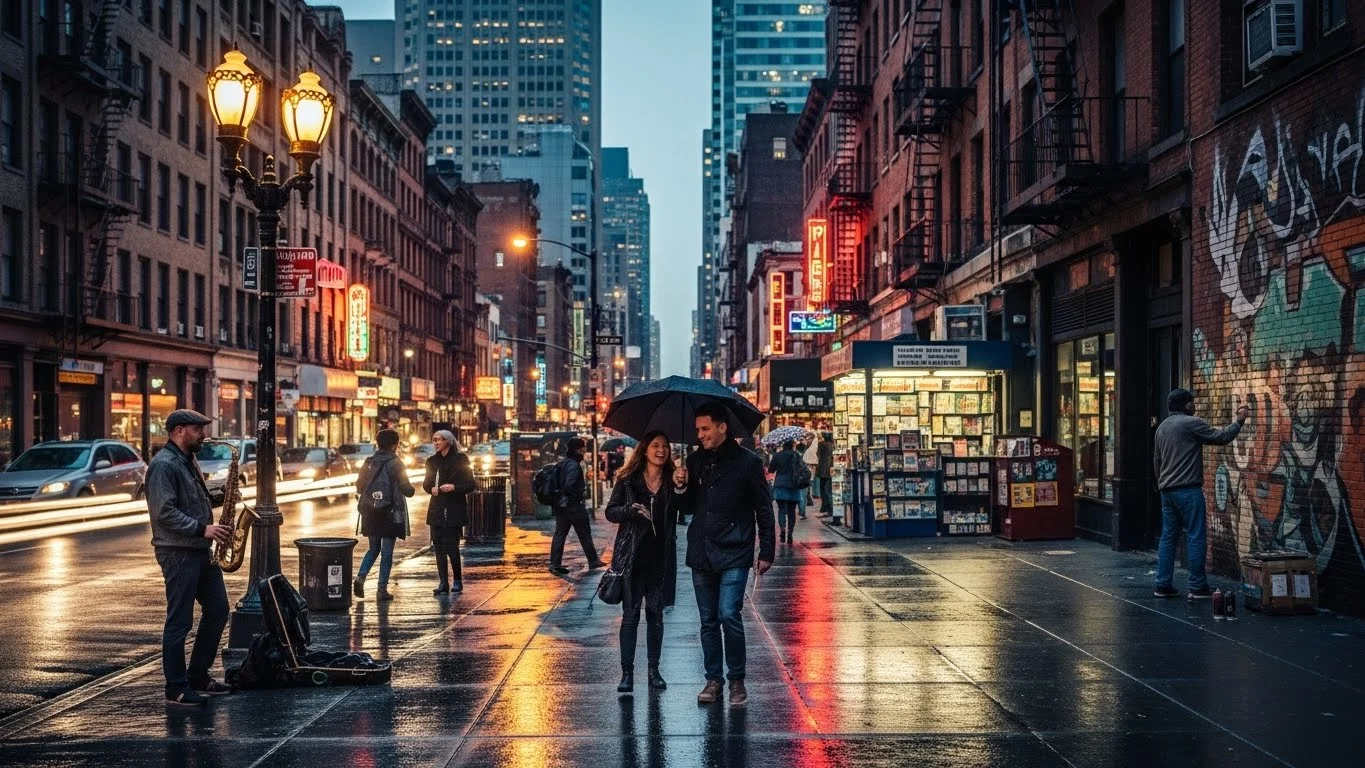
Urban street photography captures the pulse of city life, offering a unique glimpse into everyday moments. Through this lens, we can explore stories hidden in plain sight, revealing the vibrant tapestry of human experience.
Understanding Urban Street Photography
Definition of Urban Street Photography
Urban street photography, for me, is not just about snapping pictures of people in a city. It’s an art form that invites us to observe and document the stories unfolding all around us. It thrives on spontaneity, capturing candid moments that might otherwise go unnoticed. Whether it’s a child playing in the park, a couple laughing on a busy street, or an elderly person sitting quietly on a bench, urban street photography encapsulates the essence of daily life in urban settings. The goal is to reflect the soul of the city through its inhabitants, showcasing their interactions, emotions, and the environment that surrounds them. Read Interesting article: Top 10 Street Photography Tips for Budget Backpackers
History and Evolution of Street Photography
The roots of street photography date back to the early 20th century, with pioneers like Henri Cartier-Bresson, who is often referred to as the father of modern street photography. I remember reading about his concept of the “decisive moment,” where he emphasized capturing that fleeting instant that tells a story. Over the decades, street photography has evolved alongside societal changes and advancements in technology. The advent of 35mm cameras made it easier for photographers to carry their equipment and shoot spontaneously. In the 1960s and 70s, photographers like Garry Winogrand and Diane Arbus pushed the boundaries, focusing on the eccentricities of urban life and challenging social norms. Today, we see street photography embracing digital technology, with smartphones providing a new way to capture and share moments instantly.
Notable Urban Street Photographers
As I dove deeper into urban street photography, I became inspired by several notable photographers whose work resonates with me. One such artist is Vivian Maier, whose posthumously discovered photographs showcase a profound understanding of human emotion and street life. Her ability to capture intimate moments while remaining an observer is something I aspire to emulate. Another favorite of mine is Joel Meyerowitz, who beautifully blends color and light, bringing vibrancy to the streets of New York. Also, I can’t overlook the impact of street photography collectives, like the Street Photographers Association, that continue to encourage and promote the work of emerging talents. It’s fascinating to see how their unique perspectives contribute to the evolving narrative of urban environments. Read Interesting article: Mastering Street Photography: Essential Techniques for Travelers
As we explore the essence of urban street photography, we begin to understand that it’s more than just technique; it’s about connection. It’s about immersing ourselves in the rhythm of the city and being present to capture those fleeting moments that tell a larger story. In my experience, connecting with the environment and the people around us is what truly brings our photographs to life. The streets are alive with possibilities, and every click of the shutter can reveal a new facet of the human experience.
Essential Equipment for Street Photography
Cameras: Choosing the Right Gear
When I first started street photography, I was overwhelmed by the choices in cameras. I learned that the best camera for street photography is one that you feel comfortable carrying around and using. A compact mirrorless camera can be a fantastic choice because it offers great image quality without the bulk of a DSLR. I’ve found that being discreet helps me capture candid moments without drawing too much attention to myself. If you’re just getting started, a camera with a good autofocus system and a decent low-light performance can make a significant difference.
Lenses: Prime vs. Zoom
Choosing the right lens is another crucial aspect of street photography. Personally, I prefer prime lenses—specifically a 35mm or 50mm. They encourage me to move around and engage more with my subjects, which results in more dynamic compositions. I’ve noticed that using a prime lens forces me to think more creatively about my shots. However, zoom lenses can also be beneficial for those moments when you need flexibility. If I’m in a crowded area, I might reach for a zoom lens to capture the scene without having to get too close.
Accessories: Tripods, Filters, and More
While I typically prefer to shoot handheld, I’ve found that having a lightweight tripod can come in handy, especially during low-light situations or when I want to achieve a specific composition. Neutral density filters can also be useful for managing exposure in bright sunlight, allowing me to achieve that dreamy motion blur in bustling street scenes. There’s a balance to find here; I try to keep my gear minimal to maintain mobility but also ensure that I have the essentials to capture the moment effectively.
Techniques for Capturing Life in the City
Composition Principles
When I first started exploring urban street photography, I quickly realized that composition plays a vital role in how a photograph tells a story. It’s not just about what you capture, but how you frame it. There are a few key principles I’ve found particularly helpful in creating more compelling images.
Rule of Thirds
The rule of thirds is something I often think about when composing my shots. By dividing the frame into nine equal parts with two horizontal and two vertical lines, I can position my subject along these lines or at their intersections. This creates a more balanced and interesting image. I remember one instance where I captured a street performer in a busy plaza. By placing him off-center, I was able to include the bustling crowd around him, which added context and energy to the image.
Leading Lines
Another technique I enjoy using is leading lines. These are natural lines in the scene that draw the viewer’s eye toward the focal point. Whether it’s a road, a fence, or even a line of people, leading lines can guide the viewer through the photograph. I’ve had moments where I found myself standing at an intersection, noticing how the lines of the pavement seemed to lead directly to an interesting scene. By positioning myself just right, I could capture the convergence of these lines, enhancing the visual flow of the image.
Framing and Layering
Framing and layering are techniques that help add depth to my photographs. I often look for natural frames—like doorways, windows, or even branches—that can help isolate my subject while providing context. This gives the image a sense of place. For example, during one of my city strolls, I noticed a man reading a newspaper inside a café. By shooting through the café window, I could frame him within the setting, revealing a slice of life that felt intimate yet expansive.
Lighting Techniques
Lighting is another fundamental aspect of street photography that can dramatically change the mood of an image. I’ve learned to pay close attention to how light interacts with my subjects and the environment.
Natural Light vs. Artificial Light
For me, natural light is often the best friend of a street photographer. I love how different times of day can create diverse atmospheres. Early mornings and late afternoons offer softer light, which can be magical for capturing the essence of a city. However, I’ve also experimented with artificial light sources, like street lamps and neon signs, to create dramatic contrasts and highlight certain features. It’s fascinating how a single street light can transform a scene, giving it a completely different vibe.
Golden Hour and Blue Hour
The golden hour, just after sunrise or before sunset, is a time I try to plan my shoots around whenever possible. The warm glow during this time can enhance colors and add a dreamy quality to my images. I remember capturing a stunning shot of a couple walking hand in hand as the sun dipped below the horizon. The soft light wrapped around them, creating a moment that felt almost cinematic. The blue hour, just before dawn or after dusk, is also beautiful, with cooler tones that can evoke a sense of calm and stillness in an otherwise bustling city.
Timing and Anticipation
Understanding timing is crucial in street photography. It’s about being patient and waiting for the perfect moment to unfold.
Understanding Peak Moments
There are certain peak moments in street photography that can make a shot truly special. I’ve learned to recognize these moments—like a child bursting into laughter, a couple sharing a kiss, or a street vendor interacting with customers. Developing an instinct for these fleeting instances has improved my photography immensely. I often find myself hanging around busy areas, observing the ebb and flow of life, and waiting for that perfect moment to click the shutter.
Patience and Observation
Patience is a virtue, especially in street photography. I’ve spent hours in one spot, just observing the world around me. This practice has taught me to see things I might have missed if I was always on the move. Sometimes, it’s the small interactions—a smile exchanged, a child playing, or an elderly person deep in thought—that make for the most compelling images. I’ve found that allowing myself to slow down opens up opportunities for those beautiful, candid moments that tell the real story of the streets.
Street Photography Styles and Themes
Documentary Style
Documentary-style street photography holds a special place in my heart. It’s about telling a story and capturing the essence of a moment in time. I remember walking through a local market, where the vibrant colors and the chaos created a perfect backdrop for storytelling. I focused on the vendors as they interacted with customers, their faces reflecting a mix of emotions—pride, exhaustion, and joy. Each shot revealed a slice of life that spoke volumes about our shared human experience. The goal here is to create a narrative; I often think about how each photograph can stand alone yet also be part of a larger story. This approach challenges me to think critically about the images I capture and how they fit into the broader context of life around me.
Portraits in Public Spaces
One of my favorite themes in street photography is capturing portraits in public spaces. There’s something incredibly intimate about freezing a moment of a stranger’s life while they navigate through their day. I remember a day spent in a bustling square, where I noticed a woman sitting alone on a bench, lost in thought. I approached her and asked if I could take her picture. The resulting shot, with her expression revealing a combination of serenity and contemplation, became one of my favorites. It’s a reminder that people are often more open than we think, and a simple smile or a genuine question can lead to extraordinary moments. These portraits reveal the depth of character and emotion within the urban landscape.
Street Art and Urban Landscapes
Street art fascinates me and has become a prominent theme in my photography. Cities are alive with murals, graffiti, and installations that reflect the culture and creativity of their inhabitants. During a recent walk, I stumbled upon a vibrant mural that showcased the community’s spirit. I realized that these works of art tell stories just as much as the people do. Capturing street art in its context—whether it’s on the side of a building, a forgotten alleyway, or an urban park—adds layers to my photographs. I often juxtapose the art with people interacting with it. It’s amazing how a well-placed figure can breathe life into an otherwise static image. This thematic approach encourages me to explore the city in new ways, constantly searching for hidden gems that contribute to the urban narrative.
Daily Life and Routine
Documenting daily life and routine in the city has become a personal mission for me. I’ve often found beauty in the mundane—people commuting, waiting for buses, or enjoying a cup of coffee at their favorite café. I remember standing on a busy street corner one rainy afternoon, watching as people scurried past, umbrellas in hand. I snapped a shot of a child jumping in a puddle, laughter erupting amidst the dreariness. Those fleeting moments are the heartbeat of the city, reminding us that even in the rush of life, joy can be found in unexpected places. Capturing these routines allows me to reflect on the shared experiences we all have, and I believe it helps others connect with the images on a deeper level. Read Interesting article: Your Guide to Budget-Friendly Seasonal Landscape Photography
Legal and Ethical Considerations in Street Photography
Understanding Local Laws
As I immersed myself in street photography, I quickly learned that understanding local laws is crucial. Each city has different regulations regarding photography, especially when it comes to capturing people in public spaces. I remember my first trip to a major city, where I was hesitant to take photos in areas that seemed off-limits. I did some research beforehand and discovered that in many places, it’s legal to photograph individuals in public without consent, but it’s wise to respect local norms. Being aware of the laws helps us navigate potential issues and allows us to focus on what we love about street photography—capturing life as it unfolds.
Respecting Privacy and Consent
Respecting privacy is another critical aspect of street photography that I’ve come to appreciate. While I love capturing candid moments, I also believe in treating my subjects with dignity. If I sense someone is uncomfortable, I won’t take their photo. I recall an instance where I spotted a man playing music on the street. I was tempted to capture his performance, but instead, I paused and asked if he would mind. His smile and willingness to engage made the moment even more rewarding. This experience taught me that asking for consent not only shows respect but can also lead to richer stories and connections.
Ethical Implications of Street Photography
Ethics in street photography can be a complex topic, and I often find myself reflecting on it. While we have the right to capture images, we also have a responsibility to consider their impact. I’ve seen photos that exploit vulnerable individuals, and it makes me uncomfortable. In my work, I strive to highlight the humanity in my subjects rather than objectifying them. I believe that street photography should celebrate life, not diminish it. By approaching my subjects with compassion and understanding, I aim to create images that resonate positively and tell meaningful stories.
Editing and Post-Processing Techniques
Choosing Editing Software
Editing plays a significant role in street photography, and I’ve experimented with various software options to find what works best for me. I started with basic programs like iPhoto and gradually moved to more advanced tools like Adobe Lightroom and Photoshop. I appreciate Lightroom for its intuitive interface and powerful editing capabilities, which allow me to enhance my images while maintaining their authenticity. I love how I can adjust exposure, contrast, and colors to better reflect the mood I experienced while shooting. Finding the right software that suits my style has been a game changer in my photography journey.
Basic Editing Techniques for Street Photography
When it comes to editing, I focus on a few basic techniques to enhance my street photographs. Cropping is one of my go-to methods, as it helps me draw attention to the subject and eliminate distractions. I also pay close attention to exposure and contrast, often adjusting these settings to bring out the details in shadows and highlights. I recall a photo I took during a winter afternoon where the light was flat. By increasing the contrast during editing, I was able to bring a new life to the image, making it pop with clarity and depth. Simple adjustments can sometimes transform an ordinary shot into something extraordinary.
Enhancing Colors and Contrast
Colors can tell a story in street photography, and I love the opportunity to play with them during the editing process. I often boost saturation or vibrancy to make colors stand out, especially in urban environments where bold hues can create striking images. I remember capturing a shot of a colorful mural with people walking by. By enhancing the colors in post-processing, I was able to create an image that felt lively and engaging. However, I’ve learned to be cautious not to overdo it—finding the right balance is essential to maintaining the natural feel of the scene.
Building a Portfolio and Sharing Your Work
Creating a Cohesive Body of Work
Utilizing Social Media Platforms
Participating in Photography Communities
Tips for Improving Your Street Photography Skills
Practice and Experimentation
Learning from Critiques
Attending Workshops and Classes
Frequently Asked Questions
What is urban street photography?
Urban street photography is an art form focused on observing and documenting the stories unfolding in urban settings. It captures candid moments that reflect the essence of daily life, showcasing the interactions and emotions of city inhabitants.
Who are some notable urban street photographers?
Some notable urban street photographers include Vivian Maier, known for her profound understanding of human emotion, and Joel Meyerowitz, who beautifully blends color and light. Street photography collectives, like the Street Photographers Association, also contribute to promoting emerging talents.
What equipment is recommended for street photography?
A recommended setup for street photography includes a compact mirrorless camera for ease of use and portability. Prime lenses, particularly 35mm or 50mm, are preferred for their ability to encourage engagement with subjects. Additionally, lightweight tripods and neutral density filters can be useful for specific situations.
What are some key composition principles in street photography?
Key composition principles in street photography include the rule of thirds, which helps create balanced images, leading lines that draw the viewer’s eye, and framing and layering techniques that add depth to photographs.
What is the significance of lighting in street photography?
Lighting is fundamental in street photography as it dramatically changes the mood of an image. Natural light is often preferred, with the golden hour providing a warm glow that enhances colors, while artificial light can create dramatic contrasts.
What styles and themes can be explored in street photography?
Styles and themes in street photography include documentary-style photography that captures moments in time, portraits in public spaces which highlight individual stories, capturing street art, and documenting daily life and routine in urban environments.
What legal and ethical considerations should street photographers keep in mind?
Street photographers should understand local laws regarding photography, respect privacy and consent, and consider the ethical implications of their work. This includes treating subjects with dignity and highlighting their humanity without exploitation.
What basic editing techniques can enhance street photographs?
Basic editing techniques include cropping to focus on the subject, adjusting exposure and contrast to bring out details, and enhancing colors to create striking images while maintaining the natural feel of the scene.
How can photographers build a portfolio and share their work?
Photographers can build a cohesive body of work by utilizing social media platforms and participating in photography communities to share their images and gain feedback.
What tips can help improve street photography skills?
Improving street photography skills can be achieved through practice and experimentation, learning from critiques, and attending workshops and classes to gain new insights and techniques.