Web Analytics

Recent Posts

Top Carbon Offsetting Organizations for Eco-Conscious Travelers

As eco-conscious travelers, we often seek ways to minimize our impact on the environment. Carbon offsetting has emerged as an effective solution, allowing us to travel sustainably while supporting projects that combat climate change. Read Interesting article: Unlocking Eco-Tourism Potential Through Carbon Offsetting Strategies

Top Carbon Offsetting Organizations for Eco-Conscious Travelers

Understanding Carbon Offsetting

What is Carbon Offsetting?

Carbon offsetting is a way for individuals and businesses to balance out their carbon emissions by funding projects that reduce or capture an equivalent amount of CO2 from the atmosphere. Personally, I’ve come to see it as a bridge—a way to connect my travel experiences with my responsibility toward the planet. When I fly, drive, or take a cruise, I know I’m contributing to greenhouse gas emissions. By offsetting those emissions, I feel like I’m doing my part to help counteract the damage.

How Carbon Offsetting Works

So how does this all work? It’s pretty straightforward. When you calculate your carbon footprint from travel (which can be done using various online calculators), you can purchase carbon offsets that fund projects designed to reduce emissions. These projects can range from reforestation to renewable energy initiatives. I remember my first time offsetting my emissions. I felt a rush of empowerment knowing that my contribution was going towards planting trees that would absorb CO2 and restore habitats.

Each offset you purchase usually represents a metric ton of CO2 reduced or removed from the atmosphere. The key here is that the projects need to be verified and credible to ensure that they genuinely contribute to reducing carbon emissions. This is where the choice of carbon offsetting organizations becomes crucial. Understanding the impact of these organizations can help travelers make informed decisions.

Importance of Carbon Offsetting for Travelers

For us, as travelers, carbon offsetting is more than just a trend; it’s a vital step in practicing responsible tourism. I think about the beaches I’ve visited, the mountains I’ve hiked, and the forests I’ve wandered through. Each of those beautiful places deserves to be protected. By offsetting my travel emissions, I feel connected to the places I love, knowing I’m helping to preserve them for future generations.

Moreover, the awareness around climate change is growing. As travelers, we have the power to influence the tourism industry. When more of us choose to offset our emissions, we send a strong message that sustainability is essential. I’ve often shared my offsetting journey with friends, encouraging them to think about their impact and how small contributions can lead to significant changes.

Additionally, many carbon offsetting organizations reinvest in local communities, creating jobs and fostering economic growth. This means that our efforts have a dual effect—helping the environment while also benefiting people. It’s a win-win situation, and I’ve found that knowing my travel contributes positively to both the planet and local communities enhances my travel experience.

Leading Carbon Offsetting Organizations

1. Carbonfund.org

Carbonfund.org is one of the oldest and most established carbon offsetting organizations. They focus on a variety of projects, including renewable energy, reforestation, and energy efficiency. I’ve seen their projects in action and can personally vouch for their dedication to transparency and effectiveness.

2. TerraPass

TerraPass has a strong focus on renewable energy projects and has been a trusted name in the industry. They offer a range of options for travelers looking to offset their carbon footprint. I appreciate their commitment to sourcing projects that are verifiable and have a real impact.

3. Atmosfair

Atmosfair is particularly focused on air travel emissions and offers unique programs specifically designed for frequent flyers. Their projects often include renewable energy installations in developing countries. It’s inspiring to see how they empower communities while providing travelers with a clear way to offset their emissions.

4. Gold Standard

Founded by WWF and other NGOs, Gold Standard is known for its rigorous certification standards. They ensure that every project they endorse meets high environmental safeguards. I find it reassuring to know that my contributions are going to projects that genuinely prioritize sustainability.

5. ClimateCare

ClimateCare focuses on projects that deliver both climate and development benefits. They support initiatives like clean energy and water projects in developing regions. I’ve been impressed by their holistic approach, which aligns with my values as a traveler who wants to make a difference.

6. NativeEnergy

NativeEnergy stands out for their commitment to helping communities create their projects. They often work with indigenous groups to develop renewable energy solutions. This resonates with me because I believe in supporting local voices and empowering communities directly.

7. Cool Effect

Cool Effect has a unique model that allows travelers to choose specific projects to fund. This direct connection to projects makes it personal. I remember scrolling through their site, selecting projects that resonated with me, which gave me a deeper sense of ownership over my offsetting journey.

How to Choose the Right Organization

Understanding Certification Standards

Choosing a carbon offsetting organization can feel overwhelming, especially with so many options available. One of the first things I look for is certification standards. Organizations like Gold Standard and Verified Carbon Standard (VCS) provide a level of assurance that projects are legitimate and effective. I remember when I first started my offsetting journey; I felt relieved to know that certain certifications meant my money would be used wisely. These certifications ensure that projects actually reduce emissions and meet strict environmental and social criteria. It gives me peace of mind, knowing that my offsets are doing what they’re supposed to do.

Evaluating Project Types

Not all projects are created equal, and I’ve learned that evaluating the types of projects an organization supports is crucial. Some organizations might focus primarily on reforestation, while others may prioritize renewable energy or community-based initiatives. Personally, I have a soft spot for projects that not only reduce carbon but also support local communities. For instance, initiatives that provide clean energy solutions in developing areas resonate with me because they empower people while also combating climate change. It’s like hitting two birds with one stone, and I appreciate knowing my contributions have a broader impact.

Assessing Transparency and Reporting

Transparency is another key factor I consider when choosing an offsetting organization. I want to know where my money is going and how it’s being spent. Many reputable organizations publish detailed reports that outline the projects they fund, the emissions reduced, and any challenges faced. I remember reading through a couple of these reports and feeling inspired by the stories of communities benefiting from these projects. If an organization lacks transparency, it raises red flags for me. I prefer to support those that provide clear, accessible information about their operations and outcomes.

Popular Carbon Offsetting Projects

Reforestation Initiatives

Reforestation initiatives are among my favorite types of carbon offset projects. There’s something magical about trees; they not only absorb CO2 but also provide habitats for wildlife and help restore ecosystems. I think back to a trip I took to Costa Rica, where I had the chance to explore lush rainforests. Knowing that my contributions could help plant trees in similar environments makes me feel deeply connected to the places I love. It’s like giving back to nature in a way that feels personal and impactful.

Renewable Energy Projects

Renewable energy projects are another area that I find particularly exciting. They encompass a wide range of initiatives, from wind farms to solar energy installations. I’ve seen firsthand how these projects can transform communities by providing clean energy and reducing reliance on fossil fuels. When I offset my travel emissions by supporting renewable energy, I feel like I’m investing in a cleaner future. I also enjoy learning about the technology and innovation behind these projects, and it’s inspiring to see communities thrive because of the shift to sustainable energy sources. Read Interesting article: Exploring Carbon Offsetting: A Game Changer for Eco-Tourism

Community-Based Projects

Community-based projects hold a special place in my heart. I appreciate how these initiatives directly involve local populations in sustainability efforts. For example, I once supported a project that provided clean cookstoves in rural areas, reducing emissions and improving health outcomes. It was incredible to see how a simple change could enhance the quality of life for families while also contributing to carbon offsetting. I believe that the most effective solutions come from listening to and empowering communities to take charge of their futures.

Conservation Efforts

Conservation efforts are also vital in the carbon offsetting landscape. Protecting natural habitats and endangered species is crucial for maintaining biodiversity and combating climate change. I remember visiting a wildlife sanctuary and learning about the challenges faced by various species. Supporting conservation projects through carbon offsetting gives me a sense of hope, knowing that I’m helping to preserve these precious ecosystems. It’s a reminder that our planet is interconnected, and every small effort counts.

Carbon Offsetting for Different Travel Modes

Offsetting Air Travel Emissions

Air travel is one of the largest contributors to carbon emissions, which is why I make it a priority to offset these emissions. When I book flights, I always look for options to offset my carbon footprint. Many airlines now offer this as an option during the booking process, making it easier than ever for travelers to contribute. I’ve found that even small contributions can add up, and it feels good to know that I’m taking responsibility for my travel choices.

Offsetting Road Travel Emissions

When it comes to road travel, whether it’s a road trip or just a weekend getaway, I also make an effort to offset those emissions. It’s fascinating how much impact our personal vehicles can have on the environment. I often use online calculators to estimate my emissions based on distance traveled and the type of vehicle I’m using. It’s a simple step, but it helps me stay conscious of my travel habits.

Offsetting Cruise Travel Emissions

Cruise travel can be particularly challenging when it comes to carbon emissions due to the sheer scale of operations. I’ve been on a few cruises, and while they can be a fun way to see multiple destinations, I always seek ways to offset the emissions from my journey. Some cruise lines have started to offer carbon offsetting options, which is a positive step. I believe that as travelers, it’s crucial to advocate for more sustainable practices in the cruise industry, and supporting offsetting initiatives is one way to do that.

Benefits of Carbon Offsetting for Eco-Conscious Travelers

Support for Sustainable Development

One of the biggest benefits of carbon offsetting, in my experience, is the support it provides for sustainable development projects around the world. By participating in carbon offsetting, we’re not just neutralizing our own footprints; we’re also contributing to initiatives that can uplift communities. I remember reading about a solar energy project in a rural village that not only reduced carbon emissions but also provided electricity for schools and healthcare facilities. It struck me how our small actions as travelers could have such a ripple effect, supporting both the environment and society at large.

When I offset my emissions, I feel like I’m playing a part in a much bigger story—one that involves empowering local communities and paving the way for sustainable practices. Each time I contribute, I’m reminded that my travels can lead to positive changes in the places I visit.

Enhanced Eco-Friendly Travel Experiences

Offsetting my carbon footprint has also enhanced my travel experiences. Knowing that I’m actively contributing to sustainability allows me to immerse myself fully in the beauty of nature without the weight of guilt hanging over me. I recall a trip to a national park where I participated in a tree-planting event, offsetting my emissions while also connecting with fellow eco-conscious travelers. It was a unique experience that enriched my journey and deepened my appreciation for the environment.

Furthermore, many eco-friendly accommodations and tour operators are beginning to incorporate carbon offsetting into their business models. I’ve stayed in lodges that proudly display their carbon-neutral certifications or partner with local offsetting projects. This creates a sense of community among like-minded travelers, making every trip feel like a shared mission for the planet.

Contribution to Global Climate Goals

Every little effort counts when it comes to combating climate change, and I’ve come to realize that carbon offsetting is my way of contributing to global climate goals. Each time I offset my emissions, I’m supporting projects that align with international initiatives aimed at reducing greenhouse gas emissions. It’s empowering to think that my individual actions—when multiplied by thousands of travelers—can contribute to a significant reduction in carbon emissions.

For instance, I learned that many carbon offsetting projects are designed to align with the United Nations Sustainable Development Goals (SDGs). By offsetting, I’m not just helping the environment; I’m also playing a role in advancing social equity and economic development worldwide. It’s a powerful feeling to know that my travel choices can help create a more sustainable future for all.

Steps to Offset Your Carbon Footprint

Calculating Your Carbon Footprint

The first step in offsetting my carbon footprint is calculating it. There are various online calculators available that can help estimate emissions based on travel mode, distance, and even activities. I remember the first time I tried one of these calculators; I was surprised by how much my travel habits contributed to my overall carbon footprint. This realization was a bit daunting, but it motivated me to take action. By understanding my specific impact, I felt more equipped to make informed decisions about how to offset those emissions.

Choosing the Right Offset Program

After calculating my footprint, the next step is choosing the right offset program. I’ve learned that it’s essential to research different organizations and projects to find one that resonates with my values. I often consider factors like project types, geographic focus, and community impact when making my choice. For me, supporting local initiatives and projects that enhance community welfare is particularly important. I recall selecting a project that focused on clean water access for rural communities, which felt rewarding and aligned with my values as a traveler.

Making the Purchase

Once I’ve selected a program, making the purchase is straightforward. Most organizations have user-friendly websites that allow me to offset my emissions in just a few clicks. I appreciate that I can choose the amount I want to offset, whether it’s a small contribution or a more significant investment. I often find myself feeling a sense of accomplishment every time I complete this step, knowing that I’m actively contributing to a better future.

Tracking Your Impact

Finally, tracking my impact is crucial for my ongoing commitment to carbon offsetting. Many organizations provide updates and reports on the projects funded through offset purchases, which I find incredibly motivating. I enjoy seeing the tangible results of my contributions, whether it’s the number of trees planted or the amount of CO2 reduced. This feedback loop reinforces my decision to offset my emissions and keeps me engaged in my sustainability journey. I often share this information with friends and family, hoping to inspire them to take action as well.

Real-Life Success Stories

Case Study: A Traveler’s Journey with Carbon Offsetting

I want to share a story that truly highlights the power of carbon offsetting. A friend of mine, an avid traveler, decided to offset her emissions during a year filled with international adventures. She started by calculating her carbon footprint and was shocked to discover how much her travel habits had contributed to her overall emissions. Instead of feeling discouraged, she took it as a challenge.

She researched various offsetting organizations and found one that aligned with her values, focusing on reforestation and renewable energy projects. Throughout the year, she shared her offsetting journey on social media, encouraging her followers to join her in making a difference. By the end of the year, not only had she offset her travel emissions, but she also inspired a small community of fellow travelers to do the same. This experience opened her eyes to the impact individuals can have when they band together for a cause.

Case Study: Successful Projects Supported by Offsetting

Another inspiring example is the success of a reforestation project in Madagascar that was funded through carbon offsets. This project, which aimed to restore degraded land, has not only led to the planting of thousands of trees but has also created jobs for local communities. I read about how the project has improved biodiversity and helped combat soil erosion, all while providing sustainable income sources for families. It’s uplifting to see how carbon offsetting can support meaningful environmental and social impacts simultaneously.

These stories remind me that through our efforts, we can contribute to positive change—not just for ourselves, but for the planet and its inhabitants as well. Each time I offset my emissions, I carry these stories with me, as a reminder that I’m part of a larger movement toward sustainability.

Frequently Asked Questions

What is carbon offsetting?

Carbon offsetting is a method for individuals and businesses to balance their carbon emissions by funding projects that reduce or capture an equivalent amount of CO2 from the atmosphere. It serves as a bridge to connect travel experiences with environmental responsibility.

How does carbon offsetting work?

Carbon offsetting works by calculating your carbon footprint from travel and purchasing carbon offsets that fund projects aimed at reducing emissions. These projects can include reforestation and renewable energy initiatives, with each offset typically representing a metric ton of CO2 reduced or removed from the atmosphere.

Why is carbon offsetting important for travelers?

For travelers, carbon offsetting is a vital step toward practicing responsible tourism. It helps protect the environments they enjoy visiting and sends a strong message about the importance of sustainability in the tourism industry.

What are some leading carbon offsetting organizations?

Some leading carbon offsetting organizations include Carbonfund.org, TerraPass, Atmosfair, Gold Standard, ClimateCare, NativeEnergy, and Cool Effect, each focusing on various projects like renewable energy, reforestation, and community-based initiatives.

How can travelers choose the right carbon offsetting organization?

Travelers can choose the right carbon offsetting organization by understanding certification standards, evaluating project types, and assessing the transparency and reporting practices of the organizations.

What types of projects are popular for carbon offsetting?

Popular projects for carbon offsetting include reforestation initiatives, renewable energy projects, community-based projects, and conservation efforts, each contributing to reducing emissions and promoting sustainability.

How can I offset my air travel emissions?

To offset air travel emissions, travelers can look for carbon offsetting options during the flight booking process. Many airlines now offer this option, making it easier for travelers to contribute to offsetting their carbon emissions.

What are the benefits of carbon offsetting for eco-conscious travelers?

Benefits of carbon offsetting for eco-conscious travelers include supporting sustainable development projects, enhancing eco-friendly travel experiences, and contributing to global climate goals, which collectively help reduce greenhouse gas emissions.

What steps should I take to offset my carbon footprint?

To offset your carbon footprint, first calculate it using online calculators, then choose the right offset program that aligns with your values, make the purchase through user-friendly websites, and track your impact through updates from the organization.

Can you provide a real-life success story related to carbon offsetting?

One success story involves a traveler who offset her emissions during a year of international adventures, inspiring a community of fellow travelers to make similar contributions. Another example is a reforestation project in Madagascar funded through carbon offsets, which led to the planting of thousands of trees and created jobs for local communities.


Unlocking Eco-Tourism Potential Through Carbon Offsetting Strategies

Eco-tourism offers a unique opportunity for travelers to explore the world while preserving its beauty. By integrating carbon offsetting strategies, we can amplify eco-tourism’s impact and contribute to a sustainable future. Carbon Offsetting’s Impact on Eco-Tourism: What You Need to Know provides further insights into this crucial aspect of eco-tourism.

Unlocking Eco-Tourism Potential Through Carbon Offsetting Strategies

Understanding Eco-Tourism

Definition and Importance of Eco-Tourism

Eco-tourism is more than just a buzzword; it’s a movement aimed at responsible travel that conserves the environment and improves the well-being of local communities. When I first learned about eco-tourism, I was intrigued by how it allows us to enjoy nature while also playing a role in preserving it for future generations. This approach resonates with my belief that travel should enrich not just ourselves but also the places we visit.

The importance of eco-tourism lies in its potential to balance the needs of travelers and the environment. By choosing eco-friendly options, we can reduce our carbon footprints and minimize the negative impact that tourism often has on natural resources. I remember feeling a sense of responsibility when I visited a national park and learned how my visit contributed to conservation efforts. It made me appreciate eco-tourism as a way to connect with nature meaningfully while supporting its preservation.

Core Principles of Eco-Tourism

At its core, eco-tourism is guided by a few fundamental principles. First, it emphasizes sustainability. I’ve seen how eco-tourism encourages practices that protect biodiversity and ecosystems. For example, staying at eco-lodges that utilize renewable energy and water conservation techniques can make a real difference.

Another principle is community involvement. It’s inspiring to visit places where local communities are actively engaged in tourism. I recall a trip where the local guides shared their culture and traditions, making my experience richer. Supporting local businesses helps ensure that the economic benefits of tourism are felt by those living in these areas. How Community-Based Eco-Tourism Benefits Local Cultures discusses this topic in greater detail.

Lastly, eco-tourism advocates for education and awareness. I believe that understanding the environmental issues facing destinations can motivate us to be more responsible travelers. I remember attending workshops during my travels that highlighted the importance of conservation efforts, which truly opened my eyes.

Benefits of Eco-Tourism for Local Communities

The benefits of eco-tourism extend far beyond just environmental conservation; they also significantly enhance the lives of local communities. When I visited a small village that thrived on eco-tourism, I saw firsthand how it provided jobs and fostered economic development. The locals were passionate about sharing their culture, and I felt connected to them while learning about their way of life.

Eco-tourism creates a demand for local crafts, foods, and experiences, which helps preserve traditional practices. I often seek out local artisans when I travel, and buying their products not only supports their livelihood but also keeps their culture alive. It’s rewarding to know that my travel choices can contribute to the sustainability of these communities.

Moreover, eco-tourism promotes environmental stewardship among locals. When communities benefit from preserving their natural resources, they are more likely to protect them. I’ve witnessed this during visits to protected areas where local residents play a crucial role in conservation efforts. Their commitment to safeguarding the environment is inspiring and highlights the importance of community engagement in eco-tourism.

In essence, eco-tourism is a powerful way to create a positive impact on the environment while improving the quality of life for local communities. It’s a win-win situation where we can explore the beauty of our planet and help preserve it simultaneously.

Carbon Offsetting: A Key Strategy

What is Carbon Offsetting?

Carbon offsetting is a method that allows us to compensate for our carbon emissions by funding projects that reduce greenhouse gases. I first encountered the concept when planning a trip and wanted to mitigate my travel impact. It seemed like a practical solution, and I was eager to learn more about how I could contribute positively.

In essence, when we travel, we generate carbon emissions, whether through flights, car rentals, or even hotel stays. By purchasing carbon offsets, we essentially support projects that absorb or prevent the release of an equivalent amount of carbon dioxide. It’s a way of acknowledging our environmental impact and taking responsibility for it. I felt empowered knowing that by supporting these projects, I could play a role in combating climate change.

How Carbon Offsetting Works

The process of carbon offsetting is surprisingly straightforward. When we calculate our carbon footprint, we can determine how many offsets we need to purchase. I remember using an online calculator to estimate my emissions from a recent trip. It was eye-opening to see the numbers and realize the impact of my travel choices.

Once we know how much we need to offset, we can invest in various projects—like reforestation, renewable energy, and conservation initiatives—that are designed to reduce carbon emissions. For me, it was reassuring to know that my contributions could support projects that not only help the environment but also empower local communities. Learning about the different projects available opened my eyes to the diverse ways we can make a difference. How Carbon Offsetting Boosts Eco-Tourism: A Complete Guide offers additional insights into these initiatives.

The Role of Carbon Credits in Eco-Tourism

Carbon credits are essential in the world of eco-tourism as they represent the measurable reduction of greenhouse gases. When I researched carbon credits, I discovered that one credit typically equals one ton of carbon dioxide reduced or removed from the atmosphere. This measurement helps create a transparent market for carbon offsetting, allowing travelers like us to understand the impact of our contributions.

In many eco-tourism initiatives, carbon credits are used to fund various environmental projects. I found it fascinating to learn how these credits can incentivize sustainable practices. For instance, when eco-resorts purchase carbon credits, they can fund renewable energy installations or reforestation efforts, making their operations more environmentally friendly. It’s a collaborative approach to tackling climate change that aligns perfectly with the principles of eco-tourism.

As I continue to explore the world of eco-tourism, I’m excited to see how carbon offsetting can help unlock its true potential. By combining responsible travel with effective strategies to combat climate change, we can all contribute to a more sustainable future, one trip at a time.

Implementing Carbon Offsetting Strategies

Identifying Carbon Footprints in Tourism Activities

Understanding our carbon footprint is the first step in implementing effective carbon offsetting strategies. I remember when I first started tracking my travel-related emissions; it was eye-opening to see how my choices added up. From the flights I took to the accommodations I chose, every little detail contributed to my overall impact on the environment.

For many of us, the largest portion of our travel emissions comes from air travel. I’ve found that using online tools to calculate my emissions can provide clarity. These calculators take into account various aspects of our travel—like distance traveled, mode of transport, and even the type of accommodation. By breaking it down, I could pinpoint where I could reduce my carbon footprint. I realized that even small changes, like opting for non-stop flights or choosing trains over cars for short distances, can make a difference.

Strategies for Calculating Emissions

Once we’ve identified our carbon footprint, the next step is calculating our emissions accurately. I’ve learned that it’s essential to consider both direct and indirect emissions. For example, beyond just flights, I also think about how much energy my hotel uses or the emissions related to food production during my travels. Using a comprehensive calculator can help guide this process.

In my case, I started by listing all the activities I planned on a trip. For each activity, I researched the associated emissions. This included everything from transportation to meals and activities. I found it helpful to keep a travel diary, which allowed me to reflect on my choices and their impact. This practice not only made me more mindful but also equipped me with knowledge to make better decisions in the future.

Types of Carbon Offsetting Projects

Once I understood my emissions, I felt ready to explore the various types of carbon offsetting projects that I could support. I discovered that there are numerous initiatives aimed at reducing carbon in the atmosphere, and each one contributes uniquely to the environment.

Reforestation Initiatives

One of my favorite types of carbon offsetting projects is reforestation. Trees are incredible natural carbon sinks, absorbing CO2 as they grow. I remember coming across a project that aimed to restore forests in my region. The idea of supporting a project that not only captures carbon but also helps restore biodiversity was exciting. By contributing to such initiatives, I felt I was playing a small part in restoring the balance in nature.

Renewable Energy Projects

Renewable energy projects are another impactful way to offset carbon emissions. I’ve seen initiatives that focus on wind, solar, and hydroelectric power, which help reduce reliance on fossil fuels. When I learned about a community in a developing country that gained access to solar energy through donations, it struck a chord with me. Supporting these projects means I’m not only offsetting my emissions but also helping communities gain sustainable energy and independence.

Conservation Efforts

Conservation efforts also play a crucial role in carbon offsetting. Protecting existing ecosystems ensures that we maintain their ability to sequester carbon. I remember visiting a marine conservation project that aimed to protect coral reefs. Supporting initiatives like these not only helps combat climate change but also preserves the beauty and diversity of our planet. It’s rewarding to know that my contributions can help protect these vital ecosystems for future generations to enjoy.

Each type of offsetting project offers a unique way to contribute to environmental health. By diversifying my support, I realized I could make a broader impact, fostering both local communities and the planet. It’s inspiring to think that our travel choices can help drive change, reminding us of the responsibility we have as travelers to be mindful and proactive in protecting the earth.

Case Studies of Successful Eco-Tourism Initiatives

Carbon Offsetting in National Parks

Visiting national parks has always been one of my favorite ways to connect with nature, and I’ve seen how these places are embracing carbon offsetting to enhance their sustainability efforts. For instance, I remember my trip to Yellowstone National Park, where I learned about their carbon offset program. The park has partnered with various organizations to plant trees and restore native habitats, which directly counterbalances the emissions from park operations and visitor activities.

What struck me the most was how they provided educational programs for visitors, explaining the importance of their efforts. They encouraged us to participate by donating a small fee upon entry, which would go directly to their carbon offset initiatives. I felt proud contributing to a program that not only protected the environment but also supported local wildlife. It reinforced my belief that national parks can be leaders in eco-tourism by implementing such impactful strategies.

Eco-Resorts Leading the Way

On another trip, I discovered an eco-resort that truly embodied the principles of sustainable tourism. Nestled in Costa Rica, this resort didn’t just promote eco-friendliness; it lived it. I was amazed by their commitment to creating a minimal carbon footprint. They utilized solar panels for energy, collected rainwater for use, and even had an on-site organic garden that provided fresh produce for guests.

What really fascinated me was their carbon offset program. For every guest that stayed, they calculated the carbon emissions from their travel and stay, then contributed to local reforestation projects. I remember talking to the owners, who shared stories about how their initiatives were helping to restore natural habitats and promote biodiversity. Staying at an eco-resort like this transformed my view of luxury travel. It made me realize that comfort and sustainability can go hand in hand.

Community-Based Eco-Tourism Projects

One of the most inspiring examples of eco-tourism I’ve encountered was in a small village in Kenya. The community had developed a program that allowed tourists to engage in authentic cultural experiences while contributing to local conservation efforts. I was fortunate enough to join a guided tour led by community members, where we learned about their traditional practices and challenges related to wildlife conservation.

The village had implemented a carbon offset initiative by creating a local wildlife reserve, which not only protected endangered species but also provided an income source for the community through eco-tourism. I felt a deep connection during my visit, knowing that my presence and participation supported their efforts. The locals explained how the funds generated from tourism were reinvested into education and healthcare, enhancing their quality of life.

This experience highlighted the power of community-based eco-tourism in not just preserving the environment but also uplifting local cultures. It was a reminder that when we travel, we have the opportunity to create meaningful connections that extend beyond our immediate enjoyment. It’s incredible to think about how these initiatives can inspire travelers like us to make conscious choices that benefit both the environment and local communities.

Challenges and Considerations

Common Misconceptions about Carbon Offsetting

As I’ve delved deeper into the world of eco-tourism and carbon offsetting, I’ve come across several misconceptions that can cloud our understanding of these concepts. One of the biggest myths is that purchasing carbon offsets allows us to travel guilt-free without changing any of our habits. I used to think that just buying offsets would absolve me of my responsibilities as a traveler. However, I’ve learned that offsets should complement, not replace, our efforts to reduce emissions.

It’s essential to remember that while carbon offsetting is a valuable tool, it’s not a cure-all. I’ve come to appreciate the idea that we should first strive to minimize our carbon footprints through conscious choices in travel and lifestyle before turning to offsets for the remainder. This shift in perspective has made my travels more mindful and intentional.

Measuring the Effectiveness of Offsetting Programs

Another challenge I’ve encountered is understanding how to measure the effectiveness of carbon offsetting programs. Not all projects are created equal, and it can be difficult to determine which ones genuinely deliver on their promises. I remember feeling overwhelmed when researching options for offsetting my carbon footprint, as there were so many organizations claiming to make a difference.

To navigate this, I’ve learned to look for transparency in the projects I support. I seek out initiatives that provide clear data on their impact, such as how many trees have been planted or the amount of carbon sequestered. It’s important that these programs are verified by reputable third-party organizations to ensure accountability. This due diligence has helped me feel more confident in my choices and their potential impact.

Balancing Profitability and Sustainability

One of the most thought-provoking aspects of eco-tourism is the balancing act between profitability and sustainability. I’ve seen some businesses genuinely embrace eco-friendly practices, while others seem to use eco-tourism as a marketing gimmick. It’s disheartening to realize that some companies might prioritize profits over genuine sustainability efforts.

During my travels, I’ve often considered how businesses can be incentivized to adopt sustainable practices without sacrificing their bottom line. I believe that educating consumers about the importance of supporting authentic eco-tourism can drive change. When we choose to spend our money on businesses that genuinely care about the environment, we can influence the market to prioritize sustainability. This realization has empowered me as a consumer, knowing that my choices can push the tourism industry toward a more sustainable future.

Frequently Asked Questions

What is eco-tourism?

Eco-tourism is a movement aimed at responsible travel that conserves the environment and improves the well-being of local communities. It allows travelers to enjoy nature while playing a role in preserving it for future generations.

Why is eco-tourism important?

The importance of eco-tourism lies in its potential to balance the needs of travelers and the environment, helping to reduce carbon footprints and minimize negative impacts on natural resources while connecting travelers meaningfully with nature.

What are the core principles of eco-tourism?

Eco-tourism is guided by fundamental principles that emphasize sustainability, community involvement, and education and awareness about environmental issues facing destinations.

How does eco-tourism benefit local communities?

Eco-tourism enhances the lives of local communities by providing jobs, fostering economic development, creating demand for local crafts and foods, and promoting environmental stewardship among locals.

What is carbon offsetting?

Carbon offsetting is a method that allows individuals to compensate for their carbon emissions by funding projects that reduce greenhouse gases, thus acknowledging and taking responsibility for their environmental impact.

How does carbon offsetting work?

Carbon offsetting works by calculating one’s carbon footprint and purchasing offsets to support projects like reforestation and renewable energy that reduce carbon emissions, allowing travelers to mitigate their impact.

What are carbon credits?

Carbon credits represent the measurable reduction of greenhouse gases, with one credit typically equaling one ton of carbon dioxide reduced or removed from the atmosphere, helping travelers understand the impact of their contributions.

What types of carbon offsetting projects are available?

Types of carbon offsetting projects include reforestation initiatives, renewable energy projects, and conservation efforts, each contributing uniquely to environmental health and community support.

What are common misconceptions about carbon offsetting?

A common misconception is that purchasing carbon offsets allows for guilt-free travel without changing habits. It is essential to minimize carbon footprints through conscious choices before relying on offsets.

How can travelers measure the effectiveness of offsetting programs?

Travelers can measure the effectiveness of carbon offsetting programs by looking for transparency in projects, seeking data on impact, and ensuring initiatives are verified by reputable third-party organizations.

Carbon Offsetting’s Impact on Eco-Tourism: What You Need to Know

Carbon offsetting is becoming a key player in eco-tourism, offering a way to mitigate travel-related emissions. Understanding its impact can help us make more sustainable choices while exploring the world. Read Interesting article: Exploring Carbon Offsetting: A Game Changer for Eco-Tourism

Carbon Offsetting's Impact on Eco-Tourism: What You Need to Know

Understanding Carbon Offsetting

What is Carbon Offsetting?

When I first heard about carbon offsetting, I thought it was just another buzzword thrown around in environmental discussions. However, I quickly learned that it’s a significant concept in the fight against climate change. Simply put, carbon offsetting allows individuals and organizations to compensate for their greenhouse gas emissions by investing in projects that reduce or remove carbon dioxide from the atmosphere. This could be through renewable energy projects, reforestation efforts, or energy efficiency improvements. In essence, it’s about balancing the scales of our carbon footprint.

How Carbon Offsetting Works

Learning how carbon offsetting works was an eye-opener for me. The process begins with calculating the total emissions produced, which can come from transportation, accommodation, and activities during a trip. Once you have that number, you can purchase carbon credits from projects that aim to reduce emissions. Each carbon credit typically represents one ton of carbon dioxide reduced or removed from the atmosphere. It’s a way of paying for the good that someone else is doing to help counterbalance your own impact.

For example, when I traveled to Costa Rica, I noticed options for carbon offsetting at the airport. I was intrigued to learn that by contributing to a reforestation project, I could offset my flight emissions. The project not only aimed to plant trees but also supported local wildlife and communities, making it a win-win for both the environment and the local economy.

Types of Carbon Offsetting Projects

During my exploration of carbon offsetting, I discovered various types of projects that make a positive impact. Here are some of the most common ones:

  • Forestry Projects: These involve planting trees or preserving existing forests, which absorb carbon dioxide as they grow. I found it fascinating that a single mature tree can absorb about 48 pounds of carbon dioxide per year!
  • Renewable Energy Projects: Investing in solar, wind, or hydroelectric power reduces reliance on fossil fuels. I remember visiting a solar farm during my travels and being amazed at how much energy could be harnessed from the sun.
  • Energy Efficiency Projects: These initiatives aim to reduce energy consumption through upgrades or technology improvements. I learned that even something as simple as retrofitting buildings can have a significant impact on carbon emissions.
  • Agricultural Projects: Sustainable farming practices can help sequester carbon and reduce emissions. I met farmers who were implementing innovative methods to enhance soil health while producing food sustainably.

Each of these projects plays a vital role in the larger picture of carbon offsetting. I believe that by supporting such initiatives, we can not only offset our personal emissions but also contribute to global efforts in combatting climate change. Read Interesting article: How Carbon Offsetting Boosts Eco-Tourism: A Complete Guide

The Link Between Carbon Offsetting and Eco-Tourism

Defining Eco-Tourism

Eco-tourism has always intrigued me. It’s about traveling responsibly, respecting natural environments, and supporting local cultures. I’ve experienced trips where I felt deeply connected to nature, and it made me realize how important it is to protect our planet. Eco-tourism promotes sustainability by encouraging travelers to appreciate and preserve the places they visit. In my opinion, it’s not just a vacation; it’s a way to engage with the world in a meaningful way.

The Role of Sustainability in Eco-Tourism

Sustainability is at the heart of eco-tourism. It’s about minimizing our environmental impact while maximizing the benefits for local communities. I remember visiting a small village in Thailand where the locals had embraced eco-tourism. They used traditional methods to create sustainable crafts, and the income from tourists helped fund schools and healthcare. This experience reinforced my belief that when we travel sustainably, we can make a positive difference.

How Carbon Offsetting Enhances Eco-Tourism

Integrating carbon offsetting into eco-tourism is a natural fit. When I learned that many eco-tourism operators offer carbon offset options, I felt more empowered as a traveler. By choosing to offset my emissions, I was actively participating in protecting the very ecosystems I came to explore. For instance, I once booked a tour that included a carbon offset contribution, and I felt good knowing that my travels were supporting reforestation efforts in the region.

Moreover, carbon offsetting can enhance the experience of eco-tourism by creating a sense of shared responsibility among travelers. It fosters a community of like-minded individuals who care about the environment. I found that discussing carbon offsetting with fellow travelers sparked meaningful conversations and a deeper connection to the destinations we visited.

In my view, the synergy between carbon offsetting and eco-tourism creates a powerful opportunity for us to enjoy our travels while nurturing the planet. By embracing this approach, we can pave the way for a more sustainable future, one journey at a time. Read Interesting article: Top Carbon Offset Travel Options for Eco-Conscious Backpackers

Benefits of Carbon Offsetting for Eco-Tourism

Reducing Carbon Footprint

One of the most significant benefits of carbon offsetting, especially in eco-tourism, is the reduction of our carbon footprint. Every time I travel, I’m acutely aware of the emissions my journey generates, from flights to local transportation. By investing in carbon offset projects, I feel like I’m taking a proactive step to balance that impact. It’s more than just a number; it’s about making a commitment to the planet. For example, when I offset my emissions from a recent trip to the Amazon rainforest, I knew that my contribution was helping to protect the very ecosystem that was so breathtakingly beautiful. It gave me a sense of responsibility, knowing I was doing my part to lessen the environmental toll of my travels.

Supporting Local Communities

Carbon offsetting often means supporting projects that directly benefit local communities. I remember visiting a community in Madagascar where locals were involved in a reforestation project funded by carbon credits. The initiative not only aimed to restore their natural habitat but also provided jobs and resources for education and healthcare. It was inspiring to see how carbon offsetting could create a ripple effect, where the benefits extended beyond the environment and into the lives of the people living there. I believe that when we support these projects, we help empower communities to thrive while preserving their natural surroundings.

Promoting Biodiversity Conservation

Another remarkable aspect of carbon offsetting is its role in promoting biodiversity conservation. During my travels, I’ve witnessed firsthand the delicate balance of ecosystems and the urgent need to protect them. By participating in carbon offset programs that focus on preserving habitats, I know I’m contributing to the protection of countless species. For instance, I visited a coastal region where a carbon offset project was designed to restore mangroves. These ecosystems are crucial for protecting coastal areas from erosion and supporting diverse marine life. It was a beautiful reminder that our actions, even as tourists, can contribute to safeguarding the planet’s rich biodiversity.

Attracting Environmentally Conscious Travelers

As more travelers become aware of their environmental impact, carbon offsetting is increasingly attracting those who prioritize sustainable travel. I’ve noticed a growing trend where eco-tourism operators highlight their carbon offset programs, appealing to travelers who want to make a positive difference. This awareness is exciting because it creates a community of like-minded individuals who care about the planet. On one of my recent trips, I joined a group that actively discussed our carbon offset contributions and the projects we were supporting. The conversations we had made the experience even more enriching, as we connected over shared values and a commitment to sustainability.

Challenges and Criticisms of Carbon Offsetting in Eco-Tourism

Effectiveness of Offsetting Projects

While carbon offsetting offers many benefits, I’ve also encountered some skepticism regarding the effectiveness of offsetting projects. It’s essential to recognize that not all projects are created equal. I’ve learned that some initiatives might not deliver the promised results or could take years to produce measurable impacts. For me, it’s a reminder to do thorough research before investing in any carbon offset program. I want to ensure that my contributions are genuinely making a difference and that the projects are credible and well-managed.

Greenwashing Concerns

Greenwashing has become a significant concern in the realm of carbon offsetting. It’s disheartening when organizations promote themselves as environmentally friendly without actually taking meaningful steps toward sustainability. I’ve seen travel companies that market their services as eco-conscious while lacking genuine commitment to carbon offsetting. This can be frustrating for travelers like us who want to make responsible choices. I’ve made it a habit to ask questions and dig deeper into the claims made by companies before booking my trips. It’s crucial for us to be informed and to support those who genuinely prioritize the environment.

Measuring Impact and Accountability

Measuring the true impact of carbon offsetting can also be a challenge. I remember reading about various methods used to quantify the benefits of offset projects, and it made me realize how complicated it can be to track progress. Transparency and accountability are vital, and I believe that offset projects should provide clear metrics for their impact. As a traveler, I want to feel confident that my efforts contribute to real change and not just numbers on a page. I think it’s essential for companies to share their progress openly so we can see the tangible results of our contributions.

How to Choose Carbon Offsetting Options as a Traveler

Researching Carbon Offset Programs

When it comes to carbon offsetting, I’ve found that doing thorough research is key. Initially, I didn’t know where to start, but with time, I learned to look for reputable programs that align with my values. I begin by exploring the different organizations offering carbon credits. Online resources and reviews can provide insights into their credibility and the projects they support. I often check if they are certified by established standards like the Verified Carbon Standard (VCS) or the Gold Standard, which gives me peace of mind knowing that the projects have undergone rigorous evaluation.

While researching, I also pay attention to the types of projects they fund. I feel more connected to programs that support reforestation efforts or renewable energy initiatives, especially those that have a tangible impact on local communities. It’s like piecing together a puzzle; each project I consider brings me closer to understanding how my contributions can make a difference.

Evaluating Credibility and Transparency

Once I have a few potential options, I focus on evaluating their credibility and transparency. I remember a particular instance when I came across a program that was vague about its project details. It raised red flags for me, and I decided to dig deeper. I look for organizations that share clear information about their projects, including measurable outcomes and how they monitor their progress. I appreciate when they provide regular updates on the impact of contributions, as it reinforces my belief that my investment is doing good.

Another aspect I consider is third-party verification. Programs that undergo external audits are often more reliable. I think it’s essential for us as travelers to hold these programs accountable. When I see a commitment to transparency, it builds trust and encourages me to support their initiatives.

Integrating Offsetting into Travel Plans

Integrating carbon offsetting into my travel plans has become a natural part of my journey. I’ve learned that it’s not just an afterthought; rather, it’s something I weave into the entire experience. When booking flights, accommodations, or tours, I actively seek out options that offer carbon offsetting as part of the package. For example, I once booked a hiking tour in the mountains, and the operator included an option to offset emissions. It felt great to know that my adventure was contributing to local conservation efforts.

I’ve also started to discuss carbon offsetting with my travel companions. Sharing information about the benefits and importance of offsetting can encourage others to join the effort. On a recent trip with friends, we collectively decided to offset our emissions for the flights we took, and it sparked meaningful conversations about sustainability in travel. It’s amazing how a simple choice can create a ripple effect, inspiring others to think about their impact.

Case Studies of Successful Carbon Offsetting in Eco-Tourism

Notable Eco-Tourism Destinations Implementing Offsetting

As I explored various eco-tourism destinations, I became fascinated by how some places have successfully integrated carbon offsetting into their tourism strategies. One standout example is Costa Rica, a country renowned for its commitment to sustainability. I was amazed to learn that many eco-lodges offer carbon offset programs as part of their operations. They not only focus on sustainable practices within their facilities but also invest in local projects that promote biodiversity and conservation.

During my time in Costa Rica, I visited a lodge that proudly displayed its commitment to carbon neutrality. They partnered with reforestation projects, and every guest’s stay contributed to planting trees. It was rewarding to know that I was part of something larger than myself, contributing to the restoration of habitats while enjoying the beauty of the country.

Successful Projects and Their Impact

Another project that left a lasting impression on me was in Madagascar, where I witnessed the incredible impact of a carbon offset initiative focused on preserving the unique biodiversity of the island. The project aimed to protect endangered species and restore native forests through community involvement. I met local families who were directly benefiting from the initiative, as they received training in sustainable farming practices and alternative income sources. It was heartwarming to see how carbon offsetting created jobs while preserving the environment.

This experience taught me that successful carbon offset projects go beyond just reducing emissions; they empower communities and foster a sense of stewardship over their natural resources. As travelers, when we support these projects, we are helping to create a future where both people and the planet can thrive together. This connection between the environment and local communities is something I carry with me on all my travels, and it motivates me to continue seeking out opportunities to make a positive impact.

Future Trends in Carbon Offsetting and Eco-Tourism

Innovations in Carbon Offsetting Technology

As I’ve delved deeper into the world of carbon offsetting, I’ve noticed some exciting innovations taking shape. Technology is playing a significant role in enhancing how we approach carbon offsetting. For instance, blockchain technology is being used to create more transparent and traceable carbon credits. I find it fascinating that this technology can ensure that every dollar spent on carbon offsetting is going to the right project, reducing the chances of fraud. It gives me peace of mind knowing that my contributions are genuinely making a difference.

Additionally, the rise of mobile apps and platforms that allow travelers to calculate their carbon footprint on-the-go is something I’ve seen gaining traction. These tools empower us to make real-time decisions about our travel choices, encouraging more sustainable habits. I remember using an app during my last trip that helped me calculate the emissions from my flights and suggested specific offset programs tailored to my itinerary. It made the whole process feel seamless and integrated into my travel experience.

Policy Changes and Industry Regulations

Another trend I’m excited about is the growing recognition of carbon offsetting in policy-making and industry regulations. Governments around the world are starting to integrate carbon offsetting into their environmental strategies. I read about countries that are implementing mandatory carbon accounting for airlines and travel companies, which could significantly impact the eco-tourism sector. This move reflects a broader shift toward accountability and sustainability within the travel industry.

In my opinion, as more regulations come into play, we’ll likely see an increase in the number of eco-friendly travel options. Companies that prioritize sustainability will stand out, and travelers will have more opportunities to engage in practices that benefit the environment. It’s reassuring to witness these changes, knowing that they promote a collective effort to combat climate change.

Shifting Traveler Preferences and Behaviors

One of the most profound changes I’ve observed in recent years is the shift in traveler preferences towards sustainable and responsible tourism. More people, including myself, are actively seeking out eco-friendly options and supporting businesses that prioritize sustainability. I remember discussing this trend with fellow travelers during a recent trip; we all shared our excitement about finding accommodations and experiences that aligned with our values.

This changing mindset is likely to influence how travel companies operate. As demand for carbon offsetting increases, I believe we’ll see more innovative offerings that not only cater to eco-conscious travelers but also educate others about the importance of sustainable practices. The potential for growth in this sector is immense, and it feels empowering to be part of a movement that prioritizes our planet’s health.

Final Thoughts

Reflecting on my journey through carbon offsetting and eco-tourism, I feel a deep sense of hope. The initiatives and projects I’ve encountered demonstrate that we can make a real difference, not just in our travels but in the world around us. By choosing to offset our carbon emissions, support local communities, and engage with nature responsibly, we contribute to a more sustainable future for everyone.

I’ve learned that every little action counts. Whether it’s supporting a reforestation project or choosing a sustainable travel operator, we hold the power to impact our planet positively. As travelers, we must embrace this responsibility and inspire those around us to do the same. Together, we can create a beautiful harmony between exploration and conservation, leaving a legacy of sustainability for future generations.

Frequently Asked Questions

What is carbon offsetting?

Carbon offsetting is a concept that allows individuals and organizations to compensate for their greenhouse gas emissions by investing in projects that reduce or remove carbon dioxide from the atmosphere, such as renewable energy projects, reforestation efforts, or energy efficiency improvements.

How does carbon offsetting work?

The process of carbon offsetting begins with calculating the total emissions produced during a trip, which can come from transportation, accommodation, and activities. Individuals can then purchase carbon credits from projects that aim to reduce emissions, with each credit typically representing one ton of carbon dioxide reduced or removed from the atmosphere.

What types of projects are involved in carbon offsetting?

Common types of carbon offsetting projects include forestry projects (planting trees or preserving forests), renewable energy projects (investing in solar, wind, or hydroelectric power), energy efficiency projects (reducing energy consumption through upgrades), and agricultural projects (implementing sustainable farming practices).

How does carbon offsetting relate to eco-tourism?

Carbon offsetting integrates naturally with eco-tourism by allowing travelers to take proactive steps in mitigating their environmental impact. Many eco-tourism operators offer carbon offset options, enabling travelers to support sustainability and conservation efforts in the ecosystems they visit.

What are the benefits of carbon offsetting in eco-tourism?

Benefits of carbon offsetting in eco-tourism include reducing carbon footprints, supporting local communities through funded projects, promoting biodiversity conservation, and attracting environmentally conscious travelers who prioritize sustainable travel practices.

What challenges and criticisms exist regarding carbon offsetting?

Challenges related to carbon offsetting include skepticism about the effectiveness of offsetting projects, concerns about greenwashing where organizations falsely promote environmental friendliness, and difficulties in measuring the true impact and accountability of these projects.

How can travelers choose carbon offsetting options?

Travelers can choose carbon offsetting options by researching reputable programs, evaluating their credibility and transparency, and integrating offsetting into their travel plans, such as looking for flights, accommodations, or tours that include carbon offsetting as part of the package.

Can you provide examples of successful carbon offsetting initiatives in eco-tourism?

Successful examples include eco-lodges in Costa Rica that offer carbon offset programs and a reforestation initiative in Madagascar that protects biodiversity while providing local communities with jobs and sustainable practices.

What future trends are emerging in carbon offsetting and eco-tourism?

Future trends include innovations in carbon offsetting technology such as blockchain for transparency, policy changes that integrate carbon offsetting into regulations, and a shift in traveler preferences towards sustainable and responsible tourism.

What is the overall impact of carbon offsetting on travelers and the environment?

The overall impact of carbon offsetting allows travelers to actively contribute to a more sustainable future by supporting environmental initiatives, reducing their carbon footprint, and fostering a sense of community among eco-conscious individuals.

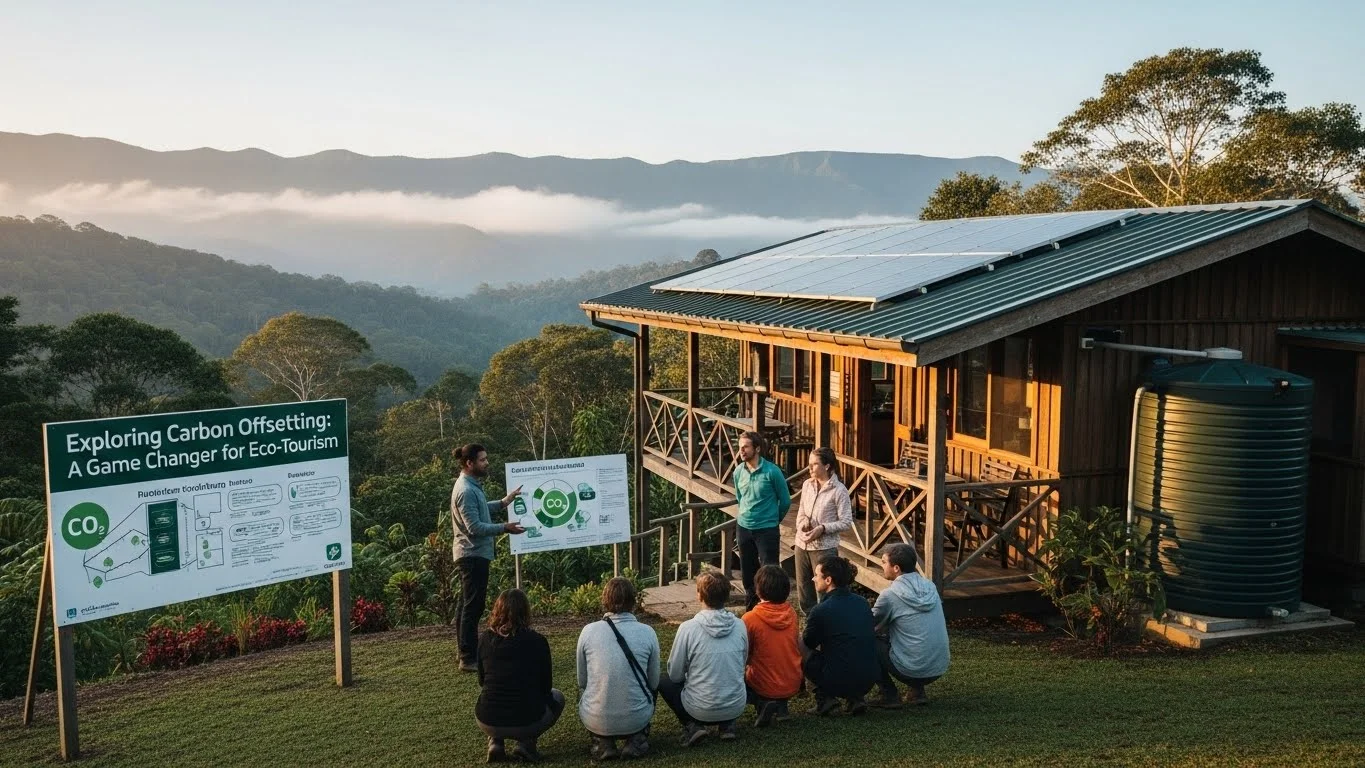
Exploring Carbon Offsetting: A Game Changer for Eco-Tourism

Carbon offsetting is transforming eco-tourism, offering us a way to travel responsibly while mitigating our environmental impact. Let’s dive into what carbon offsetting really means and how it can change the way we explore our planet. Read Interesting article: How Carbon Offsetting Boosts Eco-Tourism: A Complete Guide

Exploring Carbon Offsetting: A Game Changer for Eco-Tourism

Understanding Carbon Offsetting

Definition of Carbon Offsetting

When I first heard about carbon offsetting, I wasn’t quite sure what it meant. Simply put, carbon offsetting is a way to compensate for the greenhouse gas emissions that our activities, particularly travel, produce. It involves investing in projects that reduce or capture carbon dioxide elsewhere, effectively “offsetting” our own carbon footprint. Imagine planting trees, supporting renewable energy projects, or helping communities implement sustainable farming practices. Each of these initiatives can absorb carbon, helping to balance out the emissions we generate.

How Carbon Offsetting Works

Understanding how carbon offsetting works has been an enlightening journey for me. The process usually begins with calculating the amount of carbon emissions we produce from activities like flying, driving, or even just heating our homes. Once we have that number, we can purchase carbon credits, each representing a reduction of one metric ton of carbon dioxide. These credits support various projects worldwide that are designed to lower greenhouse gas levels. I’ve found that many companies today offer these offsets at the point of sale when booking flights or accommodations, making it easier than ever for us to contribute to environmental sustainability. Read Interesting article: Top Carbon Offset Travel Options for Eco-Conscious Backpackers

Types of Carbon Offsetting Projects

There’s a world of diverse projects dedicated to carbon offsetting, and exploring them has opened my eyes to the incredible work being done globally. Here are several types of projects that I find particularly fascinating:

  • Reforestation and Afforestation: These projects focus on planting trees to absorb carbon dioxide from the atmosphere. Not only do they help with carbon capture, but they also restore habitats.
  • Renewable Energy: Investing in wind, solar, and hydroelectric power projects reduce our reliance on fossil fuels. I’ve come to appreciate how these initiatives not only cut emissions but also provide clean energy to communities.
  • Energy Efficiency: Programs that help businesses and households reduce energy consumption. I’ve seen firsthand how simple changes can lead to substantial savings and lower emissions.
  • Agricultural Practices: Supporting sustainable farming techniques can significantly reduce carbon emissions. Projects that promote organic farming, for example, enhance soil health and reduce the need for chemical fertilizers.

The Importance of Carbon Offsetting in Eco-Tourism

Impact of Travel on Carbon Emissions

Traveling is one of my favorite pastimes, but I’ve learned that it comes with a hefty carbon price. Flights, road trips, and even hotel stays contribute to significant carbon emissions. According to estimates, aviation alone accounts for about 2-3% of global carbon emissions. Every time I step onto a plane, I can’t help but think about my environmental impact. This realization pushed me to seek ways to make my travels more responsible. Understanding this impact is vital for all of us who want to enjoy the beauty of our planet without harming it.

Role of Eco-Tourism in Sustainable Travel

Eco-tourism has become a beacon of hope for sustainable travel, focusing on responsible travel practices that conserve the environment and improve the well-being of local communities. I’ve experienced eco-tourism firsthand, from staying in eco-friendly lodges to participating in wildlife conservation projects. These experiences not only broaden my perspective but also help me connect with nature in a responsible way. Eco-tourism encourages us to tread lightly and respect the places we visit, which is crucial in our current climate crisis.

Benefits of Carbon Offsetting for the Environment

Offsetting carbon emissions has numerous benefits for our environment. By investing in carbon offset projects, we contribute to a healthier planet. I’ve seen how funding reforestation efforts can restore ecosystems, prevent soil erosion, and promote biodiversity. Additionally, supporting renewable energy projects reduces our dependence on fossil fuels, leading to cleaner air and a more sustainable future. It’s empowering to know that even small contributions can lead to significant environmental improvements. Read Interesting article: Top Carbon Neutral Resorts for Budget Travelers in 2023

How to Offset Your Carbon Footprint While Traveling

Calculating Your Carbon Footprint

One of the first steps I took toward responsible travel was learning how to calculate my carbon footprint. I remember feeling overwhelmed at first, but it turned out to be quite straightforward. Various online tools can help you estimate emissions based on your travel habits, including the distance traveled, mode of transportation, and the number of travelers. For example, I found that taking a long-haul flight can generate a significant amount of carbon emissions compared to a short road trip. I was surprised to see just how much impact my travel choices had on the environment. By understanding my carbon footprint, I could make more informed decisions that align with my eco-conscious goals.

Choosing Reliable Carbon Offsetting Programs

Once I had a rough idea of my carbon footprint, the next step was to find reliable carbon offsetting programs. This part can be tricky, as not all programs are created equal. I’ve come to realize that it’s essential to look for initiatives with transparent practices and verifiable results. I often check if they are certified by reputable organizations, such as the Verified Carbon Standard (VCS) or the Gold Standard. These certifications ensure that the projects are legitimate and that the carbon reductions are real and measurable. I remember feeling a sense of relief when I finally found programs that resonated with my values, knowing my contributions would genuinely make a difference.

Steps to Offset Carbon Emissions During Travel

Offsetting carbon emissions during travel is something I’ve learned to incorporate into my routine. Here are the steps I suggest based on my own experience:

  1. Calculate Your Emissions: Before booking a flight or planning a trip, use carbon calculators to get an estimate of your emissions.
  2. Choose Offsetting Options: When booking flights or accommodations, look for options that offer carbon offsetting. Some airlines and travel companies provide a simple checkbox to add offsets at checkout.
  3. Research Projects: Take a moment to investigate the specific projects your offsets will support. Whether it’s reforestation or renewable energy, knowing where your money goes can deepen your connection to the cause.
  4. Track Your Contributions: Keep a record of your offsets and the projects you support. This made my travels feel more meaningful and gave me a sense of accountability.
  5. Spread the Word: Share your carbon offsetting journey with friends and family! I’ve found that encouraging others to think about their carbon footprint can spark meaningful conversations and inspire change.

By following these steps, I feel like I am actively participating in the efforts to combat climate change, even while I indulge my passion for travel.

Case Studies: Successful Carbon Offsetting Initiatives in Eco-Tourism

Carbon Neutral Airlines

It’s encouraging to see airlines stepping up their game in terms of sustainability. I recently learned about airlines that have committed to becoming carbon neutral. For instance, some airlines are investing in sustainable aviation fuel and carbon offsetting programs that support reforestation and renewable energy. I was intrigued by how one airline, for example, calculated its emissions and invested in carbon credits that go toward projects like wind farms. It felt reassuring to know that I could enjoy my travel experience while supporting an industry that’s taking responsibility for its environmental impact.

Eco-Resorts Committed to Sustainability

Staying at eco-resorts has become one of my favorite ways to travel sustainably. These places don’t just offer a beautiful getaway; they often have impressive sustainability practices in place. I remember visiting a resort that used solar panels for energy and composting toilets to reduce waste. They also worked with local communities to protect surrounding ecosystems. Many eco-resorts offer carbon offsetting options for guests, allowing us to contribute to local conservation efforts. Knowing that my stay positively impacted the environment made my vacation even more enjoyable.

Community-Based Carbon Offsetting Projects

Community-based projects have a special place in my heart. I’ve seen how these initiatives empower local populations while effectively offsetting carbon. For instance, I encountered a community in South America where locals were trained to plant trees and restore their natural habitat. Not only did this help absorb carbon, but it also provided jobs and improved the community’s economy. Participating in such projects during my travels has been incredibly rewarding, as it allows me to connect with the local culture while making a tangible difference.

Challenges and Criticisms of Carbon Offsetting

Effectiveness of Offsetting Programs

As I’ve delved deeper into the world of carbon offsetting, I’ve noticed that not everyone is convinced of its effectiveness. It’s a valid concern, and one that I grappled with myself. The idea that you can simply pay to offset your carbon emissions can sometimes feel too simplistic, as if it allows us to buy our way out of the responsibility to reduce our actual emissions. I’ve read various studies that question whether the projects funded by carbon credits truly deliver the promised reductions. Some projects may take years or even decades to show significant results, while others might not be as effective as anticipated. This made me realize how important it is to continue questioning and learning about the offsetting programs I choose to support. By seeking evidence of their impact, I can feel more confident about making informed decisions on where to invest my money.

Greenwashing Concerns

Another challenge I’ve encountered is the issue of greenwashing. This term refers to the practice where companies present themselves as more environmentally friendly than they really are. It’s disheartening to think that some businesses might use carbon offsetting as a marketing tool rather than a genuine commitment to sustainability. I’ve seen companies tout their carbon offset programs without providing clear information on how they work or the actual environmental benefits they deliver. This realization made me more vigilant about researching the companies I choose to engage with when it comes to travel. I recommend looking for transparency and accountability in their offset initiatives. If a company can’t back up its claims with solid evidence, I think it’s a red flag.

Balancing Offsetting with Reducing Emissions

I’ve come to understand that while carbon offsetting is a valuable tool, it shouldn’t be viewed as a complete solution to our environmental challenges. It’s crucial to balance offsetting with genuine efforts to reduce our emissions in the first place. I know that the more we can cut down on our travel-related emissions — whether by opting for trains over planes or choosing to travel closer to home — the better. I’ve tried to make conscious choices in my travels, such as combining trips to minimize flights or using public transportation instead of renting a car. I believe that offsetting should be a part of a broader strategy for eco-conscious living, not a replacement for it. Embracing this holistic approach has made my travel experiences more fulfilling, knowing I am actively contributing to a sustainable future.

Future Trends in Carbon Offsetting and Eco-Tourism

Technological Innovations in Carbon Offsetting

As I look towards the future of carbon offsetting, I can’t help but feel excited about the potential of technological innovations. I’ve seen how advancements in technology can enhance the accuracy of carbon calculations and improve the effectiveness of offsetting projects. For instance, satellite technology is now being employed to monitor reforestation efforts and ensure that trees are actually being planted and thriving. I’ve come across apps that allow travelers to track their carbon emissions in real-time, making it easier for us to make informed decisions. It feels empowering to know that technology can help bridge the gap between our travel habits and our environmental commitments.

Increased Consumer Awareness and Demand

Consumer awareness is on the rise, and I’ve noticed a shift in how people are approaching travel. More of us are becoming conscious of our carbon footprints and are actively seeking out eco-friendly options. I often find myself discussing sustainable travel with friends and family, and I’m encouraged to see that these conversations are becoming more common. This growing demand for greener travel options is prompting companies to step up their game when it comes to sustainability. I’ve experienced firsthand how businesses are now more likely to incorporate carbon offsetting into their services or adopt sustainable practices. It gives me hope that our collective efforts can drive significant change in the travel industry.

Government Policies and Support for Carbon Offsetting

Finally, government policies play a crucial role in shaping the future of carbon offsetting and eco-tourism. I’ve learned that supportive regulations can create an environment where sustainable practices thrive. For instance, some governments are offering incentives for airlines and businesses to invest in carbon offsetting projects or adopt renewable energy sources. I’ve seen countries implement carbon pricing systems that encourage companies to reduce their emissions. This type of support can make a big difference, not only in fostering sustainable practices but also in raising awareness about the importance of reducing our carbon footprints. I hope to see more policies emerge that promote eco-tourism and carbon offsetting initiatives, making them more accessible and effective for everyone.

How Travelers Can Contribute to Carbon Offsetting

Supporting Local Conservation Efforts

As I continue my travels, I’ve become increasingly aware of the importance of supporting local conservation efforts. Each destination has its own unique ecosystems and wildlife that need protection. I’ve made it a habit to seek out projects or organizations that focus on conserving local habitats and species. For example, I once volunteered with a marine conservation group while visiting a coastal area, helping to protect nesting sea turtles. This experience not only allowed me to contribute to the local environment but also deepened my understanding of the ecosystem’s fragility. I believe that supporting these efforts can create a positive impact on the communities we visit and promote a more sustainable tourism model.

Engaging in Responsible Travel Practices

Engaging in responsible travel practices has become a priority for me. Simple actions, like minimizing waste, using refillable water bottles, and respecting wildlife, can make a significant difference. I’ve learned to be mindful of my consumption patterns while traveling, opting for local products and services that benefit the communities I visit. These choices not only reduce my carbon footprint but also foster a sense of connection to the places I explore. I encourage fellow travelers to embrace these practices, as they can lead to a more enriching and sustainable travel experience.

Educating Others About Carbon Offsetting

Lastly, I believe that sharing knowledge about carbon offsetting and sustainable travel is essential. I’ve made it a point to talk about my experiences with friends and family, raising awareness about the importance of reducing our carbon footprints. I often share articles, resources, and personal stories that highlight the impact of travel on the environment. This way, I hope to inspire others to think critically about their travel choices and consider carbon offsetting as part of their journey. We can all play a part in spreading the word and encouraging more responsible travel practices, helping to build a community committed to protecting our planet.

Frequently Asked Questions

What is carbon offsetting?

Carbon offsetting is a way to compensate for greenhouse gas emissions produced by activities like travel. It involves investing in projects that reduce or capture carbon dioxide elsewhere, such as planting trees or supporting renewable energy projects.

How does carbon offsetting work?

The process begins with calculating carbon emissions from activities like flying or driving. After determining the emissions, individuals can purchase carbon credits that represent a reduction of one metric ton of carbon dioxide, supporting various global projects designed to lower greenhouse gas levels.

What types of projects are involved in carbon offsetting?

Types of carbon offsetting projects include reforestation and afforestation, renewable energy initiatives, energy efficiency programs, and sustainable agricultural practices that reduce carbon emissions and enhance environmental health.

Why is carbon offsetting important in eco-tourism?

Carbon offsetting is crucial in eco-tourism as it helps mitigate the significant carbon emissions associated with travel. It promotes responsible travel practices that conserve the environment and support local communities, allowing travelers to enjoy the beauty of the planet without harming it.

What are the benefits of carbon offsetting for the environment?

Offsetting carbon emissions contributes to a healthier planet by restoring ecosystems, preventing soil erosion, promoting biodiversity, and reducing dependence on fossil fuels, leading to cleaner air and a sustainable future.

How can travelers calculate their carbon footprint?

Travelers can calculate their carbon footprint using various online tools that estimate emissions based on travel habits, including distance traveled, mode of transportation, and the number of travelers involved in the trip.

What should travelers consider when choosing carbon offsetting programs?

Travelers should look for reliable carbon offsetting programs with transparent practices and verifiable results, preferably certified by reputable organizations like the Verified Carbon Standard (VCS) or the Gold Standard.

What steps can travelers take to offset carbon emissions during travel?

Travelers can offset carbon emissions by calculating their emissions, choosing offsetting options when booking travel, researching the projects supported by their offsets, tracking their contributions, and sharing their carbon offsetting journey with others.

What challenges exist in carbon offsetting?

Challenges in carbon offsetting include concerns about the effectiveness of offsetting programs, the risk of greenwashing by companies, and the need to balance offsetting with actual reductions in emissions through conscious travel choices.

How can travelers support local conservation efforts while traveling?

Travelers can support local conservation efforts by seeking out projects that focus on protecting local ecosystems and wildlife, engaging in responsible travel practices, and educating others about the importance of carbon offsetting and sustainable travel.

The Role of Carbon Offsetting in Sustainable Travel Growth

Carbon offsetting is becoming a vital part of our travel plans, as we strive for a more sustainable future. Understanding its role can empower us to make better choices while exploring the world. Read Interesting article: How to Find the Perfect Carbon Offsetting Program for Travelers

The Role of Carbon Offsetting in Sustainable Travel Growth

Understanding Carbon Offsetting

Definition of Carbon Offsetting

When I first heard the term “carbon offsetting,” I was intrigued but a bit confused. In simple terms, carbon offsetting is a way to compensate for the carbon dioxide emissions produced by our activities, particularly travel. Every time we hop on a plane or drive a car, we contribute to greenhouse gas emissions that impact our planet. To counter this, we can invest in projects that reduce emissions elsewhere, essentially “offsetting” what we’ve put into the atmosphere. It’s like giving back to Mother Earth for what we’ve borrowed.

How Carbon Offsetting Works

Understanding how carbon offsetting works has been a real eye-opener for me. The concept is quite straightforward. When you travel, you calculate the carbon emissions generated by your journey. This is usually measured in tons of CO2. For instance, a round trip flight from New York to London can generate around 1.5 tons of CO2 per passenger.

Once you know your carbon footprint, you can purchase carbon offsets equivalent to those emissions. The money you spend goes directly into projects designed to reduce carbon emissions, such as reforestation, renewable energy, or energy efficiency initiatives. I personally found it rewarding to know that my travel can help fund a solar farm or plant trees in a deforested area. It’s like turning my travel guilt into a positive action!

Types of Carbon Offsetting Projects

There are several types of carbon offsetting projects, each with its unique benefits. I’ve learned about a few that I find particularly interesting. Read Interesting article: Exploring Types of Carbon Offsetting for Eco-Conscious Travel

  • Reforestation and Afforestation: Planting trees is one of the most common ways to offset carbon. Trees absorb CO2 from the atmosphere, making this a natural solution. I remember participating in a local tree-planting event, and it felt great to contribute to such a vital cause.
  • Renewable Energy Projects: Investing in wind, solar, and hydroelectric energy projects helps reduce reliance on fossil fuels. I think about how solar panels on rooftops can power homes, reducing emissions massively.
  • Energy Efficiency Initiatives: These projects focus on improving energy use in buildings or industries. For example, funding upgrades to energy-efficient lighting and insulation can significantly cut down emissions.
  • Methane Capture: Some projects aim to capture methane emissions from landfills or agricultural practices. This is crucial since methane is a far more potent greenhouse gas than CO2.

Each of these projects offers a unique way to combat climate change, and I find it fascinating how our contributions can have far-reaching effects.

The Importance of Sustainable Travel

Defining Sustainable Travel

Sustainable travel is about making choices that minimize our impact on the environment while enriching the communities we visit. I have come to realize that it’s not just about where we go, but how we get there and what we do while we’re there. When I travel, I try to focus on experiences that respect local cultures and ecosystems. For me, sustainable travel is about being a responsible tourist who contributes positively to the places I explore.

Environmental Impact of Travel

The environmental impact of travel is something we can no longer ignore. Air travel alone produces a significant portion of global CO2 emissions. I remember reading a statistic that said aviation accounts for about 2-3% of global emissions. However, that number is expected to rise as more people travel. When I think about the beautiful destinations we love to visit, it’s disheartening to realize that our adventures can contribute to climate change. This awareness has motivated me to seek ways to travel that are more environmentally friendly.

Social and Economic Benefits of Sustainable Travel

Sustainable travel goes beyond just being eco-friendly; it also brings social and economic benefits. I’ve noticed that when we choose local accommodations, eat at local restaurants, and support local guides, we contribute to the community’s economy. This helps create jobs and fosters a sense of pride among residents. I’ve had the pleasure of meeting locals who have shared their stories and traditions with me, making my travels richer and more meaningful. Supporting local businesses often leads to authentic experiences that far outshine typical tourist traps.

The Growth of Sustainable Travel

Trends in Sustainable Travel

As I’ve ventured deeper into the world of sustainable travel, I’ve noticed some really exciting trends emerging. More and more travelers are seeking eco-friendly options, and it’s refreshing to see how the industry is responding. For instance, eco-lodges are popping up in breathtaking locations, offering not just a place to stay, but an experience that connects you with nature. I remember staying at a beautiful lodge in Costa Rica that was completely off the grid—powered by solar energy and utilizing rainwater for showers. It was one of the most memorable experiences of my travels.

Another trend is the rise of “slow travel,” which emphasizes immersing oneself in a destination rather than rushing from one place to another. This approach encourages travelers to focus on quality experiences, like savoring local cuisine or learning traditional crafts from locals. I find that when I slow down, I connect more deeply with the place and its people, creating lasting memories.

Consumer Awareness and Demand

Over the years, I’ve seen a significant shift in consumer awareness regarding sustainable practices. Travelers are now doing their homework before booking trips. They’re looking for certifications and asking questions about how their travel choices impact the planet. I’ve experienced this firsthand when planning my last vacation; I made it a point to choose a travel agency dedicated to sustainable practices. The more I learned, the more I wanted to ensure that my travel choices aligned with my values.

This increased awareness is leading to a demand for more sustainable options across the board—from airlines to hotels. I’ve noticed that brands that prioritize sustainability tend to stand out. For example, I recently booked a stay at a hotel that not only had eco-friendly amenities but also offered programs aimed at reducing waste and conserving energy. It felt good to know that my choice contributed to a larger movement toward responsible tourism.

Role of Influencers and Social Media

In today’s digital age, social media plays a massive role in shaping travel trends. I often find myself scrolling through Instagram, discovering beautiful, sustainable travel destinations that I never knew existed. Influencers who prioritize sustainable travel are making significant impacts by sharing their experiences and promoting eco-friendly brands. I remember following a travel blogger who showcased her journey through national parks while highlighting ways to preserve these natural wonders. Her posts inspired me to visit some of those parks, and I made sure to follow the Leave No Trace principles while I was there.

Social media has turned into a powerful tool for raising awareness about sustainable travel. I think it’s incredible how photos and stories can inspire action. When we see others making conscious choices and enjoying themselves, it encourages us to do the same. I’ve learned that sharing my own sustainable travel experiences can also motivate my friends and family to think more critically about their choices when they travel.

How Carbon Offsetting Contributes to Sustainable Travel

Reduction of Travel Carbon Footprint

One of the most significant contributions of carbon offsetting to sustainable travel is its ability to reduce our overall carbon footprint. I’ve found that by calculating the emissions from my trips and investing in offsets, I’m making a tangible impact. It feels empowering to know that for every flight or road trip, I can balance out my emissions by supporting projects that help the environment. I remember feeling especially proud after offsetting the carbon from my last international flight. It was a reminder that every little bit counts when it comes to combating climate change.

Moreover, as more travelers begin to understand the importance of offsetting, we collectively send a message to the travel industry. By choosing to offset our emissions, we encourage airlines and hotels to adopt more sustainable practices. I believe this creates a ripple effect, pushing the entire industry toward greener alternatives.

Supporting Renewable Energy Projects

One of the things I appreciate most about carbon offsetting is that it often involves funding renewable energy projects. Investing in wind and solar energy not only reduces emissions but also promotes sustainable development. I remember visiting a solar farm during one of my travels, and it was inspiring to see how technology can harness natural resources to create clean energy. Knowing that my carbon offset contributions support such projects makes me feel like I’m part of something bigger—a movement toward a sustainable future.

These renewable energy initiatives can also empower local communities by providing jobs and reducing energy costs. I think about how many lives can be improved through access to clean energy. It’s a win-win situation, and it’s exciting to think that my travel choices can help make that happen.

Conservation and Biodiversity Initiatives

What I love about carbon offset projects is the variety of ways they contribute to conservation and biodiversity. Many offset programs include efforts to protect endangered species and restore natural habitats. I’ve learned about projects that focus on preserving rainforests or wetlands—ecosystems that are vital for our planet’s health. Participating in these initiatives feels like a contribution not just to climate change mitigation, but also to the preservation of our planet’s incredible biodiversity.

During one of my travels, I had the chance to visit a wildlife sanctuary that was supported by carbon offset funding. Seeing the animals up close and learning about their rehabilitation was both eye-opening and heartwarming. It reinforced my belief that by supporting these projects, we’re safeguarding our planet for future generations. It’s these connections and experiences that make sustainable travel so meaningful for me.

Carbon Offsetting Programs for Travelers

Airline Carbon Offsetting Options

When it comes to travel, I’ve found that many airlines are stepping up their game in offering carbon offsetting options. I remember the first time I booked a flight with an airline that provided the option to offset my emissions directly at checkout. It felt empowering to have that choice right in front of me. Typically, airlines partner with various carbon offset programs, allowing travelers to contribute to environmental initiatives with just a click. I’ve seen that some airlines even provide detailed information about the projects supported, which helps me understand where my money is going. This transparency is crucial for me, as I want to ensure that my contributions are making a genuine impact.

Many airlines also offer different levels of offsetting, which means you can choose how much you want to contribute based on your carbon footprint. For instance, if I have a long-haul flight, I might decide to invest a bit more to cover the extra emissions. It’s gratifying to know that my choices can directly support renewable energy projects or reforestation initiatives. I think this trend is only going to grow as more travelers demand sustainable practices from airlines.

Hotel and Accommodation Offsetting Programs

Hotels and accommodations are also getting in on the action. I’ve noticed that many eco-friendly hotels now offer carbon offset programs as part of their commitment to sustainability. During my stay at a green hotel in the mountains, I learned that they partnered with a local reforestation project. For every night I spent there, a portion of my payment went towards planting trees. It felt great to know that my stay contributed to something bigger than just a comfortable bed and a nice view.

Some hotels even provide guests with the option to offset their stay at the time of booking, which I think is such a convenient way to encourage responsible travel. When I see hotels taking these steps, it gives me confidence in their overall sustainability practices. I believe that as more people choose accommodations with carbon offsetting options, it will push the entire industry toward more environmentally friendly practices.

Tour Operators and Carbon Offsetting

Tour operators are also playing a vital role in the carbon offsetting movement. I’ve come across several companies that incorporate carbon offsetting into their travel packages. For example, when I booked a guided tour to a national park, the operator included a carbon offset fee, which helped fund conservation efforts in the area. This approach really resonated with me, as I was able to enjoy the beauty of nature while contributing to its preservation.

Furthermore, many tour operators now emphasize sustainable practices, such as using local guides, minimizing waste, and supporting community initiatives. I appreciate it when companies take the time to educate travelers about their environmental impact and offer solutions. It makes me feel like I’m part of a community that cares about the planet. Plus, I’ve found that these tours often lead to more authentic experiences, allowing me to connect with local cultures and environments in a meaningful way.

Challenges and Criticisms of Carbon Offsetting

Effectiveness of Offsetting Projects

While carbon offsetting has its merits, I’ve also come across some challenges and criticisms surrounding its effectiveness. It’s essential to acknowledge that not all offset projects are created equal. I remember reading about some initiatives that don’t deliver the promised results. For me, it’s vital to do my research before investing in offsets. I look for programs that are transparent about their operations and have verifiable impacts. In my experience, projects that are certified by reputable organizations tend to be more reliable.

This skepticism has prompted me to question the overall impact of offsetting. I’ve realized that while offsetting is a step in the right direction, it shouldn’t be seen as a catch-all solution. It’s crucial to reduce our emissions first and foremost. Offsetting should complement our efforts to live more sustainably and not serve as a way to justify excessive travel or carbon-heavy activities.

Greenwashing Concerns

One of the biggest concerns I’ve encountered in the world of carbon offsetting is greenwashing. Some companies claim to be environmentally friendly without backing it up with real action. I’ve come across travel providers that market themselves as sustainable but don’t actually implement meaningful practices. It’s frustrating because it can be challenging to distinguish between genuine efforts and mere marketing tactics. I think it’s crucial for us, as travelers, to be discerning and ask questions about the sustainability claims made by companies.

Whenever I encounter a travel brand that touts its green credentials, I try to dig deeper. I want to know what specific actions they’re taking to reduce their environmental impact. It’s important for me to support companies that are genuinely committed to sustainability rather than those that are just looking to capitalize on the trend.

The Need for Comprehensive Solutions

Ultimately, I believe that while carbon offsetting is an important tool, it’s just one piece of a much larger puzzle. Addressing climate change and promoting sustainable travel requires comprehensive solutions that include reducing emissions at the source, supporting local communities, and advocating for systemic changes within the travel industry. I’ve come to realize that my individual choices matter, but collective action is what drives real change.

As we continue to explore the world, I think it’s essential to stay informed about the challenges we face and the steps we can take to overcome them. Engaging in conversations about sustainability, sharing knowledge with fellow travelers, and supporting initiatives that drive systemic change can create a more significant impact than we might think. Each of us has a role to play in making travel more sustainable, and that’s a journey I’m proud to be a part of.

Frequently Asked Questions

What is carbon offsetting?

Carbon offsetting is a way to compensate for the carbon dioxide emissions produced by activities, particularly travel. It involves investing in projects that reduce emissions elsewhere to counterbalance what has been emitted.

How does carbon offsetting work?

Carbon offsetting works by calculating the carbon emissions generated by a journey, usually measured in tons of CO2. Travelers can then purchase carbon offsets equivalent to those emissions, with the funds going to projects aimed at reducing carbon emissions, such as reforestation or renewable energy initiatives.

What are some types of carbon offsetting projects?

Types of carbon offsetting projects include reforestation and afforestation, renewable energy projects, energy efficiency initiatives, and methane capture projects, each contributing uniquely to combating climate change.

What does sustainable travel mean?

Sustainable travel refers to making choices that minimize environmental impact while enriching the communities visited. It emphasizes responsible tourism that respects local cultures and ecosystems.

What is the environmental impact of travel?

The environmental impact of travel is significant, with air travel accounting for about 2-3% of global CO2 emissions. This number is expected to rise as more people travel, highlighting the need for environmentally friendly travel options.

How does carbon offsetting contribute to sustainable travel?

Carbon offsetting contributes to sustainable travel by reducing the overall carbon footprint of travel. It empowers travelers to balance their emissions and encourages the travel industry to adopt more sustainable practices. Read Interesting article: Top Carbon Offsetting Programs That Make Travel Greener

What role do airlines play in carbon offsetting?

Many airlines offer carbon offsetting options during the booking process, allowing travelers to contribute to environmental initiatives. Airlines often partner with various carbon offset programs and provide transparency about supported projects.

How do hotels participate in carbon offsetting?

Hotels are increasingly offering carbon offset programs, where a portion of guests’ payments goes towards sustainability projects, such as reforestation. Some hotels provide options to offset the stay at the time of booking.

What concerns exist regarding carbon offsetting?

Concerns regarding carbon offsetting include the effectiveness of offset projects, the risk of greenwashing, and the need for comprehensive solutions beyond offsetting to address climate change and promote sustainable travel.

What challenges does carbon offsetting face?

Challenges include the variability in the effectiveness of offset projects, the presence of greenwashing in the travel industry, and the need for broader systemic changes to effectively combat climate change.

How Carbon Offsetting Boosts Eco-Tourism: A Complete Guide

Carbon offsetting is changing the way we think about travel, especially within the eco-tourism sector. By balancing our environmental impact, we can explore the world while helping to preserve it. Read Interesting article: Top Carbon Offset Travel Options for Eco-Conscious Backpackers

How Carbon Offsetting Boosts Eco-Tourism: A Complete Guide

Understanding Carbon Offsetting

What is Carbon Offsetting?

Carbon offsetting is a way for individuals and businesses to compensate for their carbon dioxide emissions, typically generated from activities like traveling. When I first learned about carbon offsetting, it felt like uncovering a simple yet powerful tool that could help mitigate the environmental impact of my adventures. Essentially, it involves investing in projects that either reduce or capture an equivalent amount of carbon dioxide from the atmosphere. This can include renewable energy projects, tree planting, and various initiatives designed to promote sustainability. By purchasing carbon offsets, I realized I could take responsibility for my travel footprint and contribute positively to the planet.

How Carbon Offsetting Works

The mechanics of carbon offsetting can be quite fascinating. It starts with calculating the carbon footprint of a specific activity, like a flight or a road trip. I remember using online calculators to determine how many tons of CO2 my trips added to the atmosphere. Once you know your carbon footprint, you can purchase carbon credits from various projects that aim to reduce emissions. For instance, if my trip generated 2 tons of CO2, I could buy 2 carbon credits, which represent the reduction of 2 tons of CO2 elsewhere.

These projects often focus on renewable energy, reforestation, and energy efficiency improvements in communities. I’ve seen firsthand how these initiatives not only help the environment but also empower local economies. When I offset my travel, I felt a sense of connection to the communities involved in these projects, knowing my contribution was making a difference.

Carbon Footprint: Definition and Importance

Understanding what a carbon footprint is crucial for anyone looking to offset their emissions. A carbon footprint measures the total greenhouse gases emitted directly and indirectly by an individual, organization, or product. It’s usually measured in tons of CO2 equivalents. I remember the first time I saw my personal carbon footprint—it was eye-opening. It made me realize how simple activities, like driving my car or flying to a destination, added up to a significant environmental impact.

Knowing our carbon footprint is important because it helps us understand how our lifestyles contribute to climate change. By calculating and then offsetting our footprints, we can take meaningful steps toward reducing our impact on the planet. I believe that as we become more aware of our individual footprints, we can collectively make a substantial difference in combating climate change. Read Interesting article: Top Carbon Neutral Resorts for Budget Travelers in 2023

The Link Between Carbon Offsetting and Eco-Tourism

What is Eco-Tourism?

Eco-tourism is about responsible travel to natural areas that conserves the environment and improves the well-being of local people. It’s a concept that resonates deeply with me because it combines my love for travel with a commitment to protecting our planet. When I think of eco-tourism, I picture breathtaking landscapes, unique wildlife, and vibrant cultures—all experiences that foster respect for nature. Eco-tourism emphasizes sustainability, promoting activities that have minimal impact on the environment, like hiking, wildlife watching, and cultural exchanges.

Benefits of Eco-Tourism to the Environment

The benefits of eco-tourism extend beyond just enjoyment; they actually help protect and restore ecosystems. When I traveled to eco-tourism destinations, I noticed how these initiatives often fund conservation efforts, supporting local wildlife and habitats. For example, in Costa Rica, eco-tourism has played a crucial role in preserving rainforests and protecting endangered species. Funds generated from eco-tourism activities can be reinvested into conservation projects, fostering a cycle of sustainability. I’ve seen how local communities thrive when they are actively involved in eco-tourism, creating a sense of ownership over their natural resources.

How Carbon Offsetting Supports Eco-Tourism Initiatives

Carbon offsetting and eco-tourism go hand in hand in promoting sustainable travel practices. When travelers offset their carbon emissions, they contribute to projects that directly support the principles of eco-tourism. For instance, many eco-lodges and tour operators are now incorporating carbon offset programs into their offerings, allowing guests to offset their travel emissions seamlessly. I remember booking an eco-lodge in the Amazon that included an option to offset my carbon footprint when I made my reservation. It felt good knowing that my stay was not only eco-friendly but also helping to fund reforestation efforts in the area. Read Interesting article: Budget Backpacking: How to Offset Carbon Emissions Easily

Additionally, the awareness around carbon offsetting can lead to more conscious travel choices. As travelers become more informed about their environmental impact, they may choose eco-friendly accommodations and activities that align with their values. This shift not only enhances the eco-tourism experience but also increases the demand for sustainable practices within the travel industry. From my experience, supporting these initiatives feels like being part of a larger movement toward positive change, and it inspires others to do the same.

Key Entities in Carbon Offsetting

Carbon Credits and Their Role

When I first delved deeper into carbon offsetting, I encountered the concept of carbon credits. It felt like stepping into a new world where every ton of CO2 I could offset had tangible value. Carbon credits are essentially permits that allow the holder to emit a certain amount of carbon dioxide. One carbon credit typically equates to one metric ton of CO2. I learned that these credits are generated by projects designed to reduce greenhouse gas emissions, such as renewable energy installations or energy efficiency upgrades. What struck me was the idea that my purchase of these credits directly supports initiatives aimed at reducing emissions. It’s a win-win: I get to enjoy my travels, and I’m also helping to fund projects that are bettering the planet.

Renewable Energy Projects

One of the most inspiring aspects of carbon offsetting is its connection to renewable energy projects. These initiatives focus on harnessing energy from sustainable sources like wind, solar, and hydro. I remember taking a trip to a solar farm that was part of a carbon offset program. It was fascinating to see how sunlight could be transformed into energy, significantly reducing reliance on fossil fuels. By investing in renewable energy projects through offsets, I felt like I was contributing to a shift towards a cleaner, greener future. These projects not only help reduce emissions but also create jobs and foster economic development in local communities, which adds another layer of impact to my travel choices.

Reforestation and Afforestation Efforts

Reforestation and afforestation projects are some of my favorites when it comes to carbon offsetting. Planting trees is such a straightforward yet effective way to absorb CO2 from the atmosphere. I have participated in tree-planting events during some of my travels, which has been one of the most rewarding experiences. Knowing that each tree I planted would sequester carbon for years to come made me feel like I was making a lasting contribution. These projects not only help combat climate change but also restore habitats and improve biodiversity. I’ve seen firsthand how communities come together around these initiatives, fostering a strong sense of stewardship over their local environment.

Community-Based Projects

Community-based projects have a unique charm, and they often resonate deeply with me. These initiatives focus on empowering local communities to engage in sustainable practices that benefit both the environment and their livelihoods. I recall visiting a small village that had embraced sustainable agriculture and eco-tourism. The community had partnered with a carbon offset organization to promote their efforts, and it was heartwarming to see how these projects improved their quality of life. By investing in community-based projects, travelers like us can support local economies while contributing to meaningful environmental solutions. I believe that when communities thrive, the environment benefits too.

How Carbon Offsetting Affects Traveler Choices

Increasing Demand for Sustainable Travel Options

As awareness about carbon offsetting grows, I’ve noticed a significant shift in traveler preferences towards sustainable options. More people are seeking out eco-friendly accommodations, responsible tour operators, and activities that minimize environmental impact. For example, when planning my last vacation, I specifically looked for hotels that participated in carbon offset programs or had sustainability certifications. This conscious choice made me feel more connected to my destination and ensured that my travels contributed positively to the planet. The demand for sustainable travel options is encouraging businesses to adopt greener practices, creating a ripple effect throughout the industry.

Eco-Conscious Travelers: What They Look For

Eco-conscious travelers, including myself, tend to prioritize certain factors when planning trips. We look for transparency in how businesses operate, their commitment to sustainability, and how they contribute to the local community. For instance, I always research the environmental practices of tour companies before booking a trip. I want to ensure that my experience aligns with my values. I’ve found that many travelers are keen on supporting local artisans, reducing waste, and participating in conservation activities. It’s empowering to see that this collective mindset is reshaping the travel landscape.

Carbon Offsetting as a Decision-Making Factor

In my experience, the option to offset carbon emissions has become a crucial factor in my travel decision-making process. Many times, I’ve chosen one airline over another simply because they offered a straightforward way to offset my flight emissions. It makes the travel experience feel more responsible and aligned with my values. I believe that as more travelers prioritize carbon offsetting, companies will be more inclined to develop and promote programs that encourage sustainable practices. This shift not only benefits the environment but also fosters a culture of accountability within the travel industry.

Implementing Carbon Offsetting in Eco-Tourism

Steps for Tour Operators to Offset Carbon Emissions

When I think about tour operators, I realize they play a critical role in the eco-tourism movement. It’s inspiring to see how many are actively looking to offset their carbon emissions, and I believe there are a few practical steps they can take. First and foremost, calculating their carbon footprint is essential. This means evaluating the emissions produced by transportation, accommodations, and activities included in their packages. I’ve seen operators use various tools to assess their impact, which allows them to make informed decisions about offsetting.

Next, they can choose reputable carbon offset projects that align with their values. For instance, I remember booking a tour that partnered with local reforestation efforts. It felt great to know my travel choices were directly supporting environmental initiatives. Tour operators can also educate their guests on the importance of offsetting and how their contributions make a difference. By promoting transparency and providing details about their chosen projects, they can foster trust and encourage travelers to participate actively in the offsetting process.

Partnerships with Carbon Offset Organizations

Building partnerships with carbon offset organizations can significantly enhance a tour operator’s credibility. I’ve noticed that when operators collaborate with established organizations, it offers a reliable way to ensure that funds are transparently used for impactful projects. For example, a tour I took in Southeast Asia partnered with a local NGO focused on marine conservation. This partnership not only supported the conservation effort but also enriched the overall experience for travelers, allowing us to engage with the local community and learn about their environmental challenges firsthand.

Such collaborations can also lead to joint marketing efforts, which is beneficial for both parties. By highlighting their commitment to sustainability through partnerships, tour operators can attract eco-conscious travelers who prioritize responsible travel. I believe that these partnerships can create a positive cycle of environmental stewardship and economic support for the communities involved.

Promoting Carbon Offset Programs to Travelers

One of the most effective ways to ensure that carbon offsetting becomes a norm in eco-tourism is through promotion. I’ve found that when tour operators actively communicate the benefits of carbon offset programs, travelers are more likely to engage. Whether it’s through social media campaigns, informative brochures, or during the booking process, sharing compelling stories about the projects they support can resonate deeply with potential customers.

For instance, I remember reading about the impact of a reforestation project that was funded by previous travelers. The emotional connection to these initiatives made me want to participate, and I decided to offset my own carbon footprint during that trip. Operators can also incentivize travelers by offering discounts or rewards for those who choose to offset their emissions. It’s a small gesture, but it can create a culture where carbon offsetting is seen as a natural part of the travel experience.

Case Studies: Successful Eco-Tourism and Carbon Offsetting

Notable Eco-Tourism Destinations Embracing Carbon Offsetting

There are some destinations that really stand out to me when it comes to successfully integrating carbon offsetting into their eco-tourism strategies. Costa Rica, for example, has been a pioneer in promoting sustainable travel practices. With its lush rainforests and diverse wildlife, it’s no wonder that many travelers flock there. I learned that the country has implemented national programs to offset carbon emissions and has encouraged businesses to adopt sustainable practices. This has not only preserved its natural beauty but has also turned eco-tourism into a thriving economic sector, benefiting both the environment and local communities.

Similarly, Iceland has made significant strides in this area. Their commitment to renewable energy and carbon neutrality has attracted eco-conscious travelers from all over the world. I found it fascinating that many tour operators in Iceland offer packages that include options for carbon offsetting, contributing to projects like geothermal energy development and reforestation. These forward-thinking approaches make visiting Iceland not just a vacation, but a chance to be part of a larger movement toward sustainability.

Impact of Carbon Offsetting on Local Economies

The economic benefits of carbon offsetting initiatives cannot be overstated. In my travels, I’ve seen how communities that engage in eco-tourism can thrive. For example, in Kenya, I visited a community-based project that focused on wildlife conservation. By offering carbon offset programs tied to tourism, they were able to generate income that supported local schools and healthcare. I felt proud to be contributing to such a meaningful cause, and the locals shared with me how important these funds were for their community development.

When communities see tangible benefits from eco-tourism and carbon offsetting, it fosters a sense of pride and ownership. I believe that empowering local people to take charge of their natural resources is key to sustainable development. The more travelers support these initiatives, the more they can help create lasting change in local economies.

Traveler Testimonials and Experiences

Hearing firsthand accounts from fellow travelers can be incredibly inspiring. I remember a story shared by a couple I met on a trip to a carbon-offsetting eco-lodge in the Amazon. They recounted how their stay contributed to local reforestation efforts, which made their experience feel even more special. They described the joy of planting trees with locals and seeing how their visit had a direct positive impact on the environment. It’s moments like these that truly highlight the power of eco-tourism combined with carbon offsetting.

Furthermore, testimonials often emphasize the emotional connection travelers feel when they know they’re supporting sustainable practices. I’ve come across numerous blogs and social media posts where people share their experiences of carbon offsetting as part of their travels. These stories resonate with others and encourage them to think about how they can be part of the solution. It’s not just about visiting beautiful places; it’s about leaving the world a little better than we found it.

Frequently Asked Questions

What is carbon offsetting?

Carbon offsetting is a method for individuals and businesses to compensate for their carbon dioxide emissions, typically generated from activities like traveling. It involves investing in projects that reduce or capture an equivalent amount of carbon dioxide from the atmosphere, such as renewable energy projects, tree planting, and sustainability initiatives.

How does carbon offsetting work?

The process starts with calculating the carbon footprint of a specific activity. For example, after determining how many tons of CO2 a trip generates, individuals can purchase carbon credits from projects aimed at reducing emissions. Each credit represents the reduction of one ton of CO2 elsewhere.

Why is understanding carbon footprint important?

A carbon footprint measures the total greenhouse gases emitted directly and indirectly by an individual or activity. Understanding it helps individuals realize how their lifestyles contribute to climate change, enabling them to take meaningful steps toward reducing their impact on the planet.

What is eco-tourism?

Eco-tourism is responsible travel to natural areas that conserves the environment and improves the well-being of local people. It promotes activities that have minimal environmental impact and emphasizes sustainability, fostering respect for nature and local cultures.

How does carbon offsetting support eco-tourism initiatives?

Carbon offsetting and eco-tourism are interconnected as travelers who offset their emissions contribute to projects that uphold eco-tourism principles. Many eco-lodges and tour operators incorporate carbon offset programs, allowing guests to offset their travel emissions seamlessly.

What are carbon credits?

Carbon credits are permits that allow the holder to emit a certain amount of carbon dioxide, with one credit typically equating to one metric ton of CO2. These credits are generated by projects designed to reduce greenhouse gas emissions, such as renewable energy installations or energy efficiency upgrades.

What role do renewable energy projects play in carbon offsetting?

Renewable energy projects, such as those harnessing wind, solar, and hydro energy, are vital to carbon offsetting. They help reduce reliance on fossil fuels and contribute to a cleaner future while creating jobs and fostering economic development in local communities.

What are community-based projects in carbon offsetting?

Community-based projects focus on empowering local communities to engage in sustainable practices that benefit both the environment and their livelihoods. These initiatives can improve quality of life while supporting environmental solutions through eco-tourism and carbon offsetting efforts.

How can tour operators implement carbon offsetting?

Tour operators can implement carbon offsetting by calculating their carbon footprint, choosing reputable offset projects, and educating their guests about the importance of offsetting. Transparency and partnership with carbon offset organizations can also enhance their credibility.

What are some examples of successful eco-tourism destinations that embrace carbon offsetting?

Notable examples include Costa Rica, which has implemented national programs to offset carbon emissions and encouraged sustainable practices, and Iceland, which offers tour packages that include carbon offsetting options for projects like geothermal energy development and reforestation.