Web Analytics

Recent Posts

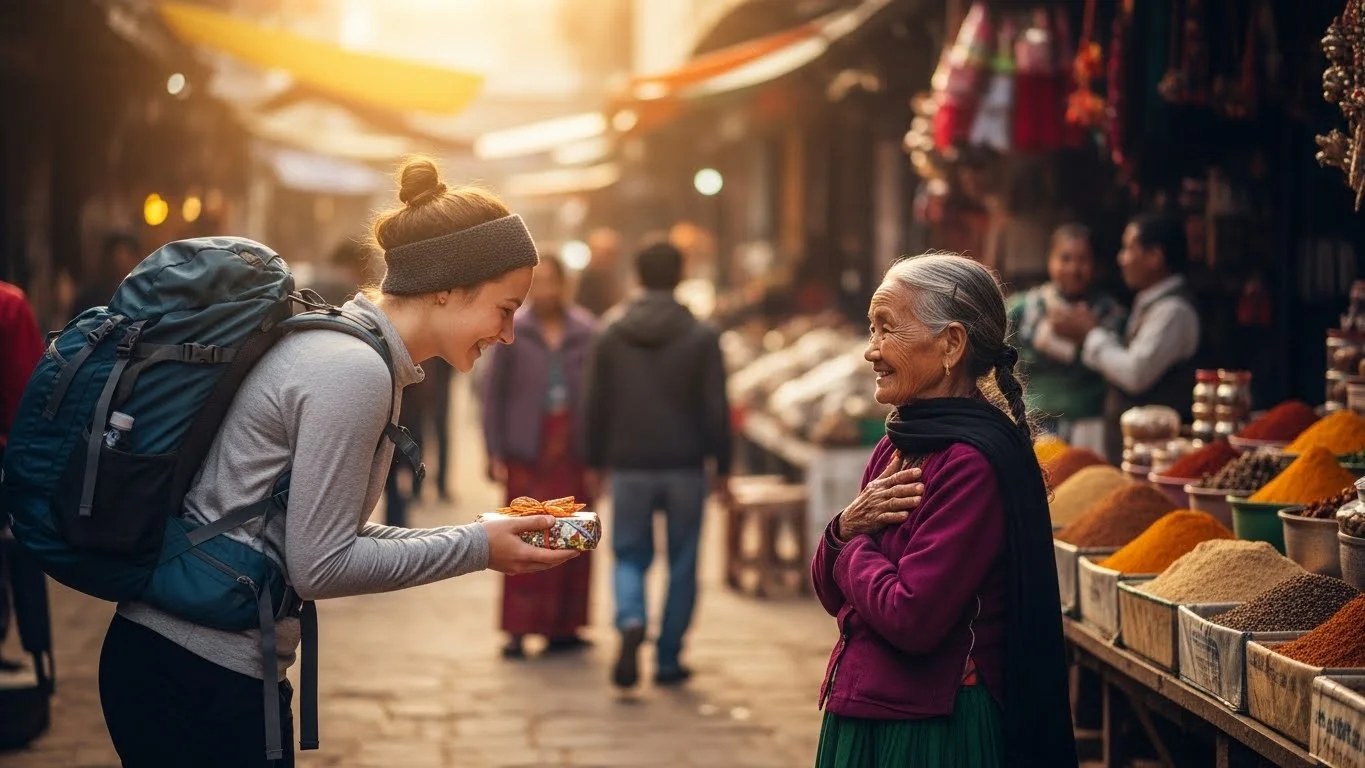
Cultural Greeting Etiquette: Tips for Budget Travelers

Traveling opens up a world of experiences, and understanding cultural greeting etiquette can make your journey even more rewarding. Let’s explore how a simple greeting can bridge gaps and enhance your travel adventures on a budget. Read Interesting article: Mastering Global Greetings: A Backpacker’s Guide
Cultural Greeting Etiquette: Tips for Budget Travelers

Understanding Cultural Greetings Around the World

Importance of Cultural Greetings

When I first started traveling, I underestimated the power of a simple greeting. It’s not just about saying hello; it’s about connecting with people. Greetings can express respect and appreciation for local customs. I’ve found that when I took the time to greet someone in their native language or style, it not only made them smile but often opened doors to conversations and experiences I would have missed otherwise. For instance, I remember being in a small village in Morocco; when I greeted the shopkeeper with “salam aleikum,” he lit up and invited me in for mint tea. That’s the magic of cultural greetings – they can transform a fleeting moment into a memorable encounter.

Common Misconceptions About Greetings

There are many misconceptions about how to greet people around the world, and I’ve fallen prey to some myself. One of the biggest misunderstandings is thinking that greetings are universal. I remember traveling to Japan and assuming a handshake would suffice. Instead, I was met with a polite bow, and I felt embarrassed for not knowing. Every culture has its own unique way of greeting, and it’s essential to recognize and respect these differences. Another misconception is believing that the more formal a greeting, the better. While it’s true that politeness is valued in many cultures, warm and casual greetings can also create a friendly atmosphere. I’ve learned that a genuine smile and openness often trump formality.

Regional Greeting Etiquette

Africa

Traditional Greetings in East Africa

In East Africa, greetings can be quite elaborate and are an integral part of daily life. When I traveled to Kenya, I quickly learned that a simple “hello” often isn’t enough. You might start with “Habari” (How are you?) and follow up with questions about the person’s family or well-being. It struck me how much value they placed on connection, and it made my interactions much richer. I remember meeting a local guide who spent several minutes exchanging pleasantries before discussing our itinerary. These moments felt genuine and welcoming.

Unique Greetings in West Africa

Moving to West Africa, the greetings vary by country but often involve a mix of verbal and non-verbal communication. In Ghana, for example, I learned to use both hands when shaking hands, which is a sign of respect. There’s also the “fist bump” which is common among younger people. I’ve noticed that these unique customs help to break the ice, and I truly enjoyed observing how the locals engaged with each other. Sharing in those greetings made me feel like part of the community.

Asia

Respectful Greetings in Japan

Japan was eye-opening for me in terms of greeting etiquette. The bowing culture is deeply rooted in respect and hierarchy. When I first arrived, I felt nervous about getting it right! I remember practicing my bows in front of the mirror. When I finally bow to an old woman at a tea shop, her delighted expression made all the practice worth it. It’s not just about bending at the waist; the depth of the bow can signify different levels of respect. I learned that taking the time to bow properly can show how much I value the culture.

Handshakes vs. Bowing in China

In China, the greeting can vary depending on the situation. Handshakes are common in business settings but are often accompanied by a slight bow. During my trip, I was surprised to find that a firm handshake was appreciated, yet I also learned that a gentle touch was more common among friends. I loved how I could adapt my greeting style to fit the context, making my interactions feel more personal. It taught me that greetings are as much about the context as they are about tradition.

Europe

Greeting Customs in Southern Europe

Traveling through Southern Europe, I quickly realized that greetings tend to be warm and expressive. In Italy, a friendly “Ciao!” and a kiss on both cheeks is the norm among friends. I remember feeling slightly awkward the first time I attempted the cheek kiss, but soon enough, it became a joyful part of my day. Embracing this custom allowed me to connect with locals, making me feel more at home.

Formal vs. Informal Greetings in Northern Europe

In contrast, Northern European countries like Sweden and Finland often have more reserved greeting styles. A firm handshake accompanied by a smile conveys friendliness without being overly familiar. During my stay in Sweden, I noticed that while their greetings might be less expressive, they carry an air of sincerity. This taught me that even subtle greetings could foster genuine connections.

North America

Casual Greetings in the United States

In the U.S., greetings are generally casual. A simple “Hi” or “Hey” often suffices, and I’ve found that people appreciate a friendly smile. However, I learned that it’s essential to read the room – a busy commuter may not want to engage, while someone at a coffee shop might welcome a chat. I’ve enjoyed how casual greetings can lead to spontaneous conversations and new friendships.

Unique Greetings in Canada

Canada has its unique flair, with an emphasis on politeness. Saying “sorry” is common even when it’s not needed! I’ve found that Canadians are warm and welcoming, often greeting you with a smile and a friendly “How’s it going?” This openness made my experience feel inviting and helped me enjoy my travels even more. Read Interesting article: Navigate Dining Etiquette: Cultural Tips for Budget Backpackers

South America

Warm Greetings in Brazil

Brazilian greetings are known for their warmth and enthusiasm. A common greeting is a hug or a kiss on the cheek, which can feel a bit overwhelming at first, especially if you’re not used to such closeness. I remember being enveloped in hugs from locals at a festival, which made me feel like I was part of the family. It’s a beautiful reminder of how greetings can foster connection and joy.

Cultural Nuances in Argentina

In Argentina, greetings often involve a kiss on the right cheek, regardless of gender. I was initially surprised by this custom but found it to be a charming way to connect. The warmth of the greeting helped me feel at ease when meeting new people. I learned to embrace this cultural nuance and found that it opened the door to deeper conversations throughout my travels.

Tips for Budget Travelers on Greeting Etiquette

Researching Local Customs

As I started traveling more, I realized just how essential it is to research local customs. I remember preparing for a trip to Thailand and spending time online to understand their greeting etiquette. Learning that the traditional “wai” involves pressing your palms together and bowing was a game changer for me. It made my interactions feel more respectful and genuine. While it can be tempting to skip this step, taking even a few minutes to brush up on local customs can pay off greatly. I’ve found that locals appreciate when you show interest in their culture, and it often leads to friendlier exchanges.

Learning Key Phrases

One of the simplest yet impactful things I’ve done is to learn a few key phrases of the local language. I remember being in Vietnam and practicing “xin chào” (hello) before meeting locals. Just saying this phrase with a smile opened up so many conversations! I recommend picking up a phrasebook or using a language app to help you get familiar with greetings. Even if you don’t master the language, making an effort can break the ice. I’ve seen how a small attempt, like mispronouncing a word, often brings laughter and warmth rather than judgment.

Using Non-Verbal Communication

Not every greeting has to be verbal, and I’ve learned that non-verbal communication can be just as powerful. During my travels in Italy, I discovered that gestures often convey more than words. A friendly wave or a thumbs-up can go a long way, especially when language barriers exist. I remember getting stuck in a crowded market where I didn’t speak much Italian. By using hand signals and friendly smiles, I was able to navigate my way through and even make some new friends. Embracing these non-verbal cues adds a layer of connection that transcends language.

Practicing Greetings with Locals

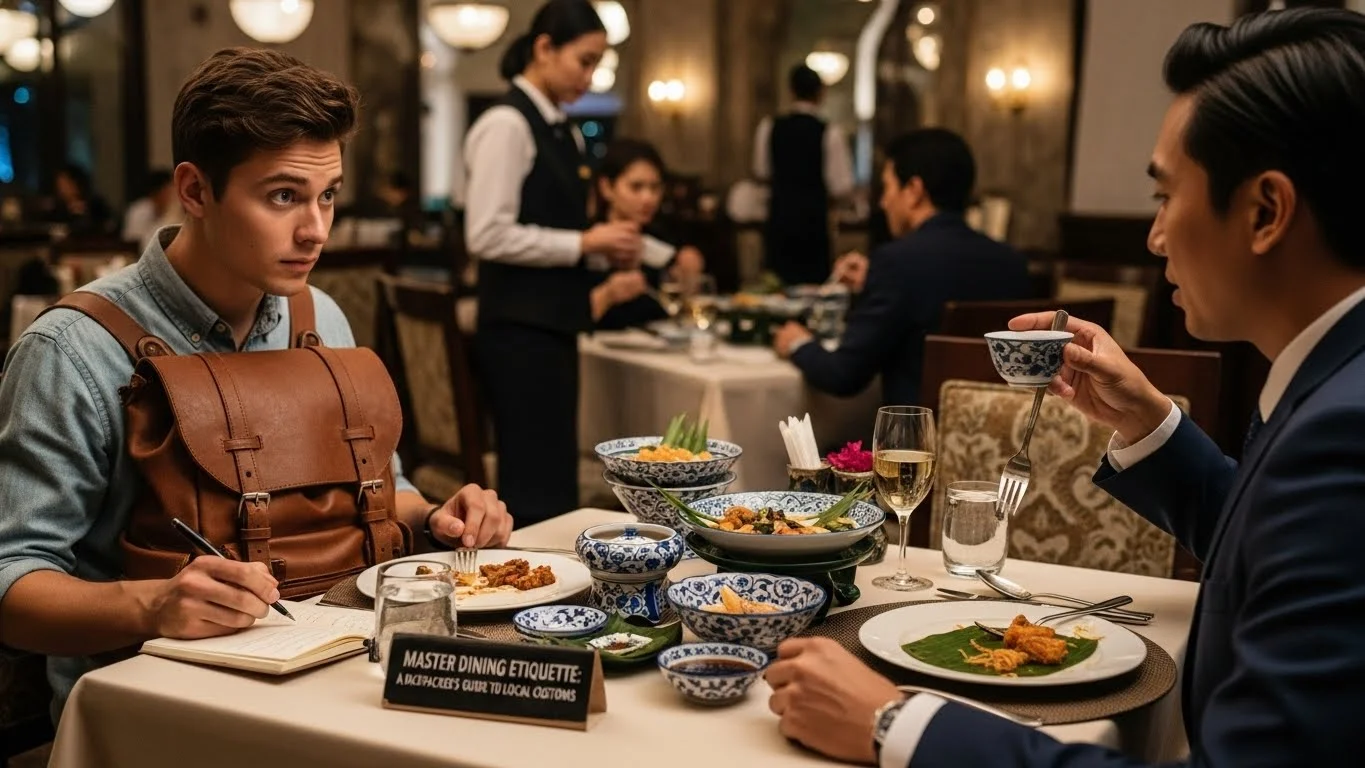
When traveling, I often seize opportunities to practice greetings with locals. I’ll never forget the time I sat down at a café in Spain and struck up a conversation with the barista. I asked her how to properly greet someone in Spanish, and she was more than happy to help! She taught me the nuances of “buenos días” (good morning) and how the tone can change the meaning. Experiencing this firsthand allowed me to not only learn but also build a rapport with someone I might not have connected with otherwise. I recommend taking these moments to ask locals about their greetings; they usually love sharing their culture! Read Interesting article: Master Dining Etiquette: A Backpacker’s Guide to Local Customs

Common Greeting Mistakes to Avoid

Ignoring Cultural Context

After years of traveling, one thing I’ve learned is how crucial it is to be aware of cultural context when greeting someone. I remember being in a formal business setting in Germany, where I casually waved to a colleague instead of offering a firm handshake. It was a mistake that made me realize how important it is to adapt to the environment. Each situation might call for a different approach, and being mindful of this can prevent awkward moments. I think it’s essential to gauge the tone of the environment before jumping into a greeting.

Overstepping Personal Space

Personal space is another aspect I’ve had to learn about. In some cultures, standing too close can be comfortable, while in others, it can feel intrusive. I recall being in Sweden, where people generally prefer to maintain a bit of distance during conversations. I learned the hard way when I stepped a little too close to a new acquaintance, and I noticed their discomfort. I’ve become more aware of observing how others react to my proximity, which has helped me adjust my greetings to make everyone feel more at ease.

Inappropriate Physical Contact

Physical contact varies widely around the world, and I’ve made mistakes in this area too. For example, in some cultures, a hug can be a warm greeting, while in others, it may be entirely inappropriate. While attending a party in Argentina, I instinctively went in for a hug, only to find that the person was taken aback. Realizing that not everyone is comfortable with physical contact has been a valuable lesson for me. I now try to observe and follow the lead of others. A firm handshake or a simple nod can often be a safer bet.

Cost-Effective Ways to Enhance Your Greeting Skills

Free Language Apps and Resources

There’s no shortage of free language apps and resources that can help enhance your greeting skills. I’ve found apps like Duolingo and HelloTalk to be incredibly helpful in learning phrases and practicing pronunciation. They make language learning fun and interactive. Just a few minutes a day can go a long way in preparing for a trip. I remember practicing my greetings before arriving in a new country and feeling more confident as a result.

Community Language Exchange Programs

Participating in community language exchange programs has been another fantastic way to boost my greeting skills. In my hometown, I discovered a local meetup group where people gather to practice different languages. I joined in, and it was a great opportunity to learn how to greet people in various languages while making new friends. Plus, many of these programs are free, making it an affordable way to dive into different cultures.

Local Workshops and Cultural Events

Whenever I travel, I keep an eye out for local workshops or cultural events that focus on greetings and etiquette. I once attended a cultural festival in India where they offered a short class on traditional greetings. It was an amazing experience that not only taught me how to greet locals but also gave me a taste of their culture. These workshops can be budget-friendly and often lead to lasting connections. I encourage you to seek out these types of opportunities; they truly enrich your travel experience.

Real-Life Scenarios and Examples

Friendly Encounters in Markets

Markets are often the heart of local culture, and I’ve experienced some of my most memorable greetings in these vibrant spaces. I remember wandering through a bustling market in Marrakech, where the air was filled with spices and the chatter of vendors. As I approached a stall selling colorful textiles, the vendor greeted me with a warm “Ahlan!” followed by a broad smile. I felt drawn in, and before I knew it, we were chatting about the history of the fabrics. I learned to appreciate how a friendly greeting could segue into a rich conversation about local craftsmanship. It’s a reminder that in markets, greetings are not just about formality; they’re about building connections with the community.

Business Greetings in Professional Settings

When I transitioned from casual travel to business trips, I quickly learned that greetings in professional settings can differ significantly. During a conference in Germany, I was nervous about how to greet my colleagues. I decided to observe how others interacted first. I noticed that a firm handshake accompanied by direct eye contact was the norm. When it was my turn to introduce myself, I followed suit, and I could see how my confidence in that simple greeting set a positive tone for the rest of our discussions. It taught me that in business, greetings can reflect professionalism, and taking the time to get it right can open doors to valuable connections.

Casual Interactions in Social Gatherings

Social gatherings can be a little more relaxed, but I’ve still found that a thoughtful greeting can make all the difference. I recall attending a friend’s wedding in Brazil, where greetings were lively and full of energy. The moment I arrived, I was welcomed with warm hugs and kisses on the cheek from people I had just met. Initially, it felt overwhelming, but as I leaned into the experience, I embraced the warmth of the customs. I learned that in social settings, greetings are often infused with joy and can set a festive tone for the event. Being open to these encounters reminded me that the essence of greetings is about connection and community, regardless of the setting.

Resources for Further Learning

Books on Cultural Etiquette

There are some fantastic books that delve into cultural etiquette, and I’ve found them incredibly helpful in enhancing my understanding of greetings. One book that stood out for me is “The Culture Map” by Erin Meyer. It breaks down how different cultures communicate and interact, providing insights into greeting styles. I remember flipping through it before my trip to Asia and feeling more prepared to navigate those nuances. Another great resource is “Kiss, Bow, or Shake Hands” by Terri Morrison and Wayne A. Conaway, which offers practical advice on greetings and etiquette in various countries. Investing time in these books can give you a solid foundation before traveling.

Online Courses and Webinars

With so much information available online, I’ve also taken advantage of courses and webinars focused on cultural etiquette. Platforms like Coursera and Udemy offer classes that cover greetings and communication styles across different cultures. I took a course on intercultural communication, and it helped me better appreciate the significance of greetings in various contexts. Watching videos and participating in discussions with instructors and fellow learners made the experience even richer. If you’re looking to deepen your understanding of cultural greetings, I highly recommend exploring these online options.

Travel Blogs and Vlogs

Travel blogs and vlogs have been a goldmine for learning about cultural greetings from real travelers’ perspectives. I often find myself drawn to blogs that share personal stories about encounters in different countries. One of my favorites is “Nomadic Matt,” where he shares insights and tips from his travels around the world. Watching vlogs on platforms like YouTube has also been fun; they often showcase how to navigate greetings in various cultures in a light-hearted way. I remember stumbling upon a video that demonstrated the greeting customs in Japan, which helped me feel more confident before my visit. I think these resources offer relatable insights and can inspire you to engage more deeply with cultures you encounter.

Frequently Asked Questions

What is the importance of cultural greetings while traveling?

Cultural greetings are essential for connecting with people and expressing respect for local customs. A simple greeting in someone’s native language can open doors to conversations and memorable experiences.

What are some common misconceptions about greetings?

One common misconception is that greetings are universal; each culture has its unique way of greeting. Another misconception is that more formal greetings are always better, while warm and casual greetings can also create a friendly atmosphere.

How are greetings approached in East Africa?

In East Africa, greetings are often elaborate and involve asking about a person’s family or well-being. A simple “hello” is usually not sufficient, as locals value connection and personal interaction.

What greeting customs are found in Japan?

In Japan, the bowing culture is deeply rooted in respect and hierarchy. The depth of the bow can signify different levels of respect, and it’s important to practice proper bowing to show cultural appreciation.

How do greetings differ in Northern Europe compared to Southern Europe?

Northern European countries like Sweden and Finland have more reserved greeting styles, often using a firm handshake with a smile. In contrast, Southern European countries like Italy have warmer and more expressive greetings, often involving cheek kisses among friends.

What are typical greeting practices in Canada?

Canadians emphasize politeness and often greet others with a friendly “How’s it going?” They may also say “sorry” even when it’s unnecessary, reflecting their warm and welcoming nature.

What should budget travelers do to enhance their greeting skills?

Budget travelers can research local customs, learn key phrases, use non-verbal communication, and practice greetings with locals to enhance their greeting skills and cultural understanding.

What common greeting mistakes should travelers avoid?

Travelers should be aware of cultural context, avoid overstepping personal space, and refrain from inappropriate physical contact. Observing how others greet can help prevent awkward situations.

What resources can travelers use to learn about cultural greetings?

Travelers can benefit from books on cultural etiquette, online courses and webinars, and travel blogs or vlogs that provide insights and personal stories about greeting customs in different cultures.

How can a simple greeting impact travel experiences?

A simple greeting can foster connections and create memorable encounters, as it shows respect for the local culture and can lead to richer interactions with the community.
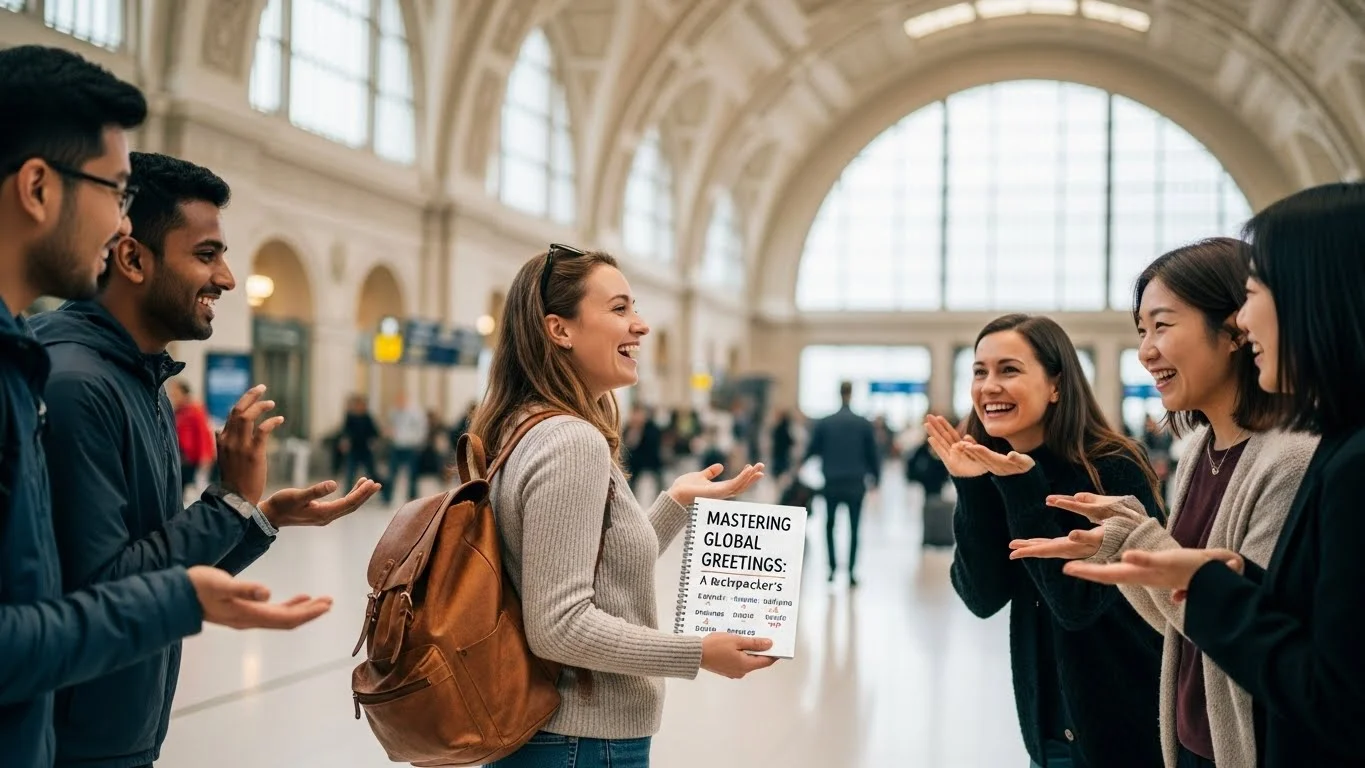
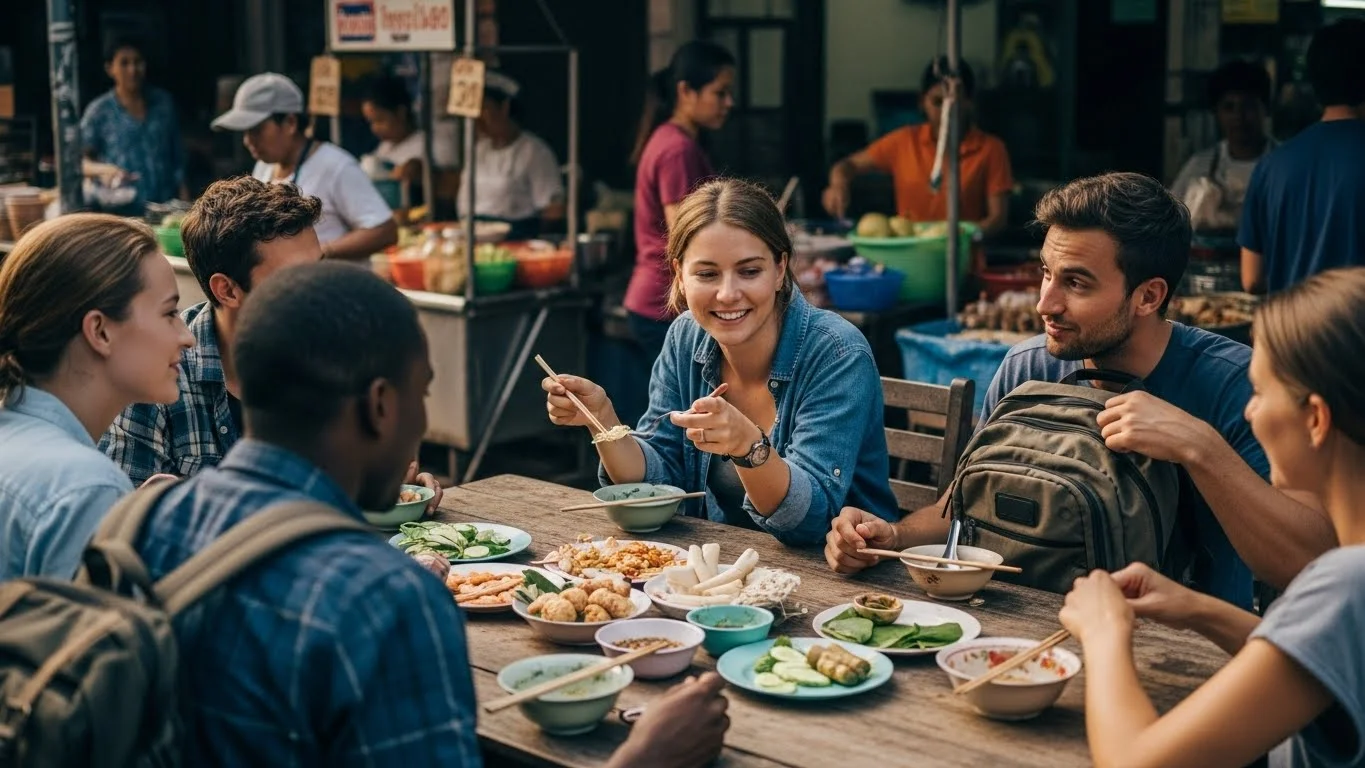
Mastering Global Greetings: A Backpacker’s Guide

Imagine stepping into a new country, and the first thing you hear is a warm greeting in a foreign tongue. Mastering global greetings can transform your travel experiences, opening doors to new friendships and cultural insights. Read Interesting article: Couchsurfing Guide: Save Big on Your Next Adventure

Mastering Global Greetings: A Backpacker's Guide

Understanding the Importance of Greetings in Different Cultures

When I first started traveling, I underestimated the power of a simple greeting. I remember landing in Japan, excited but a bit nervous. As I stepped out of the airport, I was greeted with “Konnichiwa” from a friendly shopkeeper. It struck me how that one word made me feel welcomed and connected. From my experience, greetings are more than just polite words; they are the first step in building relationships. Let’s dive deeper into why greetings are so essential in different cultures.

Why Greetings Matter

Greetings serve as a foundation for human interaction. They set the tone for the relationship that follows. When we greet someone, we acknowledge their presence, which can be incredibly powerful. I’ve noticed that in many cultures, how you greet someone can reflect your respect for them. For instance, in some Asian cultures, a bow signifies respect, while in others, a handshake is the norm. I believe understanding these nuances can enrich our travel experiences and demonstrate our willingness to engage with local customs.

Cultural Significance of Greetings

Each culture has its unique way of greeting, which often carries deep meanings. In my travels through South America, I discovered that greetings involve more than just saying hello; they often include a hug or a kiss on the cheek. This physical touch signifies warmth and connection. In contrast, in places like Scandinavia, greetings can be more reserved. People might stick to a firm handshake and eye contact, which I found to be refreshing in its straightforwardness. I learned that embracing these differences can help us connect more authentically with others.

Common Misconceptions About Greetings

One misconception I had was that all greetings are interchangeable, but that couldn’t be further from the truth. I once used a casual greeting in a formal setting while visiting a friend in Germany, and I could see the surprise on their face. It made me realize the importance of context. Each culture has its own set of rules, and understanding these can prevent awkward moments. From my perspective, even the slightest effort to greet someone in their native language or style can go a long way in showing respect.

Global Greeting Styles by Region

North America

Common Greetings

In North America, greetings are typically casual. A simple “Hi” or “Hello” is common, and often accompanied by a smile. I remember feeling immediately at ease when I received a friendly “How’s it going?” from a stranger on the streets of Toronto. This informal style fosters a welcoming atmosphere. However, in professional settings, I learned a firm handshake is the norm, and maintaining eye contact is crucial to convey confidence.

Regional Variations

As I traveled from the bustling cities of New York to the laid-back vibes of California, I noticed regional variations in greetings. In the South, for example, there’s a tendency to be more polite, with greetings like “Howdy” making an appearance. I found it charming and indicative of the hospitality that characterizes Southern culture. Understanding these variations helps us adapt our approach and make connections more easily. Read Interesting article: Discovering Indigenous Languages: A Guide for Backpackers

South America

Common Greetings

In South America, greetings can be quite expressive. Most people greet with a kiss on the cheek or a warm hug. I was surprised by how quickly I felt at home in Argentina when I was greeted with a friendly “Hola” along with a cheek-to-cheek kiss. It’s a beautiful custom that emphasizes warmth and connection. However, I found that in some countries, like Brazil, the number of kisses can vary by region, so it’s good to be aware of local customs.

Unique Local Customs

In Ecuador, I discovered that it’s common to ask how someone’s family is doing as part of the greeting. This shows that people genuinely care about each other’s well-being. I remember being touched when a local shopkeeper asked me about my family back home; it made me feel like I belonged, even as a traveler. Embracing these unique customs enriches our travel experiences and fosters deeper connections.

Europe

Western European Greetings

Traveling through Western Europe, I noticed that greetings vary widely. In France, a polite “Bonjour” with a smile goes a long way, while in the UK, a simple “Cheers” can be a casual way to say hello. I learned that a firm handshake is common in professional settings, and maintaining eye contact is appreciated. In my experience, it’s essential to adapt our greetings to suit the local style to show respect and interest.

Eastern European Greetings

Eastern Europe has its own etiquette. In countries like Russia, greetings can be a bit more formal. A handshake is often expected, and you should wait for the host to initiate any physical contact. I found this structure to be refreshing, and it taught me the importance of following cues. Over time, I learned that taking the time to understand a culture’s greeting style can create a more meaningful connection.

Africa

Greeting Rituals Across Different Countries

Africa is a continent rich in diversity, and greetings can vary dramatically from region to region. In many West African cultures, greetings are elaborate and can involve several questions about a person’s well-being and family. I was fascinated by the importance placed on greetings when I visited Ghana. People often greet with “Akwaaba,” meaning “welcome,” and follow up with questions about health and family. This practice emphasizes community and connection, something I deeply appreciated during my travels.

Asia

Traditional Greetings in East Asia

In East Asia, I discovered that greetings can be more formal. In Japan, the bow is a traditional greeting that conveys respect. I remember feeling a bit awkward when I first tried to bow but was met with friendly smiles, encouraging me to keep practicing. In China, a handshake is common, but I learned it’s polite to wait for the other person to initiate it. These small gestures made me feel more connected and respected.

Greetings in South Asia

In South Asia, greetings like “Namaste” in India involve a slight bow with hands pressed together. I found this to be a beautiful representation of respect and acknowledgment. The warmth of the greeting made me feel welcomed into the culture. Navigating these different styles taught me the importance of adapting to local customs, enriching my travel experience further. Read Interesting article: Backpacking Through Indigenous Cultures: A Traveler’s Guide

Oceania

Australian and New Zealand Greetings

In Australia and New Zealand, greetings are often casual and friendly. A simple “G’day” or “Kia ora” can make you feel right at home. I loved how relaxed the atmosphere felt when I traveled there. It’s common to see people smiling and engaging in small talk with strangers, which fosters a sense of community. I found it refreshing and felt encouraged to engage more with locals.

Indigenous Greetings

Meeting Indigenous Australians also opened my eyes to unique greeting customs. For example, in some Indigenous cultures, a handshake may not be appropriate, and a gentle nod or greeting in their native language is preferred. Understanding these customs allowed me to connect more genuinely with the community, and I felt fortunate to learn from their rich heritage.

Common Greeting Phrases Around the World

Simple Phrases for Everyday Use

When I travel, I love picking up simple phrases that allow me to connect with locals on a more personal level. For instance, in Spain, learning to say “Hola” for hello and “Gracias” for thank you really enhanced my experience. I remember walking through the vibrant streets of Barcelona, where every “Hola” was met with a warm smile, making me feel part of the community. In Italy, “Ciao” is both a greeting and a farewell, and using it felt like a small gift I could share with the locals. These little phrases often open up conversations and make interactions feel more genuine.

Formal vs. Informal Greetings

Understanding the difference between formal and informal greetings can also be a game-changer. During my time in Germany, I learned that “Guten Tag” (Good day) is appropriate in formal settings, while “Hi” or “Hey” is more relaxed for casual encounters. I remember attending a dinner party where I initially used the informal greeting, and my friend gently reminded me to use the formal one in front of her parents. It taught me the importance of reading the room and adjusting my greetings based on the context. It can make all the difference in how I’m perceived.

Regional Slang and Dialects

As I traveled through different regions, I discovered that slang terms could vary greatly. In the UK, for example, “Alright?” is a common way to say hello, while in Australia, “How’s it going?” feels more casual and friendly. I found it amusing when I was in a café in London and someone greeted me with “You alright?” I took a second to process it, thinking they were genuinely checking on my well-being! Learning these regional nuances not only helped me feel more at home but also led to some delightful conversations with locals who appreciated my effort to fit in.

Body Language and Non-Verbal Communication

The Role of Gestures in Greetings

Body language plays a significant role in how greetings are received. I’ve noticed that in many cultures, gestures can convey messages just as powerfully as words. For example, in Italy, a friendly wave or an open palm can enhance the warmth of a verbal greeting. However, in countries like Japan, it’s all about the bow. My first attempt at bowing felt awkward, but I was met with smiles that reassured me. It made me realize how important it is to be aware of and respect local customs. Noticing these small gestures can deepen our connections with others, making interactions more meaningful.

Understanding Personal Space

Personal space is another factor that varies from culture to culture. I remember feeling a bit startled when someone in Brazil got close to me while greeting with a kiss on the cheek. In North America, people tend to keep a bit more distance during greetings. I learned to adapt my comfort level based on the local customs. In places like Scandinavia, maintaining a respectful distance is valued, which I found refreshing. It’s essential to pay attention to these differences to avoid making others feel uncomfortable while also helping us feel at ease.

Eye Contact and Facial Expressions

Eye contact and facial expressions can speak volumes during greetings. In many cultures, maintaining eye contact is a sign of confidence and engagement. I experienced this in Italy, where looking someone in the eye while saying “Ciao” added a layer of sincerity to the greeting. However, I learned that in some Asian cultures, prolonged eye contact can be viewed as disrespectful. I remember having to remind myself to be mindful, especially in Japan, where a gentle smile accompanied by a bow was the preferred way to greet. Understanding these subtleties has allowed me to connect more authentically with people from different backgrounds.

Tips for Mastering Global Greetings

Researching Local Customs Before Traveling

Before I embark on a new adventure, I always make it a point to research the local customs, especially regarding greetings. I’ve found that a little preparation goes a long way. Websites and travel forums are great resources for learning about the nuances of greetings in different cultures. For example, before my trip to Thailand, I learned that the traditional greeting is a “Wai,” where you press your palms together and bow slightly. This simple act showed my respect and willingness to embrace their culture.

Practicing Pronunciation

I’ve also discovered that practicing the pronunciation of greetings can really enhance my interactions. I remember trying to say “Salam” in Arabic when I visited Morocco and how it instantly made the locals smile. I would often ask locals how to pronounce certain phrases correctly, and they were always eager to help. It’s a wonderful way to break the ice and show that you care enough to try. I recommend practicing these phrases out loud, even if it feels silly at first; you’ll be surprised at how quickly you pick them up!

Being Open to Learning and Adapting

Finally, being open to learning and adapting is vital. I’ve made my fair share of mistakes when it comes to greetings, but each experience taught me something valuable. Instead of feeling embarrassed, I tried to laugh it off and learn. I recall a time when I mistakenly greeted someone in a way that was too casual for the setting, but instead of turning red, I asked about their preferred greeting style. This openness not only helped me learn but also created a bond with the person I was speaking with. Embracing our missteps can lead to beautiful connections and richer travel experiences.

Common Mistakes to Avoid When Greeting

Using the Wrong Greeting in a Cultural Context

One of the biggest mistakes I’ve made while traveling is using the wrong greeting in a cultural context. I recall a time when I casually greeted someone in Spain with “Hola” in a very formal setting, thinking it would be received well. Instead, I noticed the raised eyebrows and slight hesitation from the person I was addressing. It was a learning moment for me. Each culture has its own unique ways of greeting in different contexts, and it’s crucial to read the room. I now take a moment to gauge the situation—if it feels formal, I opt for a more respectful greeting, while in casual settings, I may feel free to be more relaxed. This awareness not only shows respect for the local customs but also helps to avoid any uncomfortable situations.

Overstepping Personal Boundaries

Another mistake I learned to avoid is overstepping personal boundaries, especially in cultures where physical touch is less common. During a trip to Japan, I was taken aback when a few friends I had made there bowed to me instead of offering a handshake. I instinctively reached out for a handshake, thinking it would bridge the gap. To my surprise, they stepped back, clearly uncomfortable. I realized that understanding personal space and the comfort levels of others is vital. I now pay close attention to how people greet each other before I approach. It’s a simple way to show that I respect their customs and comfort zones, which makes interactions much more pleasant.

Assuming Similarities Across Cultures

One of the most common misconceptions I encountered was assuming that similarities exist across all cultures. I remember visiting Italy, where I experienced the warmth of an informal “Ciao.” Excited by this, I tried using it in France, thinking it would be similarly accepted. However, in France, informality can sometimes be seen as disrespectful. I learned quickly that not all cultures embrace the same level of casualness. This experience taught me the importance of understanding the unique characteristics of each culture. It’s essential to approach each interaction with an open mind and a willingness to learn. By acknowledging these differences, we can create more meaningful connections.

Resources for Learning About Global Greetings

Language Learning Apps

To become more confident in my greetings, I turned to language learning apps. Apps like Duolingo and Babbel have been game-changers for me. They offer bite-sized lessons that cover not just vocabulary but also pronunciation and cultural context. I remember practicing my greetings in various languages during my morning coffee, and it made me feel more prepared for my travels. Whenever I arrive in a new country, I try to brush up on the basics, ensuring that I can at least say hello in the local language. It’s such a rewarding experience to see someone’s face light up when I greet them in their native tongue.

Travel Blogs and Guides

Another resource that has helped me tremendously is reading travel blogs and guides. I often find firsthand accounts from travelers who share their experiences and tips about cultural nuances. Websites like Nomadic Matt and The Culture Trip provide insights into local customs, including greetings. I remember reading a blog about South American customs that prepared me for the warm, physical greetings I would encounter. These blogs often highlight what to do and what to avoid, giving me a clearer picture of what to expect. I recommend checking out these resources before your journey, as they can provide invaluable context.

Cultural Workshops and Classes

Finally, attending cultural workshops and classes has been an incredibly enriching experience for me. In some cities, local community centers or cultural organizations offer workshops on traditions, languages, and social customs. I signed up for an introductory class on Japanese culture before my trip, where we practiced greetings and learned about the significance of bowing. This hands-on experience made me feel more connected and prepared. I believe engaging with the local community through these workshops not only enhances our understanding but also fosters a sense of belonging, even if we’re just visitors.

Frequently Asked Questions

Why are greetings important in different cultures?

Greetings serve as a foundation for human interaction, helping to set the tone for relationships. They acknowledge a person’s presence and can reflect respect, which is crucial in various cultures.

What are common greeting styles in North America?

In North America, greetings are typically casual, with common phrases like “Hi” or “Hello” often accompanied by a smile. In professional settings, a firm handshake and eye contact are expected.

How do greetings differ in South America?

In South America, greetings are often expressive, commonly involving a kiss on the cheek or a warm hug. Additionally, asking about someone’s family is a typical part of the greeting in some countries, like Ecuador.

What are the typical greetings in Western and Eastern Europe?

In Western Europe, greetings vary from a polite “Bonjour” in France to a casual “Cheers” in the UK. In Eastern Europe, such as in Russia, greetings are generally more formal, often involving a handshake initiated by the host.

What are some unique greeting customs in Africa?

Africa has diverse greeting customs that vary by region. In many West African cultures, greetings can be elaborate, involving questions about well-being and family, emphasizing community connections.

How do greetings in East Asia differ from those in South Asia?

In East Asia, greetings can be formal, with bowing in Japan indicating respect. In South Asia, greetings like “Namaste” involve a slight bow with hands pressed together, representing respect and acknowledgment.

What are some common greeting phrases around the world?

Common greeting phrases include “Hola” in Spain, “Ciao” in Italy, and “G’day” in Australia. Learning these phrases can enhance interactions and make travelers feel more integrated into the local culture.

What are some tips for mastering global greetings?

Researching local customs, practicing pronunciation, and being open to learning and adapting are vital tips for mastering global greetings. Preparation can enhance travel experiences significantly.

What mistakes should travelers avoid when greeting people in different cultures?

Travelers should avoid using the wrong greeting in a cultural context, overstepping personal boundaries, and assuming similarities across cultures, as these can lead to misunderstandings and uncomfortable situations.

What resources can help learn about global greetings?

Language learning apps, travel blogs, and cultural workshops are excellent resources for learning about global greetings. They provide valuable insights into pronunciation, local customs, and social etiquette.

Navigate Dining Etiquette: Cultural Tips for Budget Backpackers

Dining around the world can be a delightful adventure, but it also comes with its own set of cultural rules. As budget backpackers, understanding these dining etiquettes can enhance our travel experiences and help us connect with locals. For more insights, check out Essential Dining Etiquette Tips for Cultural Travel Adventures.

Navigate Dining Etiquette: Cultural Tips for Budget Backpackers

Understanding Dining Etiquette Across Cultures

Importance of Dining Etiquette for Travelers

When I first set out on my backpacking journey, I quickly realized that dining etiquette is not just about knowing which fork to use. It’s about immersing ourselves in the culture of the places we visit. Respecting local dining customs can open doors to memorable interactions with locals, making our experiences richer and more enjoyable. I remember one evening in Thailand, sitting down for a meal with a family who shared their favorite dishes with me. If I hadn’t followed their customs of communal eating and showing appreciation for the food, I might have missed out on that beautiful connection.

Dining etiquette also plays a critical role in avoiding misunderstandings. For instance, in some cultures, finishing your plate signals you were not satisfied with the meal. In others, it shows appreciation. By understanding these nuances, we can navigate our way through meals confidently, reducing the chances of accidentally offending our hosts or fellow diners.

Common Dining Etiquette Terms

As I traveled, I stumbled upon various terms that helped me navigate different dining settings, making me feel more at ease. Here are a few that I found particularly useful:

  • Table manners: This encompasses a range of behaviors such as how to eat, speak, and interact at the table.
  • Communal dining: Sharing dishes and eating from a common plate is a common practice in many cultures, promoting togetherness.
  • Tipping customs: Understanding when and how much to tip can vary greatly between countries, and it’s crucial to know what’s expected.
  • Host-guest etiquette: Knowing how to behave as a guest or host can make a significant difference in your dining experience.

These terms became part of my travel vocabulary, and they helped me feel more integrated into different dining experiences. Whether I was at a street food stall in Vietnam or a cozy café in Paris, they guided my actions and decisions. For more information on these terms, visit Dining Etiquette Around the World: Tips for Budget Travelers.

Dining Etiquette in Specific Countries

Dining Etiquette in Italy

Italy has a rich culinary culture that is deeply tied to its regions. One thing I learned quickly was the importance of enjoying the meal, rather than rushing through it. Italians take their time, savoring each course. At a trattoria in Florence, I noticed how patrons lingered over their wine and conversation long after the plates were cleared. I decided to join in, and it turned out to be one of my favorite evenings.

Another point to remember is that it’s customary to wait for everyone at the table to be served before starting to eat. I once made the mistake of diving into my pasta too early, and it drew some amused glances. Now, I always make it a point to be patient, enjoying the moment with my fellow diners.

Dining Etiquette in Japan

Japan is a fascinating blend of tradition and modernity, and its dining etiquette reflects this. One key aspect I found fascinating was the concept of ‘itadakimasu,’ a phrase said before meals to express gratitude. I always try to remember to say it, as it shows respect for the food and those who prepared it. I also learned that slurping noodles is not only acceptable but encouraged, as it signifies enjoyment of the meal!

However, I had to be careful with chopsticks. Sticking them upright in rice or passing food directly from one pair of chopsticks to another is seen as disrespectful, as it resembles funeral rituals. Being aware of these subtleties enhanced my dining experiences in Japan immensely.

Dining Etiquette in India

Dining in India is a vibrant affair. It’s common to eat with your hands, and using the right hand is essential, as the left hand is considered unclean. I remember being a bit nervous about this at first, but once I got the hang of it, it felt incredibly liberating and connected me to the culture. Sharing food is also a big part of Indian dining; I found that locals were always eager to share their dishes with me, which made meals feel like a communal celebration.

Dining Etiquette in France

Dining in France is an art form. I quickly learned that meals are seen as a time to relax and enjoy, rather than just refueling. At a bistro in Paris, I noticed how the waitstaff took their time, emphasizing service and attentiveness. I made a point to engage with my server, practicing a bit of my French, which made the experience even more enjoyable.

Another interesting aspect of dining in France is the importance of wine. It’s not just a drink; it’s part of the meal. I learned to ask for recommendations, and I found that locals appreciated my effort to embrace their culture.

Dining Etiquette in Mexico

Mexico is a land of flavors and traditions, and dining etiquette varies by region. I found that meals often start with a warm greeting and perhaps a small appetizer. It’s polite to wait for the host to begin before digging in, and sharing food is a common practice, especially at family gatherings. I still remember being invited to a home-cooked meal by a local family where we all shared different platters, creating a warm, communal atmosphere.

Overall, each of these experiences taught me that dining etiquette is not just about the rules; it’s about respect, connection, and enjoying the moment. By learning these cultural nuances, we can enrich our travels and create lasting memories. As we move forward, let’s explore budget-friendly dining options and tips for navigating dining situations while traveling. Don’t forget to check out Master Dining Etiquette: A Backpacker’s Guide to Local Customs.

Budget-Friendly Dining Options

Street Food vs. Restaurants

One of the best parts of traveling is discovering local cuisine, and as a budget backpacker, I’ve learned that street food can be a game changer. There’s something exciting about grabbing a bite from a street vendor, feeling the energy of the city, and tasting authentic flavors. I remember wandering through the bustling streets of Bangkok, where the air was filled with the aromas of grilled meats and spicy noodles. I sampled delicious pad thai from a street stall for just a couple of dollars, and it quickly became one of my favorite meals of the trip.

On the flip side, dining at restaurants can also be a fulfilling experience, especially if you’re looking to relax after a long day of exploring. I’ve discovered that many local eateries offer lunch specials or fixed-price menus that are much more affordable than dinner prices. For instance, in Lisbon, I enjoyed a three-course meal at a cozy restaurant for less than what I’d pay for a single dish at a tourist spot. It’s all about doing a bit of research and asking locals for recommendations.

Finding Affordable Local Eateries

When I’m on the hunt for affordable dining options, I always keep my eyes peeled for places filled with locals. If you see a crowded restaurant or café, that’s usually a good sign! I remember sitting in a small diner in Mexico City, completely surrounded by families enjoying their meals. The atmosphere was vibrant, and the prices were unbelievably low. I was able to feast on tacos and fresh guacamole, all while enjoying the lively chatter around me.

Another tip I’ve found helpful is using local apps or websites to identify budget-friendly places. In some countries, there are even social media pages dedicated to food deals. Additionally, asking your hostel staff or fellow travelers for suggestions can lead you to hidden gems that aren’t in the guidebooks. I’ve often found that the best culinary experiences come from those unexpected finds.

Utilizing Food Markets and Cafés

Food markets are one of my favorite places to explore when traveling. Not only do they offer a variety of affordable options, but they also provide a unique cultural experience. I remember visiting a market in Barcelona, where I sampled everything from fresh seafood to artisan cheeses. It felt like a feast for the senses! I often make a meal out of snacks from different stalls, trying a bit of everything without breaking the bank.

Cafés, too, can be a great way to enjoy local flavors without spending much. I’ve found that many cafés offer breakfast or lunch specials that are reasonably priced. Plus, they often provide a cozy atmosphere to relax and recharge. In Paris, I enjoyed a delightful croissant and coffee while people-watching at a small café, and it was one of my favorite moments of my trip. It’s amazing how a simple meal can create such lovely memories.

Tips for Navigating Dining Situations

Making Reservations: When and How

Making reservations can feel daunting, especially in foreign countries where the language barrier might complicate things. However, I’ve learned that it can save you a lot of hassle, particularly at popular restaurants. In my experience, it’s best to book ahead, especially for dinner, to ensure you have a spot waiting for you. I remember trying to walk into a famous sushi bar in Tokyo without a reservation and being told there was a two-hour wait! Now, I always make it a point to check if reservations are needed, either by calling or checking online.

Understanding Tipping Practices

Tipping can be a tricky subject since customs vary widely around the world. In some places, like the U.S., tipping is expected, while in others, it can be seen as an insult. I’ve made it a habit to do a little research on tipping practices before my trips. For instance, in Italy, I learned that a small service charge is usually included in the bill, so leaving a little extra is appreciated but not obligatory. In contrast, in many Asian countries, tipping is generally not practiced, so I’ve had to adjust my approach accordingly. Knowing these nuances helps me navigate dining situations without feeling awkward.

How to Handle Dietary Restrictions

As someone who follows a vegetarian diet, I’ve often found myself in situations where I need to communicate my preferences clearly. I’ve picked up a few key phrases in the local language to help express my dietary restrictions, and it’s made a huge difference. For example, in India, I learned to say “no meat” in Hindi, which helped me enjoy delicious vegetarian dishes without any confusion.

In some places, I’ve even found that restaurants are more than willing to accommodate special requests. I had a wonderful experience in Thailand, where the chef prepared a delightful vegetarian version of a traditional dish just for me. It’s all about being polite and clear about what you need, and I’ve found that locals are often eager to help.

Polite Ways to Decline Food

Declining food can be tricky, especially when you’re a guest. I’ve been in situations where locals offer me food as a gesture of hospitality, and I always want to be respectful. I’ve learned that expressing gratitude while politely declining is key. A simple, “Thank you so much, but I’m full,” has worked well for me. I’ve noticed that locals appreciate honesty, and framing it positively helps maintain that warm connection.

Cultural Differences in Dining Customs

Table Manners: What to Know

As I continued my travels, I became increasingly aware of how table manners can vary drastically from one culture to another. For instance, in some places, like the United States and much of Western Europe, it’s common to keep your hands on the table but not your elbows. Meanwhile, in countries like Egypt, it’s more acceptable to keep your hands resting on your lap during meals. I recall dining in a cozy restaurant in Cairo where I noticed most diners would eat with their right hand, but they also seemed relaxed about personal space. The contrast was eye-opening! Understanding these simple rules helped me blend in and feel more comfortable.

Another thing I found interesting was how people engage with their utensils. In many Asian cultures, the use of chopsticks comes with its own set of rules. For example, I learned that resting chopsticks on the table is generally frowned upon. Instead, there’s usually a holder or a place to rest them that avoids contact with the tablecloth. This little detail made me appreciate the thoughtfulness embedded in their dining customs.

Sharing Food: Communal vs. Individual Plates

When it comes to sharing food, I discovered that practices can vary even within the same country. In countries like China and Ethiopia, communal dining is the norm. I remember being at a family-style meal in Beijing, where dishes were placed in the center of the table, and everyone would share. It felt wonderfully inclusive, and I loved trying a bit of everything. I tried to engage fully, using my chopsticks to serve myself while also remembering to offer the dishes to others first—an important gesture of respect.

Conversely, in many Western countries, individual plates are the standard. I found this to be the case in France, where I enjoyed beautifully plated individual servings that were as much art as food. It made me reflect on how sharing food can foster connection, while individual plates might emphasize personal preference and presentation. Regardless of the style, being attuned to these differences enriched my dining experiences everywhere I went.

Alcohol Consumption and Etiquette

Alcohol is often part of the dining experience, but the etiquette surrounding it can vary widely. In some cultures, like in Germany or Hungary, toasting before drinking is important. I remember enjoying a traditional meal in Budapest where everyone raised their glasses, and I learned to say “Egészségedre!”—meaning “To your health!”—which helped me connect with my fellow diners. It’s these small gestures that can enhance the entire experience.

On the other hand, in places like Morocco, it’s customary to pour tea for others, and refusing a drink can be seen as impolite. I had the pleasure of enjoying a mint tea ceremony in Marrakesh, and I quickly learned to embrace this ritual. Being aware of these customs not only helped me fit in but also deepened my appreciation for the cultural significance behind each drink.

How to Be a Respectful Guest

Bringing Gifts or Offering to Pay

Being a guest in someone’s home can be one of the most rewarding experiences while traveling, but it also comes with its own set of expectations. I’ve learned that bringing a small gift, such as sweets or a local specialty, is often appreciated in many cultures. I remember visiting a friend’s family in Spain and bringing a box of pastries from a local bakery. The smiles on their faces when I presented it brought warmth to the gathering and set a positive tone for the evening.

Offering to pay for a meal can also be a gray area. In some cultures, like in the U.S., splitting the bill is common, while in countries like Japan, it can be seen as disrespectful to divide the bill. I’ve often found that in many Asian countries, the person who invites others usually pays. I once made the mistake of trying to pay my share during a dinner in Tokyo, and I quickly learned to gracefully allow my host to take care of it. Observing and following these customs can help maintain the harmony of the gathering.

Engaging in Conversation During Meals

Conversation is the heart of dining, and learning how to navigate it in different cultures has been a journey of its own. In some places, like Italy, meals are lively affairs filled with laughter and animated discussions. I remember one dinner where the host encouraged everyone to share stories and jokes, making the meal feel like a celebration. It taught me the importance of engaging with those around me, creating a sense of community and connection.

In contrast, I found that in many Asian cultures, dining tends to be quieter, with less emphasis on conversation. This was particularly evident during meals in Japan, where silence during eating was respected as a sign of appreciation for the food. I learned to appreciate these moments of calmness, realizing that it doesn’t mean a lack of connection but rather a different way of showing respect and mindfulness.

Understanding Host-Guest Dynamics

The dynamics between hosts and guests can also vary dramatically. In some cultures, the host takes a central role, ensuring everyone is taken care of, while in others, it’s more about sharing the responsibility. I remember attending a dinner party in India where the host was attentive to everyone’s needs, but guests were also expected to help with serving and cleaning up afterward. This communal approach made the gathering feel warm and inclusive, reinforcing the idea that dining is about togetherness.

Understanding these dynamics has not only helped me navigate meals more gracefully but has also deepened my appreciation for the hospitality I’ve encountered. Each culture has its unique way of expressing warmth and generosity, and I’ve been fortunate to experience it firsthand.

Frequently Asked Questions

Why is dining etiquette important for travelers?

Dining etiquette is crucial for travelers as it helps immerse them in the local culture, facilitates memorable interactions with locals, and reduces misunderstandings that could lead to accidental offense.

What are some common dining etiquette terms that travelers should know?

Some common dining etiquette terms include table manners, communal dining, tipping customs, and host-guest etiquette, all of which help travelers navigate different dining experiences comfortably.

What should I know about dining etiquette in Italy?

In Italy, it’s important to savor each course and wait for everyone to be served before starting to eat. Rushing through a meal is generally frowned upon.

How does dining etiquette differ in Japan?

In Japan, saying ‘itadakimasu’ before meals expresses gratitude, slurping noodles is encouraged, and it’s considered disrespectful to stick chopsticks upright in rice or pass food directly between chopsticks.

What dining customs should I be aware of in India?

In India, it’s common to eat with your right hand, as the left hand is considered unclean. Sharing food is also an integral part of the dining experience.

What unique aspects of dining etiquette exist in France?

Dining in France is viewed as an art form, where meals are enjoyed slowly. Engaging with the waiter and understanding the significance of wine as part of the meal is also essential.

How can budget travelers find affordable dining options?

Budget travelers can seek out crowded local eateries, utilize local apps or websites for recommendations, and explore food markets and cafés for affordable meals and unique culinary experiences.

What should travelers know about making reservations at restaurants?

Making reservations is advisable, especially at popular restaurants, to avoid long waits. Checking online or calling ahead can help ensure a spot is available.

How can travelers handle dietary restrictions while abroad?

Travelers can communicate dietary restrictions by learning key phrases in the local language and politely expressing their needs, which helps in enjoying suitable meals without confusion.

What is the proper way to decline food when offered by locals?

To decline food politely, travelers should express gratitude while stating they are full, which is generally appreciated by locals and helps maintain good relations.

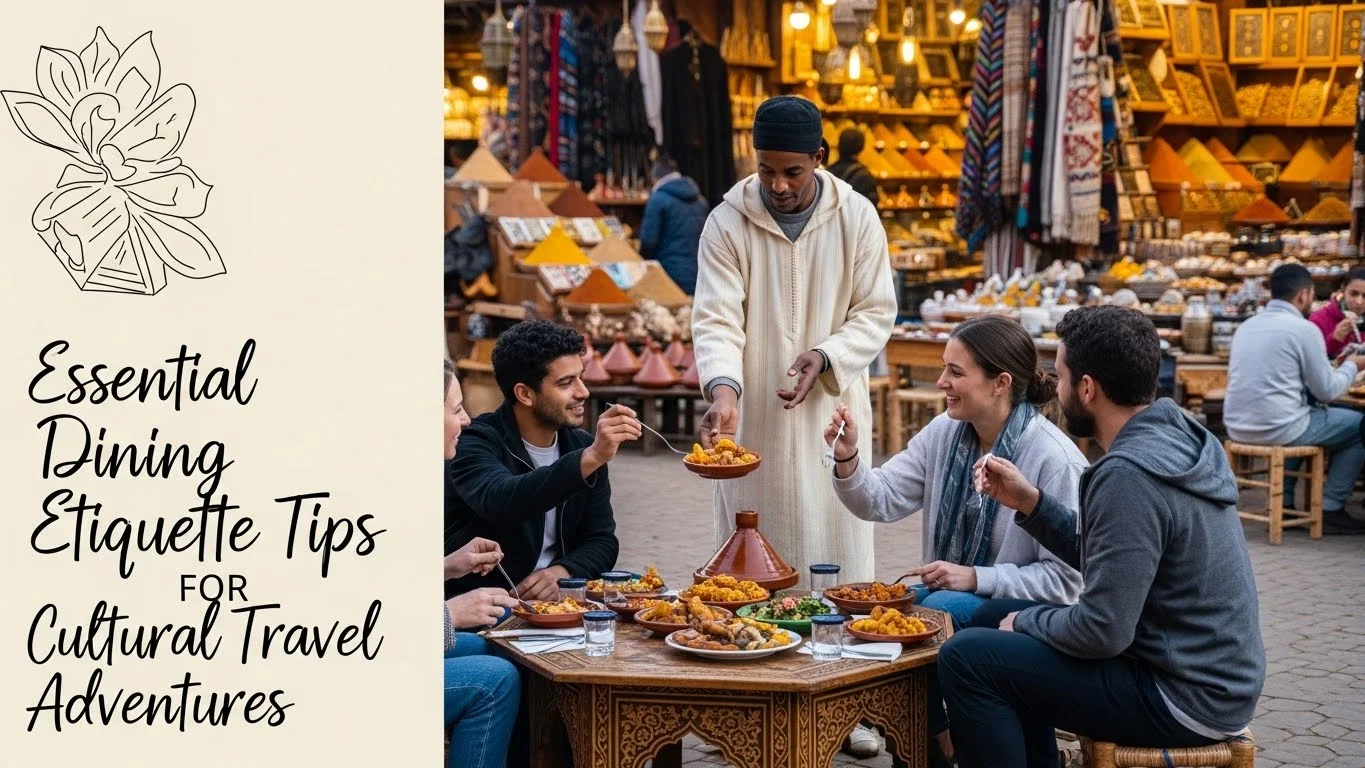
Essential Dining Etiquette Tips for Cultural Travel Adventures

Traveling to new cultures is exciting, especially when it involves exploring local dining customs. Understanding dining etiquette enhances our experiences and helps us connect with others, making our culinary adventures unforgettable. Dining Etiquette Around the World: Tips for Budget Travelers can provide additional insights into this fascinating aspect of travel.

Essential Dining Etiquette Tips for Cultural Travel Adventures

Understanding Dining Etiquette Across Cultures

The Importance of Dining Etiquette in Cultural Travel

Every time I set foot in a new country, I feel a mix of thrill and nervousness, especially when it comes to dining. I remember my first trip abroad to Italy, where I quickly learned that dining is more than just eating; it’s a cherished ritual. Dining etiquette is not just about the rules; it’s about respect and appreciation for a culture. When we travel, knowing how to navigate these customs can help us avoid awkward situations and foster deeper connections with locals. I’ve discovered that, more often than not, our table manners can open doors to new friendships and enhance our overall experience.

How Etiquette Reflects Cultural Values

During my travels, I noticed that dining etiquette often mirrors a culture’s values and beliefs. For example, in Japan, I learned that the way you handle chopsticks reflects your respect for the meal. I remember my host shaking their head when I unknowingly passed food with my chopsticks. Through this experience, I realized that these customs often stem from historical contexts and social norms that may not be immediately apparent to outsiders.

Take Italy, for instance. Their emphasis on communal dining reflects the value they place on family and togetherness. I experienced this firsthand at a family-owned trattoria where the meals were long and leisurely, with everyone sharing dishes. In cultures where meals are a social event, understanding etiquette helps us engage more meaningfully, making our experiences richer and more memorable. For more tips on dining customs, check out Master Dining Etiquette: A Backpacker’s Guide to Local Customs.

General Dining Etiquette Tips

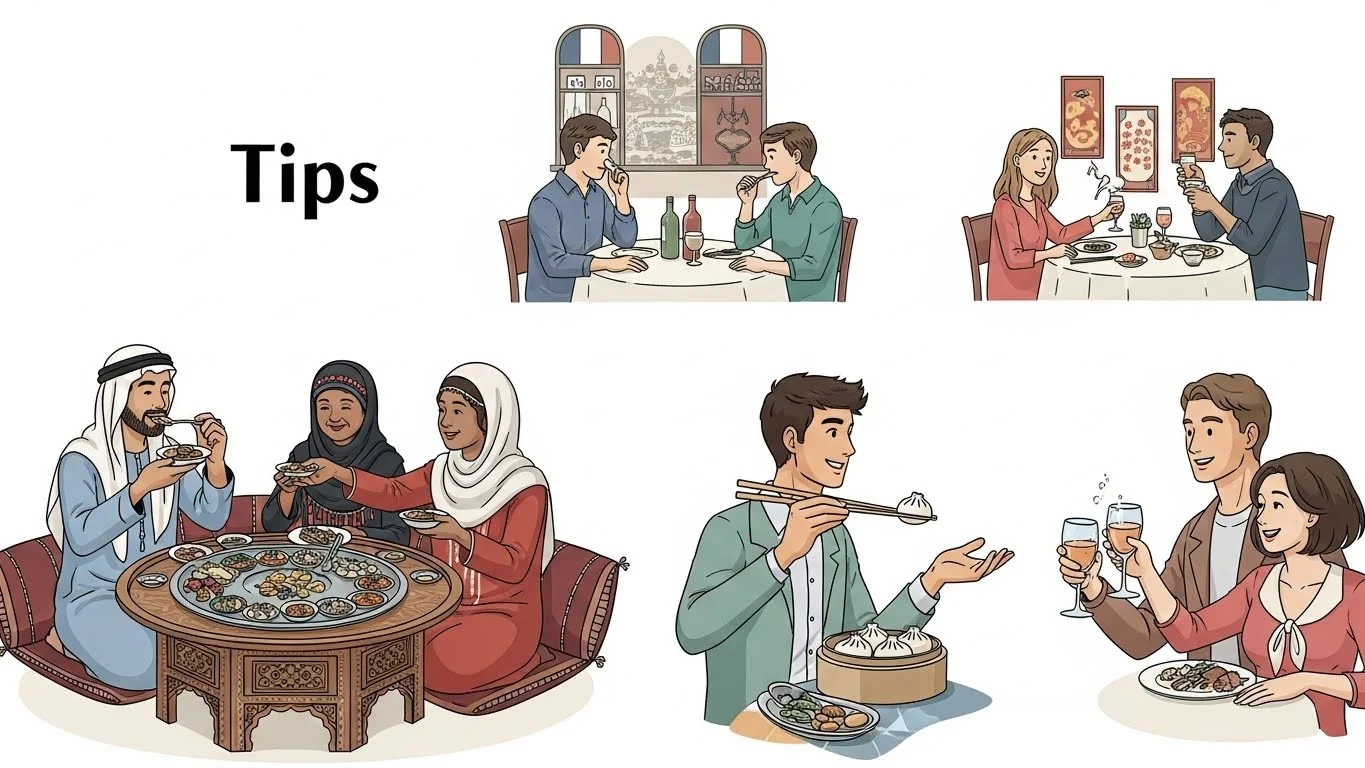
Table Manners: Universal Do’s and Don’ts

As I’ve traveled, one thing remains constant: good table manners are appreciated everywhere, even if they vary slightly from culture to culture. I always remember to be polite and patient. For instance, never start eating until everyone has been served; this simple act shows respect. I once made the mistake of diving into my food too quickly in Spain, and I could feel the eyes of my dining companions on me. I learned that waiting for everyone is not just a rule; it’s a way of bringing everyone together.

Another universal don’t is to speak with your mouth full. I can’t stress enough how vital this is; a little self-restraint goes a long way. Additionally, keeping elbows off the table is a common courtesy, though I found that this varies from place to place. In some cultures, resting your elbows on the table isn’t frowned upon at all. I suggest observing the locals and following their lead when in doubt.

Understanding Place Settings

When I first encountered a formal place setting, I was overwhelmed by the number of utensils. However, I learned that each piece has a purpose. At a lovely dinner in France, I admired the intricate arrangements, where each fork and knife had its specific place. The general rule I follow now is to work from the outside in: start with the utensils farthest from your plate and move inward with each course. This has made dining in formal settings much less stressful for me.

Using Cutlery and Napkins Properly

Using cutlery can feel daunting, especially in cultures where dining is more formal. I remember the first time I encountered a fish knife and fork in a fancy restaurant. It felt like I was in a scene from a movie! I learned that the way you hold your utensils matters too. In many European countries, it’s customary to keep your fork in your left hand and knife in your right while eating. I found this technique to be quite practical, although it took some practice!

Napkins also play an essential role in dining etiquette. I’ve made it a habit to keep my napkin on my lap as soon as I sit down. This small gesture not only keeps my clothes clean but also signals to others that we’re ready to begin. When finished, I learned to place the napkin neatly beside my plate rather than crumpling it up. It’s these little details that can make a big difference in how we’re perceived at the dining table.

Dining Etiquette by Region

European Dining Etiquette

France: The Art of French Dining

When I think of dining in France, I can’t help but recall the elegance and sophistication that envelops the whole experience. During my trip to Paris, I was fortunate enough to dine at a bistro that embodied the essence of French cuisine. I quickly learned that every meal is treated with reverence, from the presentation to the pacing. What struck me most was how much emphasis they place on savoring each bite. Meals can stretch for hours, and I found that it’s perfectly acceptable to linger over coffee long after the main course has been served. This leisurely approach to dining taught me the value of patience and appreciation for good food.

In France, I also encountered the subtle art of conversation during meals. Engaging in lively discussions while dining is not only welcomed but encouraged. However, I learned the hard way that it’s essential to avoid discussing controversial topics. Instead, I found that lighter subjects, like travel or art, are much safer and appreciated. I loved how this etiquette encouraged bonding over shared interests while enjoying delicious food.

Italy: Dining Traditions and Practices

Italy holds a special place in my heart, especially when it comes to their dining customs. I had the privilege of sharing a meal with a local family in a small Tuscan village, and it was eye-opening. I learned that meals are often separated into multiple courses, and it’s essential to appreciate each one. I once made the mistake of asking for a pizza at an upscale restaurant, only to be gently informed that this was a dish best enjoyed in a casual setting. This experience taught me to respect the context of dining in Italy and the significance of each course in their culinary tradition.

One charming practice I discovered is that Italians often toast before starting their meal. I remember feeling a surge of warmth when everyone raised their glasses and shouted “Salute!” It was a lovely way to celebrate togetherness, and I’ve since adopted this practice in my own gatherings. This experience reminded me that dining in Italy is as much about the people as it is about the food.

Asian Dining Etiquette

Japan: Sushi and Sake Etiquette

Traveling to Japan was like stepping into a world where every detail is meticulously curated. I remember my first encounter with sushi, and it was more than just food; it was a work of art. I learned that in Japan, there are specific ways to eat sushi. For example, I found out that it’s customary to dip the fish side into soy sauce rather than the rice side. This small detail blew my mind and made me realize how much thought goes into every aspect of Japanese dining.

Another important etiquette point I learned was regarding sake. I was invited to a traditional izakaya, and I quickly picked up on the fact that pouring for others is a sign of respect. I made a point to pour for my companions, and it was delightful to see their smiles of approval. This experience taught me that dining in Japan is about mindfulness and consideration for others, which I think is a beautiful value to embrace.

China: Chopsticks and Sharing Dishes

In China, sharing is at the heart of the dining experience. I remember sitting at a round table with a group of friends, all eagerly reaching for different dishes. At first, I felt a bit awkward, but I soon discovered that sharing food is a sign of friendship and trust. I learned the importance of using the serving utensils provided for each dish rather than using my own chopsticks, which can be seen as rude. This simple guideline opened my eyes to how dining etiquette can reflect communal values.

One evening, I accidentally pointed with my chopsticks, and the look of horror on my friend’s face was priceless. I quickly realized that chopsticks are not just tools; they carry a cultural significance. After that incident, I made it a point to hold them properly and to avoid any gestures that could cause offense. This experience reinforced my belief that being attentive to local customs can significantly enhance our dining adventures.

Middle Eastern Dining Practices

Understanding Hospitality in Arab Culture

One of the most memorable dining experiences I had was in Morocco, where hospitality took center stage. I was welcomed into a local home, and the warmth and generosity of my hosts made me feel like family. I learned that in many Arab cultures, refusing food can be seen as impolite, so I made sure to try everything offered to me. I remember being served a delicious tagine, and I felt honored that my host had prepared it just for me. This experience taught me the significance of food as an expression of love and generosity.

During my stay, I also discovered the tradition of sharing food directly from a communal plate. At first, I hesitated, but then I realized that this practice fosters a sense of unity. I appreciated how the act of eating together brought everyone closer, and it reminded me of the joy of communal dining.

Eating with Your Hands: Cultural Significance

In many Middle Eastern cultures, eating with one’s hands is not just acceptable; it’s encouraged! I was initially apprehensive about this practice, but I soon embraced it during a meal in Lebanon. I found that using my right hand to scoop up food enhanced the experience, making each bite feel more personal. I learned that the etiquette surrounding hand-eating varies, such as ensuring that my left hand remained away from the food. This small detail made me feel more connected to the meal and the culture.

Specific Dining Situations and How to Navigate Them

Invited to a Local’s Home: What to Bring

Being invited to a local’s home for a meal is one of the most enriching experiences when traveling. I remember the joy I felt when I received an invitation to a traditional dinner in Turkey. I wanted to make a good impression, so I asked a few friends who had traveled there before for advice on what to bring. They suggested a small gift, such as flowers or sweets, as a token of appreciation. This small gesture was warmly received, and I felt like I was already part of the family before even sitting down to eat.

In many cultures, it’s also customary to ask the host if there’s anything specific you can bring. I learned that this not only shows respect but also gives them the chance to share their culture with you. During my visit to a Moroccan home, I offered to bring dessert, and my host showed me how to prepare traditional baklava together, creating memories beyond just the meal itself.

Dining in Formal Settings vs. Casual Eateries

Understanding the difference between formal dining and casual eateries can significantly impact your experience. I remember dining at a luxurious restaurant in Switzerland, where the atmosphere was elegant, and the dress code was strict. I wore my best outfit, and I was amazed by the attention to detail in service and presentation. I learned that in such settings, it’s essential to follow all the etiquette rules, from how to hold utensils to how to engage with the staff. I was even surprised to find that making eye contact with the servers while they are serving you can show appreciation, enhancing the overall dining experience.

On the other hand, when dining in a casual eatery in Thailand, I noticed that the atmosphere was much more relaxed. People were mingling, and the etiquette was less formal. I could enjoy my meal and talk with other diners more freely. It was a reminder that dining etiquette varies widely depending on the setting. I recommend paying attention to the vibe of the place and following the lead of those around you. For travelers interested in more tips, check out Backpacking Through Cultural Cities: Tips for Budget Travelers.

How to Handle Dietary Restrictions and Preferences

Dietary restrictions can be a bit tricky, especially when dining in another culture. During my travels, I found that being open and honest about my preferences is usually appreciated. For instance, when I was in India, I was invited to a dinner at a family’s home. As someone who doesn’t eat meat, I was initially worried about offending my hosts. I gently mentioned my dietary preference, and to my delight, they prepared a wonderful vegetarian feast just for me! This experience taught me that most hosts would rather accommodate than make their guests uncomfortable.

However, I also learned to be mindful of how I communicate my restrictions. In some cultures, it might be seen as impolite to refuse food, so I try to frame my preferences positively. I often say, “Thank you so much for this lovely dish; I prefer vegetarian options, but everything looks delicious!” This approach allows me to maintain respect for the host’s offerings while still being true to my dietary needs.

Communicating During Meals

Making Small Talk: Topics to Avoid

Engaging in conversation during meals can be a delightful way to connect with others, but I’ve also learned that some topics are best avoided. During a dinner in Germany, I mistakenly brought up politics, and the room became noticeably tense. I quickly shifted the conversation to travel and local cuisine, which lightened the mood. From that experience, I learned that it’s wise to steer clear of sensitive subjects like politics, religion, or personal finances when dining with new friends.

Instead, I enjoy discussing shared interests, such as local culture or favorite foods. I remember talking about unique dishes I had tried around the world, and it sparked a lively exchange of stories, making the meal even more enjoyable. I’ve found that asking open-ended questions about the local cuisine or traditions can create a warm, inviting atmosphere.

Understanding Silence in Different Cultures

In many cultures, silence during meals can be common and comfortable. I discovered this during a meal in Finland, where I noticed that everyone was quietly enjoying their food. I initially felt awkward, but I soon embraced the moment, recognizing that sometimes, sharing a meal is about appreciating the flavors and not filling the air with conversation. It taught me that silence can be a form of respect for the meal and each other.

However, in other cultures, silence might be interpreted differently. For example, in some Middle Eastern countries, lively conversation during meals is the norm. I remember feeling a bit overwhelmed at first, trying to keep up with the rapid exchanges at a dinner in Lebanon. But once I got the hang of it, I found that participating in the banter added a layer of joy to the meal. It’s essential to be observant and adapt to the communication styles of those around you to enhance the dining experience.

Frequently Asked Questions

What is the significance of dining etiquette in cultural travel?

Dining etiquette is important in cultural travel because it reflects respect and appreciation for a culture. Understanding these customs helps avoid awkward situations and fosters deeper connections with locals, enhancing overall travel experiences.

How does dining etiquette reflect a culture’s values?

Dining etiquette often mirrors a culture’s values and beliefs. For instance, how chopsticks are handled in Japan shows respect for the meal, while communal dining in Italy reflects the importance of family and togetherness.

What are some universal table manners to remember while dining?

Some universal table manners include being polite and patient, waiting for everyone to be served before starting to eat, not speaking with your mouth full, and observing local customs regarding resting elbows on the table.

How should one navigate formal place settings?

When faced with a formal place setting, the general rule is to work from the outside in, starting with the utensils farthest from your plate and moving inward with each course.

What is the proper way to use cutlery and napkins?

In many European countries, it’s customary to keep the fork in the left hand and the knife in the right while eating. Napkins should be kept on the lap until finished, at which point they should be placed neatly beside the plate.

What dining customs are common in France?

In France, meals are treated with reverence, emphasizing patience and appreciation for good food. Engaging in light conversation is encouraged, but it’s important to avoid controversial topics during meals.

What are some key etiquette points when dining in Japan?

In Japan, it is customary to dip the fish side of sushi into soy sauce and to pour sake for others as a sign of respect. Mindfulness and consideration for others are significant values in Japanese dining etiquette.

How is dining etiquette practiced in China?

In China, sharing food is a sign of friendship and trust, and it is important to use the serving utensils provided for each dish rather than your own chopsticks, which can be considered rude.

What customs are associated with dining in Middle Eastern cultures?

In many Middle Eastern cultures, refusing food can be seen as impolite, and sharing food from a communal plate fosters a sense of unity. Eating with one’s hands is encouraged, especially using the right hand, which enhances the personal experience of the meal.

How should one handle dietary restrictions when dining in another culture?

It is best to be open and honest about dietary preferences while maintaining respect for the host’s offerings. Communicating preferences positively can help hosts accommodate guests without causing discomfort.

Dining Etiquette Around the World: Tips for Budget Travelers

Dining around the world can be a delightful adventure, but it comes with its own set of rules. Understanding dining etiquette can enhance your travel experience and help you connect with locals. For more insights, check out Master Dining Etiquette: A Backpacker’s Guide to Local Customs.

Dining Etiquette Around the World: Tips for Budget Travelers

Understanding Dining Etiquette

What is Dining Etiquette?

When I first started traveling, I didn’t think much about dining etiquette. I figured eating was pretty straightforward—just order and eat, right? But as I explored new countries and their cultures, I quickly realized that dining etiquette goes far beyond mere table manners. It encompasses the customs, traditions, and expectations surrounding eating and drinking in different cultures. For instance, in some places, it’s polite to finish everything on your plate, while in others, leaving food can signify that you’ve had enough. Understanding these nuances can not only help you fit in but also show respect for the culture you’re experiencing.

Importance of Dining Etiquette for Travelers

Dining etiquette is essential for travelers like us. I’ve found that knowing the local customs can drastically enhance our experience. It’s more than just avoiding embarrassment; it’s about connecting with the people and the culture. For example, during a trip to Japan, I learned that slurping my noodles was not just acceptable but encouraged. This little detail made me feel more at home in a foreign place. Plus, it opens up conversations with locals, who often appreciate our efforts to respect their traditions. So, whether you’re dining at a high-end restaurant or grabbing street food, understanding etiquette can give you a richer travel experience. For those interested in budget travel, consider reading Backpacking Through Cultural Cities: Tips for Budget Travelers.

General Dining Etiquette Tips

Table Manners Basics

Table manners can vary significantly from one culture to another. I remember sitting at a dinner table in Italy where I instinctively reached for bread without asking. I soon learned that it’s polite to wait for the host to serve before digging in. Similarly, I’ve noticed in the U.S. that it’s common to keep your hands on the table, but in many Asian cultures, it’s considered rude to let your hands rest on the table during a meal. One universal rule, however, is the importance of saying “please” and “thank you.” A simple “grazie” in Italy or “arigato” in Japan can go a long way in building rapport.

Using Cutlery and Table Settings

When it comes to cutlery, I’ve had my share of awkward moments. In some places, like France, the fork is held in the left hand and the knife in the right, and it’s frowned upon to switch them. In contrast, in the U.S., it’s common to cut a bite-sized piece and then put down the knife before switching the fork to the right hand. If you’re ever confused about which utensil to use, just watch the locals; it’s a great way to learn without drawing attention to yourself. Table settings can also tell you a lot about the meal. For instance, if there are multiple forks, it usually means you’ll be enjoying multiple courses!

Conversation Etiquette at the Table

Conversation at the dining table is another area where I’ve learned to tread carefully. In many cultures, engaging in light conversation is expected and welcomed. For example, during my time in Argentina, I found that discussing family was a favorite topic among locals. However, in some Asian cultures, such as Japan, it’s polite to wait for the host to initiate conversation. I’ve also discovered that it’s best to avoid controversial topics like politics or religion, as these can lead to uncomfortable situations. Instead, focus on the food, the ambiance, and common interests. Asking about local dishes can also show your interest in their culture!

Dining etiquette is a fascinating subject that can significantly enhance your travel experience. It’s about more than just food; it’s about respect, connection, and understanding. As we continue our journey through the dining customs around the world, let’s dive deeper into regional specifics that can make or break your dining experience while traveling. Additionally, for solo travelers, understanding these nuances is crucial; check out Solo Travel Success: Understanding Cultural Etiquette.

Dining Etiquette by Region

North America

United States

Dining in the United States can vary widely depending on the region and type of restaurant. I remember my first meal in New York City, where everything felt fast-paced and casual. In most American dining settings, it’s common to greet your server and be friendly, but don’t be surprised if they don’t stick around for a long chat. I learned that tipping is expected; usually around 15-20% of the total bill, which can feel a bit stressful for newcomers. It’s also customary to wait until everyone is served before starting to eat, a practice I’ve come to appreciate as it fosters a sense of togetherness.

Canada

In Canada, I noticed that dining etiquette is quite similar to the U.S., but with a particular emphasis on politeness. I found that saying “sorry” and “thank you” comes naturally to Canadians, and it’s a good idea to follow suit. At a restaurant, it’s common for the host to pay the bill, but if you’re splitting the cost, be sure to communicate that clearly. I also learned that in some provinces, like Quebec, meals can often include a side of poutine—an absolute must-try! And yes, always treat the staff with kindness. They’re known for their patience and friendliness.

South America

Brazil

In Brazil, dining is a lively affair. I remember attending a churrascaria, where servers bring skewers of meat right to your table. It’s customary to wait for the host to say a few words before starting, and the meal often includes sharing dishes with everyone at the table. I found out that it’s polite to keep your hands on the table, but don’t rest your elbows; that’s a no-no! And when it comes to toasting, you can’t forget to make eye contact! It’s a charming ritual that adds to the communal vibe of the meal.

Argentina

During my time in Argentina, I discovered that dining out can turn into a social event that lasts for hours. Meals often begin late in the evening, and it’s common to share a bottle of wine with your meal. I learned that it’s polite to try a bit of everything, especially when dining with locals. And don’t be surprised if someone offers you a mate; it’s a traditional drink that’s meant to be shared. Just remember to pass it back to the person who served it to you. I loved the warmth that this ritual brought into the dining experience!

Europe

France

Ah, France! I couldn’t help but feel a sense of elegance when dining there. I learned that meals are often seen as an art form. From the moment I sat down, I was reminded to savor every bite and take my time. Bread is served without a plate, placed directly on the table, and it’s considered rude to cut it. Instead, I learned to break it by hand. Also, never rush to leave; lingering over a meal is part of the French dining experience. A simple “bon appétit” before starting can make a great impression.

Italy

Italy is like a culinary journey of its own. I remember feeling welcomed as I walked into a trattoria, where the aroma of fresh pasta filled the air. Italians take pride in their food, and it’s customary to appreciate the meal by finishing everything on your plate. I was taught that it’s inappropriate to order cappuccino after 11 AM, so I made sure to enjoy my morning cup! And when someone offers you a dish, it’s polite to accept, as refusing can be seen as rude. Sharing food is a beautiful way to bond with locals.

Germany

Dining in Germany can be a refreshing experience. I learned that punctuality is key; arriving on time is a sign of respect. Meals often consist of hearty portions, and I found it common to clink glasses before drinking. A simple “Prost!” will do. I also noticed that it’s polite to wait for the host to begin eating, and creative table manners, like not cutting your sausage with a knife, are appreciated. If you’re invited to someone’s home, bringing a small gift, like flowers or chocolate, is a thoughtful gesture.

Asia

Japan

Japan was an eye-opener for me. I quickly learned that dining there is an art form filled with rituals. It’s considered polite to say “itadakimasu” before the meal begins, thanking everyone who contributed to the food. Chopsticks are used, but I found that it’s rude to stick them upright in rice. Also, slurping noodles is a sign of appreciation! I enjoyed how every meal felt like a celebration of flavors and traditions. When dining with others, waiting for the elder or the host to start is a must.

China

In China, I discovered that dining is deeply communal. Meals are typically served family-style, with dishes placed in the center of the table. I learned that it’s polite to use serving chopsticks to take food from communal dishes, and I was fascinated by the tradition of toasting. I often found myself participating in rounds of “gan bei,” which means “dry cup”—an exhilarating experience! And if you’re offered tea, it’s polite to accept, as refusing can be seen as disrespectful.

India

Dining in India was a sensory overload, and I loved every minute of it. I learned that eating with my hands is not only acceptable but preferred in many regions. The trick is to use only the right hand, as the left is considered unclean. Sharing food is a sign of hospitality, and I was often invited to join others in a meal, which made me feel like part of the family. Spices are a huge part of Indian cuisine, so I was always eager to ask about each dish and its ingredients. It’s a great way to connect with locals.

Africa

Morocco

In Morocco, dining is an experience filled with flavors and tradition. I remember sitting on the floor around a large platter of tagine, where everyone eats together. It’s common to use bread to scoop up food, and I learned not to use my left hand for eating. The meal often begins with a sweet mint tea, and it’s polite to finish everything on your plate to show appreciation. I loved how this communal style of dining brought everyone together in such a festive atmosphere.

South Africa

South African dining etiquette surprised me with its mix of cultures. I learned that sharing is a big part of the experience, particularly with traditional braai (barbecue). It’s polite to wait for everyone to be served before starting, and a hearty “enjoy” is often shared among guests. I also found it fascinating that meals often lead to storytelling, which I cherished. It’s a beautiful way to bond, and the warmth of the people made every meal memorable.

Oceania

Australia

Dining in Australia felt relaxed and casual. I enjoyed the outdoor barbecues, where sharing food with friends is common. I found that it’s polite to wait for everyone to be served before digging in, and asking questions about the menu is always welcome. I learned that Australians have a love for coffee, so don’t miss out on trying a flat white! Also, tipping is appreciated but not mandatory, which was a breath of fresh air.

New Zealand

In New Zealand, I experienced a similar laid-back vibe. Meals often emphasize local ingredients, and I enjoyed the culture of sharing food. I learned that it’s polite to ask about dietary preferences before planning a meal. The Maori culture has also influenced dining experiences, and I enjoyed trying hangi, a traditional method of cooking. When dining, the sense of community is palpable, and I felt grateful to be included in their traditions.

Special Dining Etiquette Situations

Dining with Locals

One of my most memorable experiences traveling has been dining with locals. I remember a warm evening in a small village in Greece where I was invited to join a family for dinner. They set an extra place at the table, welcoming me into their home with open arms. I quickly learned that dining with locals is as much about the food as it is about connection. They shared stories about their culture and traditions, and I felt privileged to be part of their world for a night. It’s important to show appreciation for their hospitality by trying everything they offer, even if it’s outside your comfort zone. A simple compliment about the meal goes a long way in strengthening that bond. I always make sure to acknowledge the effort they put into the meal; it’s a sign of respect and gratitude.

Street Food Etiquette

Street food is one of my favorite aspects of exploring new cultures. I’ve had some of the best meals from street vendors around the world, but I’ve also learned a few etiquette tips along the way. In places like Thailand, I discovered that it’s polite to greet the vendor with a smile and maybe a “hello.” When dining in a busy market, I found it’s best to eat quickly and clear the area for others who are waiting. I’ve noticed that in many cultures, it’s considered respectful to enjoy your food while standing or walking, rather than sitting down. Also, if you’re sharing a table with others, be mindful of your space and try not to monopolize the table. I love how street food offers a casual atmosphere, where everyone is there to enjoy good food and sometimes even engage in a bit of friendly conversation.

Formal Dinners and Ceremonies

Attending formal dinners or ceremonies can be intimidating, but I’ve learned that being aware of the customs can ease the nerves. I remember an elegant dinner in India where traditions were deeply woven into the experience. I was guided through a series of courses served in a particular order, and it felt like a beautiful ritual. Dressing appropriately is a must, as it shows respect for the occasion. I also discovered that waiting for the host to start the meal is crucial. In my experience, it’s polite to keep conversation light and focus on the event at hand. When the meal concluded, a heartfelt “thank you” to the host is always appreciated. It’s a way to express that I valued not just the meal, but the effort put into creating a memorable experience.

Buffet Dining Tips

Buffets can be a fun dining experience, but they do come with their own set of etiquette rules. I recall a vibrant buffet in a hotel in Malaysia, filled with a variety of dishes from different regions. I learned that it’s best to take smaller portions on the first go so you can sample many different flavors. It’s also polite to wait until everyone has had a chance to serve themselves before going back for seconds. I always keep in mind that sharing the table space is important; it helps maintain a friendly atmosphere. Additionally, using serving utensils instead of my own is a must! It’s a small gesture that shows respect for others dining around me. Overall, buffets are a wonderful opportunity to try new foods, but just a little consideration can make the experience enjoyable for everyone.

Frequently Asked Questions

What is dining etiquette?

Dining etiquette encompasses the customs, traditions, and expectations surrounding eating and drinking in different cultures. It goes beyond mere table manners and includes understanding how to fit in and show respect for the local culture.

Why is dining etiquette important for travelers?

Dining etiquette is essential for travelers as it enhances the travel experience by helping to connect with the local culture and people. Understanding local customs can also help avoid embarrassment and foster a sense of belonging.

What are some general table manners to consider while dining?

Table manners can vary by culture, but some basics include waiting for the host to serve before eating, keeping hands on the table in some cultures, and always saying “please” and “thank you” to show appreciation.

How should cutlery be used in different cultures?

Cutlery usage varies; for example, in France, the fork is held in the left hand and the knife in the right, while in the U.S., it’s common to switch the fork to the right hand after cutting. Observing locals can be a helpful way to learn proper use without drawing attention.

What should I know about conversation etiquette at the dining table?

Conversation etiquette varies; in some cultures, light conversation is expected, while in others, it’s polite to wait for the host to initiate. Avoid controversial topics and focus on food and common interests to keep the atmosphere enjoyable.

What dining etiquette should I follow in the United States?

In the U.S., it’s common to greet your server, tip around 15-20%, and wait until everyone is served before starting to eat. The dining experience can feel fast-paced and casual, so being friendly is encouraged.

What dining customs are unique to Japan?

In Japan, it’s polite to say “itadakimasu” before the meal, chopsticks should not be stuck upright in rice, and slurping noodles is a sign of appreciation. Waiting for the elder or host to start eating is also important.

How is dining etiquette in Morocco different from other cultures?

In Morocco, dining is often communal, with everyone eating from a large platter. It’s polite to use bread to scoop food, not to use the left hand for eating, and finishing everything on your plate shows appreciation for the meal.

What are some tips for dining at buffets?

When dining at a buffet, it’s best to take smaller portions initially, wait for everyone to serve themselves before going for seconds, and use serving utensils instead of personal ones. This helps maintain a respectful and friendly dining atmosphere.

What should I do if invited to dine with locals?

Dining with locals is about connection as much as food. Show appreciation by trying everything offered, complimenting the meal, and acknowledging the effort they put into it. This creates a bond and demonstrates respect for their hospitality.

Master Dining Etiquette: A Backpacker’s Guide to Local Customs

Mastering dining etiquette can transform your travel experience, making meals more enjoyable and culturally enriching. As a backpacker, embracing local customs not only shows respect but also opens doors to new friendships and unforgettable experiences. Read Interesting article: Explore Cultural Cities on a Budget: Ultimate Backpacker’s Guide

Master Dining Etiquette: A Backpacker's Guide to Local Customs

Understanding Dining Etiquette Across Cultures

The Importance of Dining Etiquette

Dining etiquette is more than just a set of rules; it’s a reflection of cultural values and social norms. I’ve found that understanding these customs can greatly enhance my travels. For instance, when I dined in Italy, I noticed how important it was to savor each course, allowing the meal to become a leisurely experience rather than a rushed event. In many cultures, the way we eat, what we eat, and even how we hold our utensils can convey respect and appreciation. I believe that by practicing good dining etiquette, we show that we value not just the food, but also the company and the traditions associated with it. Read Interesting article: Solo Travel Success: Understanding Cultural Etiquette

How Dining Etiquette Reflects Local Customs

Each culture has its unique dining customs that often mirror its history and social structure. For example, during my travels in Japan, I experienced how bowing before a meal is a sign of gratitude. This simple act resonated with me, highlighting the deep respect the Japanese have for their food and the people who prepare it. Similarly, in many Middle Eastern countries, meals are often shared, emphasizing community and connection. This practice reminded me of family gatherings at home, where food serves as a bridge that brings people together. Understanding these customs can offer valuable insights into a culture’s identity, and I’ve learned that this understanding can often lead to more meaningful interactions with locals.

Essential Dining Etiquette Tips for Backpackers

General Table Manners

When dining in a new country, I always start by observing the locals. Their behavior can provide a wealth of knowledge about what is considered polite or rude. For instance, I learned that in many Asian cultures, finishing every last morsel on your plate can imply that you were not satisfied with the meal, whereas leaving a small amount can signify enjoyment. I also found it essential to maintain a pleasant conversation while dining. In my experience, asking locals about their favorite dishes or dining customs often led to delightful exchanges and deeper cultural insights. Keeping my voice at a respectful volume and avoiding controversial topics is something I prioritize during meals, as it fosters a positive dining atmosphere.

Proper Use of Utensils

Using utensils appropriately can vary dramatically from one culture to another. I remember my first meal in Thailand where I was handed a spoon and fork. It took me a moment to realize that the fork is used to push food onto the spoon, which is then brought to the mouth. This was quite different from the standard knife and fork approach I was used to back home. In contrast, I learned that in Ethiopia, it’s customary to eat with your hands, using injera to scoop up food. I found this to be a fun and immersive way to experience the culture, as it allowed me to connect with the meal and the people sharing it. It’s crucial to adapt my utensil use to match local customs, as it shows respect and willingness to engage with the culture.

When to Eat: Meal Times Around the World

Meal times can also vary widely, and I’ve had my fair share of surprises. In Spain, I learned that dinner doesn’t usually start until after 9 PM, which was a stark contrast to my usual routine. At first, I felt a bit lost, but I came to enjoy the late-night atmosphere of bustling restaurants filled with laughter and chatter. In some Middle Eastern countries, lunch is the main meal of the day, often enjoyed during the hottest part, while in other places like Germany, dinner is typically lighter and served earlier. Recognizing these differences can help me avoid any potential faux pas, such as showing up to a restaurant that is still closed for the evening or arriving too late for lunch service. Read Interesting article: Navigating Cultural Etiquette Solo: A Traveler’s Guide

Dining Etiquette by Region

North America

Common Practices in the U.S.

When I first traveled to the United States, I was surprised by how casual dining can be, yet there are still many unwritten rules to keep in mind. For instance, I learned that in most restaurants, it’s customary to wait for everyone at the table to be served before diving into the meal. This practice fosters a sense of togetherness that I appreciate. I also discovered that tipping is a significant part of dining culture here—generally, a tip of 15-20% of the bill is expected. While at first, I felt pressured by this expectation, I realized it’s a way to show appreciation for good service, which is something I can get behind. I remember a time when I tipped an extra amount for a waiter who went out of his way to accommodate my food allergies, and it felt good to acknowledge his efforts.

Dining in Canada

My experience dining in Canada was quite similar to that in the U.S., but with a few unique twists. Canadians are known for their politeness, and this is reflected in their dining etiquette. I noticed that saying “please” and “thank you” is emphasized, even with waitstaff. Also, I found that in more casual dining settings, especially in smaller towns, it’s common for diners to share dishes or order family-style, which creates a friendly atmosphere. I remember enjoying a meal of poutine and sharing it with new friends I met at a hostel. It felt so authentic and warm, truly capturing the essence of Canadian hospitality.

Europe

Dining Etiquette in France

Dining in France was one of the highlights of my travels. The French take their meals seriously, and I quickly learned that meals are often seen as a celebration. I discovered that it’s polite to greet the staff with a simple “Bonjour” before placing my order, which sets a positive tone. I also found that the French usually enjoy their meals in multiple courses, and it’s considered rude to rush through them. In fact, I remember sitting for hours in a cozy bistro, savoring each course and chatting with my travel companion. It felt like we were part of something special, a tradition that stretches back generations.

Italian Dining Customs

Italy was yet another culinary adventure. One thing I learned is that Italians typically eat their pasta as a first course, known as “primo,” before moving on to the main dish. When I was in Rome, I noticed that they take their time enjoying meals, often accompanied by lively conversations and laughter. I also learned about the “no cappuccino after meals” rule—something I initially overlooked but quickly adapted to after receiving some curious glances! It’s these little nuances that make dining in Italy so engaging and memorable.

German Table Manners

When I visited Germany, I found their dining customs to be straightforward yet respectful. It’s common to say “Guten Appetit” before digging in, which I enjoyed as it felt like a shared acknowledgment of the meal. I learned that it’s polite to keep my hands on the table (but not my elbows!), and that finishing my plate is a sign of appreciation for the meal. I also experienced the unique tradition of eating with a knife in the right hand and fork in the left, which felt a bit different but was easy to adapt to with practice. Sharing a hearty meal of sausages and sauerkraut with locals at a beer garden was a highlight of my trip!

Asia

Chinese Dining Etiquette

Traveling to China opened my eyes to a whole new world of dining etiquette. One of the first things I encountered was the tradition of serving dishes family-style, where several plates are placed at the center of the table for everyone to share. I found that it’s polite to wait for the eldest person at the table to start eating before I dive in. I also learned the significance of chopstick etiquette—like never sticking them upright in rice, as it resembles funeral rituals. During one memorable meal, I accidentally pointed my chopsticks at someone when I was trying to grab a piece of food, and the table burst into laughter. It was a great reminder of how humor can bridge cultural gaps!

Japanese Table Manners

In Japan, I was struck by the emphasis on respect and tradition during meals. I quickly learned that saying “Itadakimasu” before eating is a way to show gratitude for the food. I also experienced the beauty of using chopsticks correctly, which can be quite intricate. I remember my first sushi experience, where I was served a beautiful platter. I was nervous about making mistakes, but I was pleasantly surprised by how patient and understanding the locals were. It made the experience all the more enjoyable, and I felt honored to partake in such a culturally rich dining experience.

Indian Dining Customs

During my time in India, I was fascinated by the communal aspect of dining. Meals are often shared, and I learned that it’s common to eat with the right hand, a tradition rooted in cultural norms. In some regions, I noticed everyone sitting on the floor around a large platter, which made me feel connected to the meal and the people I was with. One memorable experience was when I tried a thali, a platter filled with various dishes. Sharing this meal not only filled my stomach but also my heart as I connected more deeply with my companions. I appreciated how food can be a powerful unifier across cultures.

Latin America

Dining in Mexico

My travels took me to Mexico, where I quickly learned that meals are often a vibrant and lively affair. I discovered that it’s customary to say “Buen provecho” to others who are eating, which is a lovely way to wish them an enjoyable meal. I also noticed that sharing food is a common practice; it’s not unusual for diners to pass around dishes to try a bit of everything. I loved experiencing this sense of community and warmth. One evening, I found myself at a family-run taquería, sharing tacos and stories with the locals, and it was a night I’ll always cherish.

Argentinian Steakhouse Etiquette

In Argentina, the dining experience revolves around the famous asado, or barbecue. I learned that meals often start late in the evening and can last for hours. I was amazed by the emphasis on meat and the careful preparation that goes into it. When dining at a steakhouse, I quickly picked up that it’s polite to order a bottle of wine to share, which added to the festive atmosphere. I remember being invited to a local’s home for an asado, where I not only enjoyed delicious food but also learned about the cultural significance of this tradition. It was a delightful experience that connected me to the heart of Argentinian culture.

Dining Etiquette in Specific Situations

Eating at Street Food Stalls

Street food has a special place in my heart. There’s something magical about grabbing a bite from a bustling stall, surrounded by the sounds and smells of a vibrant city. However, I quickly learned that there are some etiquette tips to keep in mind when indulging in street food. For starters, I always try to observe how locals enjoy their meals. I noticed that in places like Thailand and Mexico, it’s common to eat standing up or while walking, which made me feel part of the local scene. I remember savoring a spicy taco in Mexico City while chatting with a friendly vendor, and it felt like the most authentic experience I could have!

Another important aspect is to be mindful of cleanliness. I tend to look for stalls that have a high turnover of customers, as this usually indicates fresh food. It’s also polite to use utensils if they’re provided, or to wash my hands before digging in. In some cultures, like in India, I learned that eating with my right hand is not just common, but a sign of respect. I found it incredibly rewarding to embrace these little customs while enjoying delicious street food, as it made each bite even more satisfying.

Dining with Locals: What to Expect

One of the most enriching experiences I’ve had while traveling is dining with locals. I discovered that sharing a meal often goes beyond just food; it’s about connection and understanding. When I was invited to a family dinner in a rural village in Greece, I was both excited and nervous. I learned that it’s customary to bring a small gift, such as a dessert or some wine, which I made sure to do.

At the table, I found that meals were filled with laughter and storytelling. I noticed that locals often encouraged me to try everything, offering multiple dishes at once. This was a delightful experience, but I had to keep in mind that refusing food can be seen as rude. There were moments when I felt overwhelmed by the variety, but I learned to accept small portions. This way, I could appreciate each dish without overloading my plate.

Additionally, I realized that conversation plays an essential role during meals. I made an effort to engage in discussions about traditions, local ingredients, and favorite recipes. This not only helped me learn more about the culture, but it also created an atmosphere of warmth and camaraderie. I believe that sharing meals with locals is one of the best ways to experience a culture authentically.

Formal Dining vs. Casual Dining

Understanding the difference between formal and casual dining settings has been crucial for my travels. I’ve been to places where I had to don my best attire for a formal dinner, and others where I could get away with shorts and a t-shirt. In countries like France and Italy, I found that formal dinners are often a way to celebrate special occasions and come with specific etiquette rules. I remember being taken aback by the multiple forks and plates set before me at a formal event in Paris. It was a learning curve to navigate which utensils to use for each course, but I enjoyed the challenge and the elegant atmosphere that came with it.

Casual dining, on the other hand, has its own set of unwritten rules. I’ve found that it often emphasizes a relaxed and friendly environment, where interaction is encouraged. During a casual meal in a pub in Ireland, for example, I was delighted to see locals sharing stories and laughter without any formalities. I learned that it’s perfectly acceptable to engage in conversations with fellow diners, which added to the enjoyment of the experience.

In my experience, being aware of the dining context helps me adjust my behavior accordingly. Whether it’s keeping a lower voice in a formal restaurant or engaging in lively banter at a casual eatery, adapting to the environment has enriched my culinary adventures.

Understanding Cultural Nuances

The Role of Sharing Food

Food has an incredible ability to bring people together, and I’ve witnessed this across many cultures. In many Asian and Middle Eastern countries, sharing food is not just a custom, but a way of showing hospitality and friendship. I recall dining with a family in Morocco, where they laid out a large tagine in the center of the table, and we all dug in using our hands. It felt so intimate and communal, creating a sense of belonging that I cherished.

Sharing food also allows for a richer tasting experience. When I tried a variety of dishes in a communal setting, I was able to sample flavors that I wouldn’t have ordered on my own. This practice taught me the importance of being open-minded and adventurous when it comes to trying new foods. It’s a reminder that food is not only nourishment but a means of connection and shared experiences.

Understanding Tipping Customs

Tipping can be a tricky subject, especially since customs vary widely around the world. In the U.S. and Canada, I learned that tipping is expected and often serves as a significant part of a server’s income. However, during my travels in Japan, I found that tipping is considered rude, as exceptional service is expected without extra compensation. I remember feeling awkward when I tried to leave a tip at a restaurant in Tokyo, only to have the waiter chase after me to return it.

In countries like Mexico and many European nations, tipping practices can be more relaxed. I typically round up the bill or leave a small percentage, which is always appreciated. Understanding these nuances has helped me navigate various dining situations smoothly and respectfully, ensuring that my gestures of appreciation align with local customs.

Alcohol Consumption and Etiquette

When it comes to alcohol, I’ve noticed that different cultures have unique attitudes and practices surrounding its consumption. In many European countries, sharing a toast before drinking is an important ritual, and I remember my first time clinking glasses in Germany while saying “Prost!” It created an immediate connection with my dining companions.

In contrast, during my time in some Middle Eastern countries, I learned that alcohol consumption is often restricted due to cultural and religious beliefs. Being aware of these customs has helped me navigate social situations without inadvertently offending anyone. I’ve also learned to appreciate non-alcoholic beverages, which often come with their own rich traditions, like chai tea in India or mate in Argentina. Embracing these practices has expanded my experiences and allowed me to connect more deeply with the local culture.

Frequently Asked Questions

What is the significance of dining etiquette while traveling?

Dining etiquette reflects cultural values and social norms, enhancing travel experiences by showing respect for local customs and fostering connections with locals.

How can observing locals help improve my dining etiquette?

By observing locals, you can learn what is considered polite or rude in their culture, which can inform your behavior and make for a more enjoyable dining experience.

What are some general table manners to keep in mind while traveling?

Maintaining pleasant conversation, keeping your voice at a respectful volume, and avoiding controversial topics are essential for fostering a positive dining atmosphere.

What are the typical meal times in different cultures?

Meal times vary by culture; for example, dinner in Spain often starts after 9 PM, while in some Middle Eastern countries, lunch is the main meal of the day.

What are some dining customs in North America?

In the U.S., it is customary to wait for everyone at the table to be served before starting the meal, and tipping of 15-20% is generally expected. In Canada, politeness is emphasized, and sharing dishes in casual settings is common.

How do dining customs differ in European countries?

In France, meals are seen as celebrations requiring polite greetings and savoring multiple courses, while in Italy, pasta is typically served as a first course. Germany emphasizes straightforward manners, such as saying “Guten Appetit” before eating.

What is unique about dining etiquette in Asian cultures?

In China, meals are often served family-style, and it’s polite to wait for the eldest to start eating. In Japan, saying “Itadakimasu” before eating shows gratitude, and proper chopstick use is important.

What dining customs are observed in Latin America?

In Mexico, it is customary to say “Buen provecho” to fellow diners, and food sharing is common. In Argentina, dining often revolves around the asado, with meals starting late and a focus on communal enjoyment.

What etiquette should I follow when eating street food?

Observe locals on how to enjoy their meals, be mindful of cleanliness, and use utensils if provided. In some cultures, like India, eating with the right hand shows respect.

What should I know about dining with locals?

Dining with locals is about connection; it’s customary to bring a small gift and engage in conversation. Accepting food is important, and discussing traditions enhances the experience.